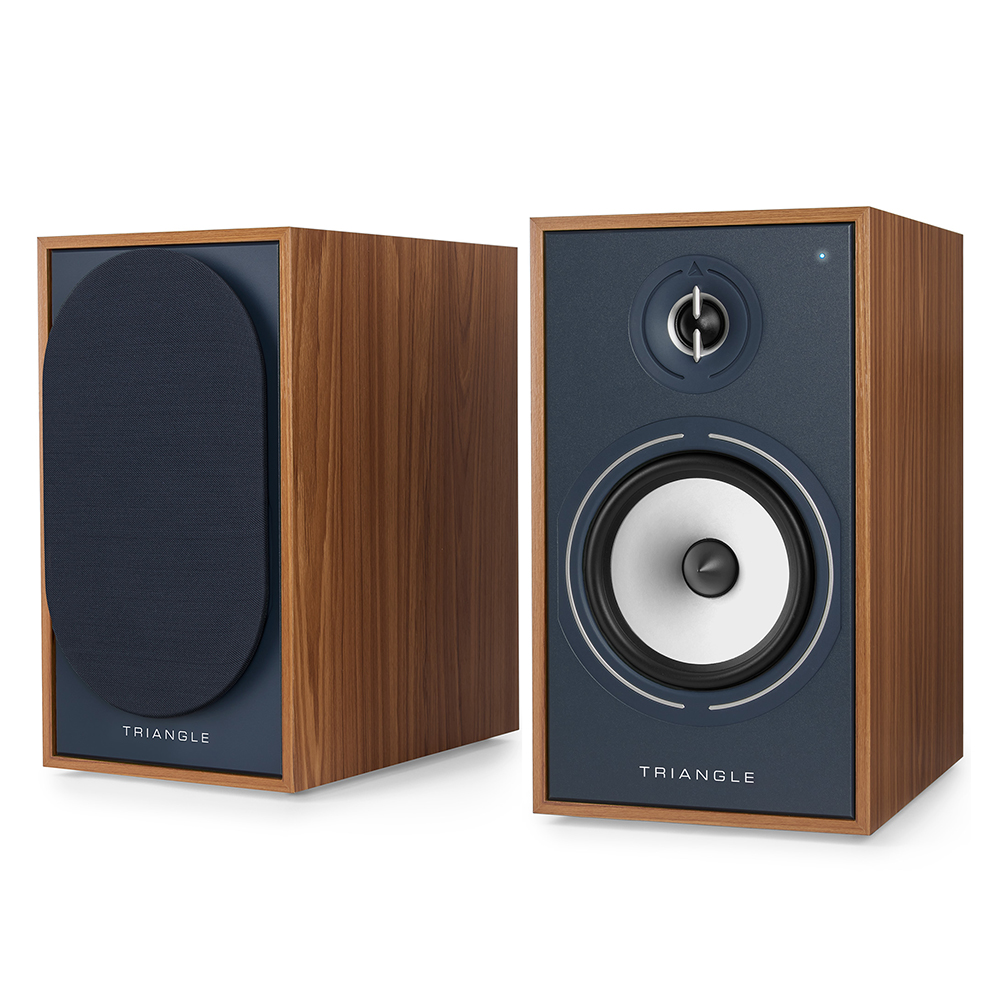
Triangle BOREA BR03 CONNECT is a powered stereo system built around a particularly useful set of physical connections. HDMI ARC brings a television into the plan, USB-B supports a computer audio route, and a switchable phono input accommodates an MM turntable. Bluetooth covers convenient direct wireless playback, but this is not a built-in Wi-Fi streaming system. The main cabinet powers its passive partner through a cable. Original review evidence suggests an engaging music-first result, provided the buyer understands the practical difference between broad connectivity and a fully networked stereo.
Research-based review. This assessment draws on manufacturer documentation and the original published evaluations linked below. Audio Review has not performed a hands-on test of this model.
Music performance supports a serious shortlist
AVForums’ original evaluation finds a lively, involving presentation with convincing instrumental character and stereo organisation. It regards the supplied phono facility as useful rather than the last word in dedicated phono performance. The review also records minor HDMI behaviour issues with its older LG television; it does not prove those occur with every current display.
An audition should therefore cover both music and the intended source routine. Use a familiar vocal recording and something rhythmically busy, then compare another system at a similar playback level. Check whether the bass remains proportionate in the room rather than assuming a larger bass driver automatically makes the better purchase. A pleasant first impression should survive a longer listening session at the normal seat. The evidence supports taking this pair seriously as a compact stereo system. It does not replace checking the actual television or computer arrangement, which may be a larger influence on daily satisfaction than a small difference during a showroom music demonstration.
Powered speakers still need a cable and suitable supports
The electronics sit in the main cabinet and power both channels. A supplied speaker cable links the passive partner. This gives the pair a simpler electronics layout than a conventional amplifier and passive speakers, but it does not create two completely independent wireless cabinets.
Decide where the main speaker should sit based on the sources and mains location. Plan the cable route between speakers before placing either one on a narrow shelf. Leave space for the rear ports and connections, and use secure supports that suit the cabinet depth. When a television sits between the speakers, aim for a workable stereo layout rather than pushing both cabinets into a small recess. A desk may suit the sources but require attention to speaker height and reflections. Consider stands where they solve an actual placement problem, including them in the price comparison. The important benefit is a practical reduction in separate boxes. It should not be undermined by a crowded installation that makes a source cable or volume control awkward to reach.
HDMI ARC is useful for stereo television, with checks
BR03 CONNECT provides HDMI ARC for a stereo television arrangement. It is not a surround decoder and should not be treated as a direct substitute for a multichannel receiver. Television output settings and control behaviour remain part of the setup.
Use the TV’s appropriate ARC connection and follow its documented audio settings. Confirm a compatible stereo output with broadcasts, internal apps and any external player used regularly. Test volume control, standby and the return from another input. A working picture on the television does not by itself establish that every audio path has been configured correctly. The original review’s older-display issue is a reason for an individual compatibility check, not a basis for declaring the product universally unreliable or the issue universally solved. Keep the option to return a combination that cannot provide a consistent household routine. Where it works well, HDMI makes a two-speaker music system easier to live with for television. Where it does not, another connection or product may provide a simpler solution.
USB-B makes computer use a distinct strength
The dedicated USB-B input is a genuine computer-audio route, unlike a USB socket provided only for power. Its advertised format support should be understood separately from the capabilities of optical, Bluetooth or HDMI. The sending computer and software still determine the actual playback configuration.
Select the correct output device and begin at a conservative volume. Check normal system audio, a music player and the applications used for calls or video. Establish whether a direct cable route is practical rather than adding adapters without checking their role. A high maximum supported format is not a reason to convert every file to that format. The practical improvement is convenient access to the library and a stable stereo output. If the pair will be used at a desk, assess background noise and level adjustment at the normal close distance during the return period. A large powered pair can be attractive for computer music, but it needs enough physical room to function as speakers rather than simply fit beside a monitor.
Phono and Bluetooth solve different source needs
The RCA route can operate at line level or as an MM phono input. Bluetooth provides direct playback from a compatible phone or other source, with codec negotiation depending on both devices. Neither facility should be confused with a built-in network music service.
For records, identify the cartridge and whether the turntable already contains a phono stage. Choose the corresponding input setting rather than applying phono equalisation twice. Keep the player mechanically stable and follow the grounding instructions where needed. For phone use, test ordinary reconnection and source switching with the actual handset. Do not assume that an aptX label guarantees the same codec on every phone, or that an HD codec is lossless. A separate network streamer can be added through an appropriate input if independent service access becomes important. Include that extra component in the budget before comparing against a system with Wi-Fi already built in. The broad connection set is useful because it offers clear routes, not because all of those routes are technically identical.
Buy it for the sources you actually need
BR03 CONNECT is strongest when its television, computer and analogue connections reduce the number of boxes in a real system. A buyer who only wants app-based network streaming may prefer a different package, while someone connecting a PC and record player can make good use of the physical inputs.
Compare complete arrangements rather than amplifier wattage or a long specification list. Include supports, cable routing, any external streamer and the current local warranty. Ask the seller to demonstrate the actual connection that matters most, and measure the space with plugs attached. Consider future changes realistically: adding a line source or subwoofer is different from independently replacing an amplifier within a powered pair. The supplied remote should also fit the intended room routine. A successful purchase is a system that sounds enjoyable and remains easy for everyone to operate after the initial setup. The Triangle deserves attention because it combines several useful jobs in one pair, provided those jobs correspond to the buyer’s actual priorities.
Alternatives to consider
KEF LSX II LT: Compare this compact connected pair if network playback and its particular connection set suit the room better. Assess cabinet size, source support and complete cost rather than choosing only from amplifier figures.
WiiM Amp: A WiiM Amp with suitable passive speakers is another route to television and network music. It offers different component flexibility, while requiring a separate amplifier box and ordinary speaker wiring.
Triangle BOREA BR03 CONNECT key specifications
- Format
- Powered main cabinet plus passive partner
- Amplifier rating
- 2 × 60 W RMS into 8 ohms, manufacturer specification
- Drivers per cabinet
- 25 mm tweeter; 16 cm bass/mid
- TV
- HDMI ARC stereo input
- Computer audio
- USB-B; supported formats depend on source configuration
- Digital inputs
- Optical and coaxial
- Analogue
- RCA switchable line / MM phono; 3.5 mm
- Wireless
- Bluetooth, supported codecs depend on source
- Network streaming
- No built-in Wi-Fi / Ethernet streamer
- Subwoofer
- Mono sub output
- Link between cabinets
- Supplied 3 m speaker cable
- Ports
- Rear-firing
- Speaker weight
- 7.3 kg master; 6.6 kg secondary
Verdict
BOREA BR03 CONNECT is a versatile powered stereo pair with encouraging original music evidence and unusually useful physical inputs. HDMI ARC and USB-B are central attractions, while Wi-Fi streaming requires another component. Check television behaviour and allow sensible space for both cabinets. It is a strong candidate when its source flexibility makes the complete system simpler at a competitive current price.
Documentation and original reviews
Triangle official BOREA BR03 CONNECT specifications · AVForums original BR03 CONNECT review
Editorial record
Sources and updates
Product specifications and factual claims were checked against Official Triangle BOREA BR03 CONNECT product page ↗. Scores and buying advice follow our category-specific editorial methodology.
- Published
- November 17, 2026
- Last updated
- November 17, 2026