Research note: This is an independent, research-based assessment built from official specifications and product documentation. We have not claimed a hands-on laboratory test.
KEF LSX II LT key specifications
- Drive units
- Uni-Q array: 19 mm aluminium-dome tweeter and 115 mm magnesium/aluminium LF/MF cone per speaker
- Amplification
- 70 W LF and 30 W HF Class-D per speaker
- Frequency response
- 54 Hz to 28 kHz (±3 dB)
- Maximum SPL
- 102 dB at 1 m
- Streaming
- AirPlay 2, Google Cast, UPnP and Bluetooth 5.0
- Supported network resolution
- Up to 384 kHz/24-bit
- Inputs
- HDMI ARC, optical TOSLINK, USB-C and Ethernet
- Output
- RCA subwoofer output
- Inter-speaker link
- Supplied proprietary USB-C cable; all sources resampled to 96 kHz/24-bit PCM
- Wi-Fi
- IEEE 802.11a/b/g/n/ac dual-band 2.4/5 GHz
- Dimensions
- 240 x 155 x 180 mm per speaker
- Weight
- 6.8 kg per system
Driver design and sound goals
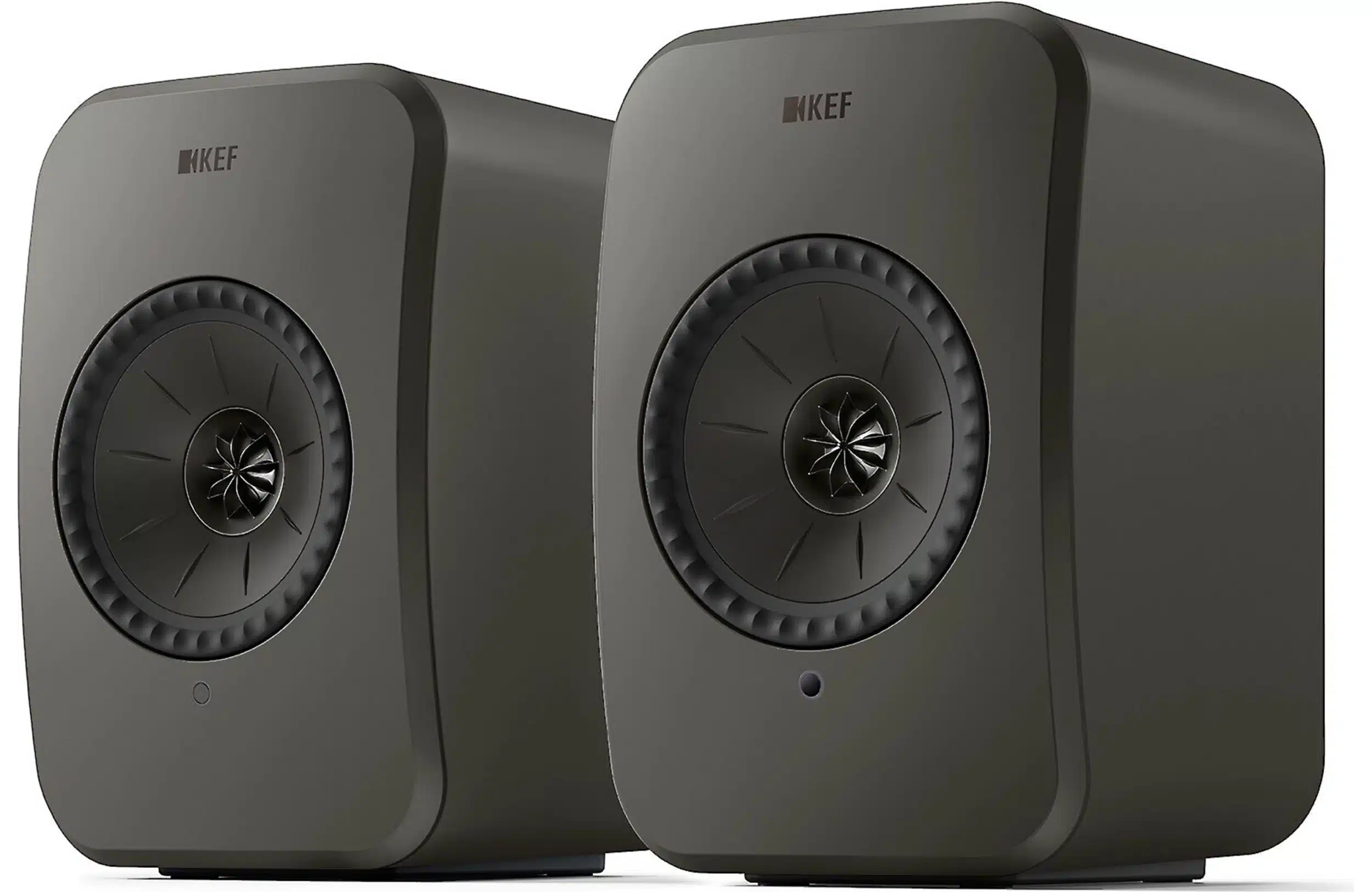
The concentric Uni-Q array behaves as a point source to widen the listening area and improve image coherence. DSP through Music Integrity Engine coordinates the two-way system, producing true stereo from cabinets small enough for desks. Published frequency and output figures are useful boundaries, but room placement and listening distance often determine the result more strongly. A stereo pair also creates real image width that a single smart speaker or soundbar can only approximate.
Amplification and system architecture
Each speaker contains 70 W for bass and 30 W for treble, totaling 200 W. The secondary speaker is powered and connected through a mandatory USB-C interspeaker cable, simplifying cost but preventing fully wireless placement. Active systems simplify amplifier matching and allow DSP to coordinate drivers, but they also concentrate electronics, software and amplification inside the speakers. Long-term ownership therefore depends on app support and serviceability as well as conventional cabinet quality.
Inputs and streaming
HDMI ARC serves televisions and USB-C suits computers, while optical and network inputs cover other digital sources. The LT version omits the 3.5 mm analog input, so turntables and analog devices require conversion. Buyers should map every intended source before purchase, especially televisions, computers and turntables. HDMI ARC/eARC improves TV convenience, while analog sources may require adapters or a phono preamp.
Placement, calibration and bass
Compact cabinets fit desks and shelves, though stands or isolation pads improve imaging. KEF Connect adjusts wall and desk compensation, and a dedicated sub output supports deeper bass in larger spaces. Boundary distance, stands and listening height affect tonal balance and imaging. App EQ can correct broad problems but cannot turn poor placement into an ideal stereo triangle. A subwoofer output is valuable when deeper bass or lower distortion is needed.
Daily use and ecosystem
W2 streaming provides AirPlay 2, Chromecast, Roon and major services, with Bluetooth 5.0 as a fallback. The wired speaker link is reliable but must be concealed across the setup. Network speakers should wake reliably, preserve volume settings and remain controllable when services change. Multiroom compatibility is useful only if it matches devices already in the home; Bluetooth remains a convenient fallback but may offer fewer features.
Value and alternatives
LSX II LT keeps the drivers, amplification and core streaming of LSX II at a lower price by trimming inputs and wireless interspeaker communication. It is strong value when those omissions do not matter. The correct comparison includes amplifiers, streamers, cables and stands that a passive system might require. All-in-one speakers can be expensive upfront yet economical as a complete system, while traditional separates retain greater upgrade freedom.
Who should buy it?
Choose LSX II LT for a desk, bedroom or small living room where real stereo, computer USB and TV ARC are priorities. It is less suitable when analog sources or cable-free speaker placement are essential.
Alternatives to consider
Full LSX II adds analog input and wireless interspeaker operation; LS50 Wireless II offers much greater scale at a higher price. Sonos Era 300 is easier for multiroom and spatial audio, while powered studio monitors provide simpler computer-focused value.
Verdict
KEF LSX II LT is a carefully simplified active hi-fi system rather than a compromised lifestyle speaker. Its mandatory interspeaker cable and missing analog input are clear, but genuine Uni-Q stereo, strong streaming and useful TV/computer connections make it excellent for compact rooms.
Primary source
KEF LSX II LT official product page
Editorial record
Sources and updates
Product specifications and factual claims were checked against Official KEF LSX II LT product page ↗. Scores and buying advice follow our category-specific editorial methodology.
- Published
- July 1, 2026
- Last updated
- July 25, 2026
Compare before choosing
Two strong alternatives from the same wireless & smart speakers category.
KEF LS50 Wireless II Review
KEF LS50 Wireless II research-based review covering Uni-Q/MAT drivers, 760 W amplification, W2 streaming, HDMI eARC, extensive inputs…
Denon Home 350 Review
OverviewThe Denon Home 350 is a large HEOS-enabled wireless speaker designed to do more than provide convenient background…