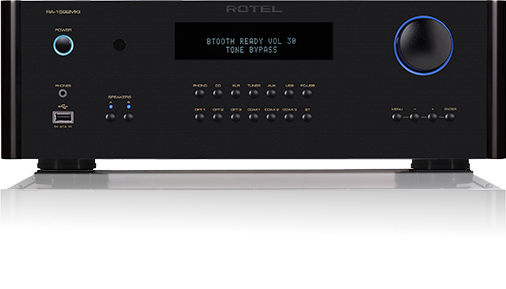
Rotel RA-1592MKII is a substantial stereo integrated amplifier-DAC whose strongest claim is the combination of speaker drive and a broad conventional source section. It supports balanced line input, MM vinyl and multiple digital transports, but neither Ethernet nor its Roon Tested label makes it a native network music system. This research-based review considers its strong original evidence for controlled, engaging speaker playback while keeping the phono, headphone and television limitations visible. Those distinctions matter when a large amplifier is expected to become the centre of a modern mixed-use room.
Research-based review. This assessment draws on manufacturer documentation and the original published evaluations linked below. Audio Review has not performed a hands-on test of this model.
The main amplifier has a strong original-review case
AVForums’ original evaluation is highly positive about the RA-1592MKII’s forceful, involving presentation, particularly its bass control and convincing musical body. It also notes a soundstage concentrated between the speakers and qualifies the phono and headphone performance. Those findings apply to the reviewer’s setup rather than an Audio Review test.
Audition the intended speakers with a familiar vocal, a complex rhythmic track and music with large dynamic changes. Keep levels matched against the alternative and listen at ordinary domestic levels as well as a brief louder passage. Powerful bass should remain articulated rather than simply become more abundant. A different room can turn a promising low-frequency balance into excess, so position the speakers sensibly before attributing everything to amplification. The published evidence makes the Rotel worth hearing for a confident conventional system. It does not mean that every buyer needs its output capability or will prefer its presentation to an amplifier with a lighter or more spacious balance.
The output figures need a realistic speaker context
Rotel specifies two hundred watts per channel continuous into eight ohms, while the larger four-ohm figure is labelled maximum power. They are not identical test conditions and should remain distinguished when comparing another amplifier’s claims.
Consider the complete loudspeaker load, sensitivity, listening distance and desired headroom. An amplifier’s volume-display number does not directly state the fraction of available power being used; source level and speaker sensitivity affect that relationship. Do not infer that a setting around one-third means two-thirds of output remains untouched. A demonstration with the actual combination is more useful than that arithmetic. Leave adequate ventilation and use furniture suitable for a heavy component, including the rear connection space. More output can be valuable when a system genuinely needs it, but does not correct room placement or make every recording more engaging. Buy sufficient capability for the intended system rather than using the largest power figure as an automatic quality ranking.
The digital and balanced inputs offer genuine source flexibility
The source section includes RCA and XLR line level, MM phono, multiple optical and coaxial inputs, computer USB and Bluetooth reception. Input-specific PCM limits and USB configuration requirements still apply. Native DSD capability should not be assumed from a broad DAC description.
Demonstrate the actual computer, transport and playback software. Check official driver requirements and recovery after sleep, then compare the normal music collection rather than relying on a maximum-format test file. An external source handling a different format may need suitable conversion before sending supported PCM. For balanced equipment, use an appropriate documented signal route and compare at matched output level. A converter chip’s name alone cannot establish the complete sound or interface quality. The Rotel’s broad source section is useful when several conventional components already exist. It is less valuable if most sockets remain unused while a required network player or television interface still needs a separate purchase.
Phono and headphones deserve independent evaluation
The original AVForums review finds the main speaker amplifier more compelling than the included phono and headphone stages. That does not make those facilities unusable; it means the buyer should not transfer praise for speaker drive automatically to every other listening route.
Use the actual cartridge and records when judging MM playback, checking hum, tonal balance and clarity through quiet and complex passages. An external stage should solve a demonstrated need or cartridge requirement rather than be treated as compulsory from a short review summary. For headphones, check noise, useful volume adjustment and the preferred presentation with the intended pair. The manual states that inserting a headphone plug does not silence speakers automatically, so the A/B selector remains part of private listening. Reduce level before changing modes and verify the complete routine. A household that switches frequently may value automatic speaker muting more than another owner who rarely uses headphones. Those small operating differences can matter more in daily use than an extra digital input.
Ethernet, subwoofer sockets and bypass each have limits
Ethernet serves control and updates rather than native network playback. The manual describes parallel mono sub outputs, variable preamplifier output and specific integration modes. It also notes that not all hardware versions support the described trigger-input HT-bypass function.
Confirm the exact unit’s rear-panel markings and documented configuration if integration with a cinema processor is planned. Do not assume every example has identical trigger behaviour. Two parallel sub connections are not separately corrected channels, so plan compatible active subwoofers and their setup accordingly. A/B speaker outputs also remain part of one stereo amplifier, not independent sources for two rooms. If direct streaming or HDMI ARC is essential, include the required external arrangement or compare a different platform. These are clear architectural choices rather than minor omissions that a general firmware update should be expected to fix. The RA-1592MKII is most coherent when conventional stereo amplification is central and the other system roles are assigned deliberately.
Judge the complete current offer rather than brand hierarchy
A large integrated amplifier can reduce the number of conventional electronics boxes, but the final system still depends on the sources and speakers. Current condition and support are especially relevant for a used or demonstration purchase, while launch prices do not establish today’s value.
Check regional mains suitability, remote operation, accessories and service information. Test every input that will actually be used and listen for balanced operation between channels. Include a suitable network source and any external phono equipment in the price if those are needed. Compare the whole rack and its controls, not just the amplifier front. Someone with demanding passive speakers and several existing transports may find the Rotel’s combination particularly attractive. A buyer seeking a compact television-and-streaming system may gain more convenience from another design even with a smaller output claim. Its strongest value proposition is substantial conventional capability with positive musical evidence and an accurately matched installation. That remains a meaningful case without presenting it as the right amplifier for every room.
Alternatives to consider
Audiolab 9000A: Compare the actual speaker demands, digital handling and control interface at complete current prices. A different output rating alone does not settle the preferred system.
Yamaha R-N2000A: Consider a different network and room-adjustment approach if one-box source convenience matters alongside amplification. Check the household television and music routine directly.
Rotel RA-1592MKII key specifications
- Role
- Class-AB integrated stereo amplifier-DAC
- Manufacturer continuous output
- 200 W/channel into 8 ohms
- Manufacturer maximum output
- 350 W/channel into 4 ohms; different stated condition
- Analogue sources
- RCA line, balanced XLR and MM phono
- Digital sources
- Three optical and three coaxial inputs; PC-USB
- Digital formats
- PCM according to input limits; no native DSD promise
- Wireless
- Bluetooth reception; official page lists aptX and AAC
- Outputs
- A/B speakers; variable stereo pre-out; parallel mono sub connections
- Headphones
- Front 3.5 mm; speaker deselection is separate
- Network / TV
- Ethernet control and updates; no native streaming or HDMI ARC
- Dimensions / weight
- Approximately 431 × 144 × 425 mm; 17.63 kg
- Version check
- Current manual identifies hardware-dependent trigger-input HT bypass
Verdict
RA-1592MKII has strong research support for controlled, involving speaker playback and broad conventional source flexibility. Check phono and headphones separately, understand version-dependent integration and plan network and television sources realistically. With suitable speakers and a fair complete offer, it is a persuasive premium integrated choice. Its size and output are advantages when the system actually uses them.
Documentation and original reviews
Rotel official RA-1592MKII specification · Rotel official RA-1592MKII current owner manual · AVForums original RA-1592MkII evaluation by Ed Selley
Editorial record
Sources and updates
Product specifications and factual claims were checked against Official Rotel RA-1592MKII product page ↗. Scores and buying advice follow our category-specific editorial methodology.
- Published
- November 17, 2026
- Last updated
- November 17, 2026