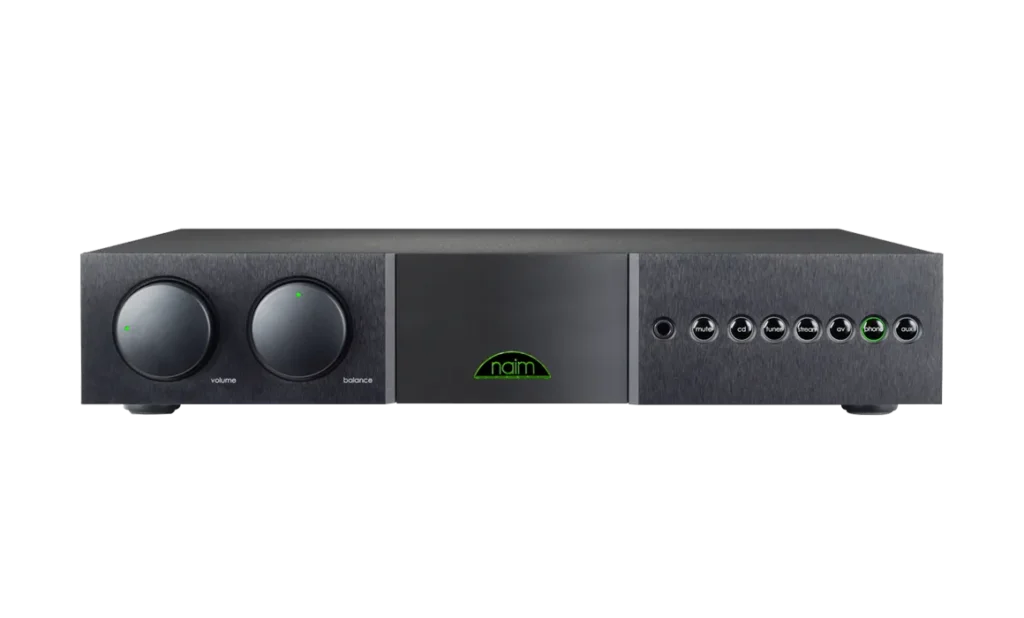
SUPERNAIT 3 is a premium analogue integrated amplifier with a moving-magnet phono stage, headphone output and specific options for integration with separate components. It does not include a network player, DAC or HDMI input. The official original-model page now marks it no longer available, making condition and the exact current offer important. This research-based review considers its unusually strong original evidence for musical drive and control while examining the sources, speakers and installation needed to make that strength worthwhile in a real system.
Research-based review. This assessment draws on manufacturer documentation and the original published evaluations linked below. Audio Review has not performed a hands-on test of this model.
The original evidence favours confident musical organisation
What Hi-Fi’s evaluation finds the SUPERNAIT 3 muscular and assured, with precise rhythmic drive, convincing dynamics and a cohesive handling of complex arrangements. It also notes that stereo presentation is not the most expansive available and that existing owners of the previous generation need not automatically upgrade. Phono and headphone performance receive positive assessments.
That combination suggests an amplifier to audition for the way it holds music together rather than for an exaggerated spotlight on one frequency region. Use a familiar rhythm section, natural voices and a larger ensemble, matching playback levels against the alternative. Follow quieter changes in intensity as well as the obvious crescendos. A controlled presentation should remain useful during an ordinary evening, not only at demonstration volume. The listening evidence is strong, but it is evidence from another publication’s installation. Different speaker loads, rooms and listening priorities still matter. Someone who values a particularly spacious presentation or integrated room adjustment may prefer a different route even while recognising the Naim’s strengths.
Eighty watts does not describe the whole speaker match
Naim rates the amplifier at eighty watts per channel into eight ohms under stated distortion conditions. The specification is relevant, but it should not be compared indiscriminately with a peak, single-channel or differently loaded claim from another product.
Consider speaker sensitivity, impedance behaviour, listening distance and the maximum level actually required. A difficult room and a demanding speaker pair can challenge an otherwise capable amplifier, while a sensible domestic combination may never approach its limits. Audition the exact loudspeakers where possible. Compare bass control and tonal stability as the level changes rather than listening only for outright loudness. Avoid interpreting a positive high-end review as a promise to drive every possible load. Include stands, sensible positioning and appropriate cable connections in the installation plan. Those details may provide a clearer improvement than moving up a brand hierarchy before the room is sorted. The SUPERNAIT 3’s reputation for authority is a reason to investigate a suitable pairing, not a replacement for that pairing exercise.
Analogue sources and MM vinyl are its natural environment
The amplifier offers line inputs through the manufacturer’s RCA and DIN arrangements alongside a moving-magnet phono stage. Digital conversion and network playback remain external jobs. The USB service connection does not turn it into a computer DAC or local-file player.
List the sources that will actually be used. A suitable streamer with analogue output can provide network music, while a separate DAC may be appropriate for existing digital transports. Vinyl buyers should check cartridge output and loading requirements rather than assuming moving-coil support. A turntable supplying line level should use the appropriate line connection. Keep hum checks and ordinary record condition consistent when comparing phono stages. An amplifier of this price should be assessed with the source equipment that will remain in the system, not solely with an unusually expensive demonstration source. Its analogue focus can be a virtue when independent source replacement matters, but the additional equipment and controls belong in the complete cost and usability calculation.
System expansion is specific rather than universally plug-and-play
The official reference manual describes the preamplifier and power-amplifier links, supported external supplies, bi-amp output and AV bypass. It also identifies the sub output as a full-range preamplifier duplicate rather than a filtered bass-management system. These are useful facilities with distinct operating roles.
Use the exact manual and appropriate dealer guidance for a proposed change. Do not remove links experimentally or treat all similarly shaped DIN connections as interchangeable. An active subwoofer still needs appropriate crossover, level and placement adjustment. AV bypass hands volume control to the surrounding system and should be configured deliberately, not left active for an ordinary music source. With a used unit, check the existing configuration before connecting sources and speakers. The ability to expand can protect a purchase when the system develops, but it can also become an expensive distraction. Identify the actual limitation first, then compare the proposed expanded arrangement with a simpler alternative that already provides the required function.
The physical controls support a traditional listening routine
A substantial enclosure, motorised volume control, separate balance control and front headphone connection make the SUPERNAIT 3 a distinctly physical component. Naim’s official description and manual support those facilities, while the fourteen-kilogram weight deserves appropriate furniture and handling.
Check remote adjustment from the normal seat, particularly at quieter levels. Try the balance control if the room or seating arrangement makes it useful, but do not confuse it with correction for all room-acoustic problems. Demonstrate the actual headphones for noise, comfortable gain and tonal balance rather than generalising from a positive review with different models. Leave ventilation and rear cable clearance as instructed. The low-profile case should not tempt the owner to pack the unit tightly between other warm components. Traditional operation can be pleasantly direct when each source has a clear role. It is less convenient when a household expects a single phone interface to manage every input and television behaviour automatically. Choose the control style that will remain understandable after the initial purchase excitement.
Current condition and total cost decide its value today
The official original-model page now states that SUPERNAIT 3 is no longer available. A buyer should therefore establish what is actually being offered: remaining stock, demonstration equipment or a used amplifier with a particular service history. Launch-era prices and awards do not describe those offers completely.
Verify the regional version, accessories, remote and required link hardware. Test all relevant inputs and controls, and obtain realistic information about service support. Budget separately for a network source, DAC or different phono solution if needed. Do not purchase an external supply simply because an upgrade path exists; hear the benefit in the actual system and compare its complete price with other options. A well-chosen amplifier can remain useful across changes of source, but that longevity depends on condition and practical system fit. SUPERNAIT 3 makes the strongest case for buyers already committed to a good analogue chain who value its documented musical strengths. It is a less obvious choice when the main aim is to reduce boxes or obtain automatic television and streaming convenience.
Alternatives to consider
NAD C 399: Compare the complete source and optional-module arrangement when digital integration is as important as speaker amplification. Listen with the intended loudspeakers and include every required addition.
Audiolab 9000A: Consider a different integrated approach with its actual digital-source facilities, controls and musical balance. Current complete-system pricing is more relevant than launch-price hierarchy.
Naim SUPERNAIT 3 key specifications
- Role
- Analogue integrated amplifier for passive stereo speakers
- Manufacturer output
- 80 W per channel into 8 ohms at stated 0.1% THD+N
- Sources
- RCA / DIN line level and MM phono
- Headphones
- Front 6.35 mm; Class-A headphone stage
- Outputs
- Variable preamp, bi-amp and stereo RCA sub connections; fixed line outputs
- Subwoofer signal
- Full-range duplicate of preamplifier output
- Digital audio / streaming
- Not built in
- USB
- Firmware / diagnostics; not USB audio or memory playback
- Controls
- Volume, balance, source selection and remote
- Dimensions / weight
- Approximately 432 × 87 × 314 mm; 14 kg
- Availability
- Official original-model page states no longer available
Verdict
SUPERNAIT 3 has a strong research case for an analogue system that values rhythmic control and confident dynamics. The built-in MM and headphone facilities add substance, while digital sources and bass management need separate planning. Check the retired model’s condition and configuration, compare complete systems and audition the intended speakers. Its musical strengths are meaningful when that wider arrangement fits.
Documentation and original reviews
Naim official SUPERNAIT 3 specification and availability · Naim official integrated-amplifier reference manual · What Hi-Fi original SUPERNAIT 3 listening evaluation
Editorial record
Sources and updates
Product specifications and factual claims were checked against Official Naim SUPERNAIT 3 product page ↗. Scores and buying advice follow our category-specific editorial methodology.
- Published
- November 17, 2026
- Last updated
- November 17, 2026