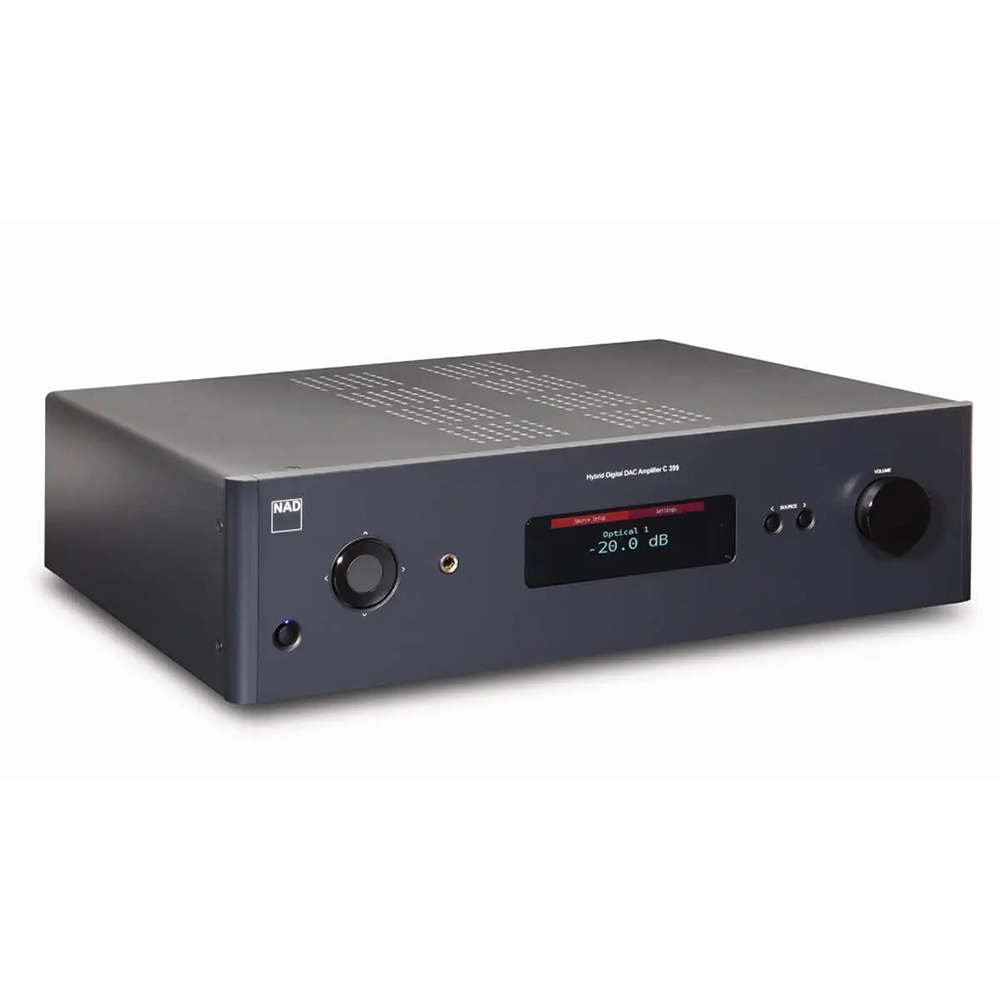
The NAD C 399 is a powerful stereo integrated amplifier with an internal DAC and a modular route to streaming and room correction. Its restrained appearance hides a broad set of analogue and digital functions. The key buying distinction is whether it is supplied as the base amplifier or with the optional MDC2 BluOS-D card installed.
NAD C 399 — A traditional control centre with modern capability
The C 399 is aimed at someone who wants a serious stereo amplifier to remain central while sources change. It does not rely on a large artwork screen to explain its purpose. A clear source and volume routine can be an advantage when a system combines television, records and music playback. The owner can choose whether the amplifier’s front panel or a separate source supplies the main interface.
It is a full-width component and needs an appropriate shelf. Allow space for rear cables and ventilation instead of measuring only the enclosure. Think about access to speaker terminals, analogue leads and optional module connections before the system becomes difficult to move. The C 399 can reduce the need for separate source and processing boxes when equipped appropriately, but a broad feature set is useful only if the layout remains understandable to the people using it.
Power: useful headroom, not a substitute for matching
NAD specifies more than 180 W per channel continuously into 8 or 4 ohms, across 20 Hz to 20 kHz at the rated distortion with both channels driven. That is a clearly described manufacturer figure rather than an Audio Review measurement. It provides a strong starting point for demanding conventional stereo systems. It does not mean the amplifier can be selected independently of the loudspeakers and room.
Consider sensitivity, impedance behaviour and listening distance together. A large room and a low-sensitivity speaker can make headroom useful, while a smaller room and efficient speakers may rarely use the available capability. There is no requirement to match a loudspeaker’s printed maximum power exactly to the amplifier’s rating. A practical pairing is about clean operation at the required level and sensible handling of dynamic peaks.
More power will not correct every bass or clarity problem. Speaker placement and the listening seat can have large effects before electronics are changed. If a room creates a heavy low-frequency balance, simply increasing level or buying a larger amplifier may reinforce the problem. The C 399 is most persuasive when its reserve serves a well-planned system, with room correction considered separately where appropriate.
Analogue, digital and television sources
The core connection set includes two line-level analogue inputs, MM phono, two optical and two coaxial digital inputs. NAD’s current product page identifies HDMI eARC for television integration. A compatible TV can therefore share the main speakers, but the actual audio format and control behaviour still need to be configured correctly. This is a stereo amplifier rather than a multichannel AV receiver.
The phono input is for moving-magnet cartridges. A low-output moving-coil cartridge requires appropriate matching elsewhere. If a turntable already has an enabled phono stage and delivers line level, connect it to a normal line input instead. Getting the signal level and equalisation right matters more than whether a cable is labelled as an audiophile accessory.
There is no USB DAC input for a direct computer-audio connection. The presence of a USB port elsewhere in a configuration does not establish that function. Plan a compatible digital output or network playback route for a computer source. This is an important difference from many desktop DAC amplifiers and should be settled before purchase, particularly when a laptop is the main music source.
What the optional BluOS-D module adds
The MDC2 BluOS-D card adds network streaming and Dirac Live Limited Bandwidth correction. The licence supplied with that module covers the lower range up to 500 Hz; Full Bandwidth is an optional paid upgrade. NAD’s current compatibility page treats Bass Control as a separate product with model-specific eligibility, so it should not be assumed included simply because the amplifier supports Dirac Live.
This distinction matters when reading the original SoundStage Access review. Its sample had the module installed and the reviewer used correction above the normal included bandwidth for part of the evaluation. Those results are useful evidence for a configured system, but do not mean the base amplifier or standard licence provides the identical setup. Compare the complete package you would actually buy.
Room correction can be a significant practical benefit, particularly where the room creates bass peaks. It still requires careful measurements and a target suited to the speaker and listening area. Begin with sensible placement and avoid asking the software to restore deep output beyond the speaker’s clean capability. Keep an uncorrected reference and compare at similar levels. A well-chosen filter should improve consistency without turning setup into a permanent search for a perfect graph.
Sound quality and the independent review
SoundStage Access’s original C 399 review praised its quiet operation, dynamic capability and full presentation, and found the BluOS and correction options particularly useful. That supports a strong recommendation for the complete stereo role. It does not turn those listening observations into our measurements or guarantee the same perceived balance with every speaker. The review used particular loudspeakers and a specific room, which remain part of the evidence.
For a buyer, the meaningful comparison is with the intended speakers and sources at a consistent playback level. A louder demonstration can sound more impressive even when the difference is largely level. Include a quiet passage, a complex mix and a recording with strong bass, then listen long enough to assess comfort. If correction is part of the intended ownership, compare that complete experience rather than focusing only on the amplifier with all processing disabled.
Owners of a capable existing integrated amplifier should identify the benefit before replacing it. Additional headroom, television integration or the internal correction route are concrete reasons to consider the C 399. A newer DAC specification alone is a weaker reason when the current system already works well. The complete behaviour of the system matters more than one component label.
Expansion, subwoofers and value
Preamp connections, dual subwoofer outputs and a headphone stage extend the amplifier’s usefulness. Subwoofer sockets alone do not guarantee independent automatic optimisation, and settings can depend on whether the module is installed. Plan the intended crossover and calibration arrangement before adding a second subwoofer. Placement and a smooth blend with the main speakers matter more than simply increasing bass output.
The C 399 makes the strongest case for a system that can use both its power and source flexibility. Compare current EU prices for the base and module-equipped versions, including any licence upgrade and local support. A smaller integrated streaming amplifier may be enough for efficient speakers and a simple source list. A separate streamer may already cover network playback, leaving the module worthwhile chiefly for correction. The NAD’s appeal is choice and capability, provided the purchased configuration solves a real system need.
Alternatives to consider
NAD C 700 V2: A smaller integrated streaming approach for an owner who does not need the C 399’s power and expansion structure.
Bluesound POWERNODE (2025): Compare this when the BluOS system and a compact just-add-speakers arrangement are the main priorities.
NAD C 399 key specifications
- Type
- Stereo integrated DAC amplifier
- Continuous output
- More than 180 W/channel into 8 or 4 ohms, both channels driven
- Analogue sources
- Two line inputs and MM phono
- Digital sources
- Two optical, two coaxial; current official page specifies HDMI eARC
- Expansion
- Two MDC2 slots
- Dirac with BluOS-D
- Limited Bandwidth to 500 Hz; Full Bandwidth optional
- USB DAC input
- Not included
Verdict
A powerful, flexible stereo foundation with a convincing optional streaming and correction path. It is strongest when the system can use its reserve and connectivity; compare the complete BluOS-D and licence cost, and account for the absence of a direct USB DAC input.
Primary documentation and independent reviews
NAD official current C 399 specifications · NAD current Dirac support and licences · SoundStage Access original C 399 review with BluOS-D
Editorial record
Sources and updates
Product specifications and factual claims were checked against Official NAD C 399 product page ↗. Scores and buying advice follow our category-specific editorial methodology.
- Published
- November 8, 2026
- Last updated
- November 8, 2026