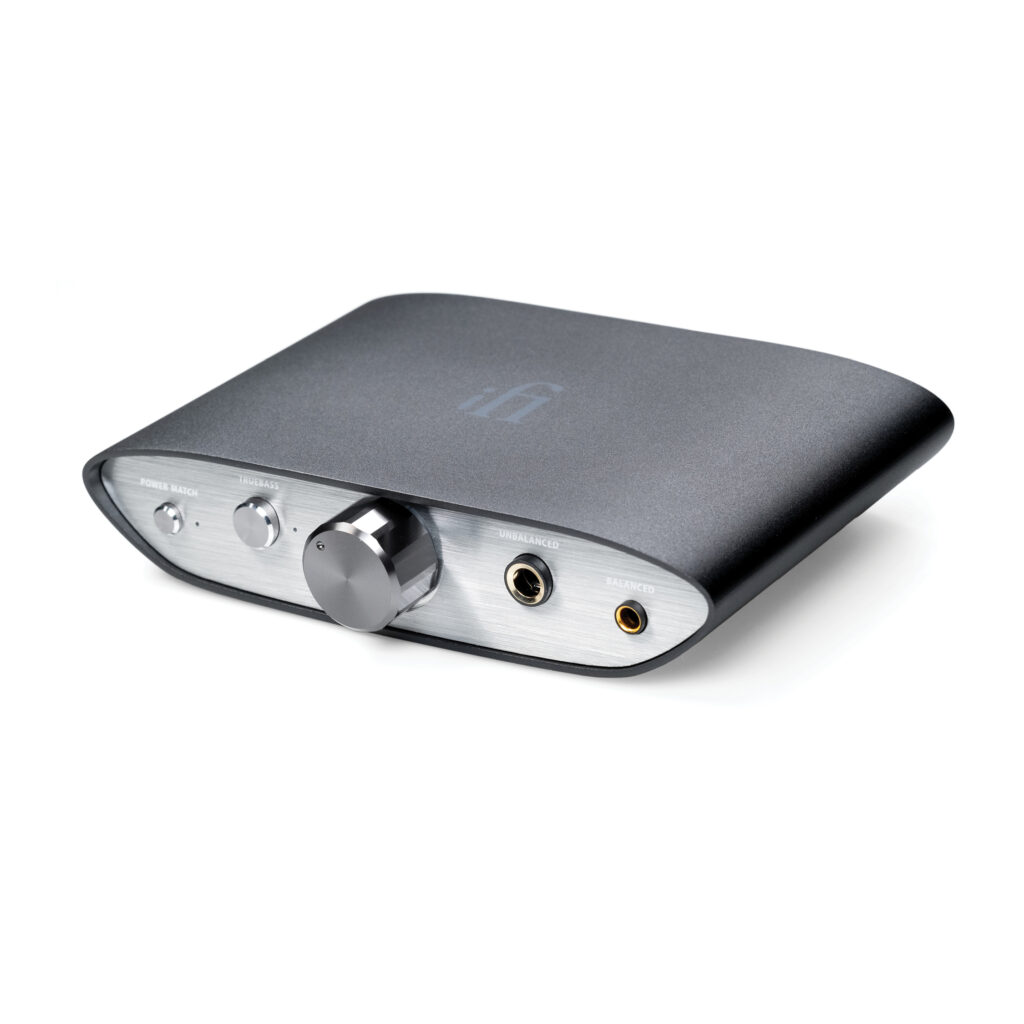
iFi ZEN DAC Signature V2 is a USB-only stereo DAC with fixed or variable line output. It shares a familiar ZEN shape, but it does not contain the headphone amplifier found in some other ZEN DAC models. This research-based review considers original measured evidence and the practical significance of its output modes. The important buying checks are source compatibility, exact V2 identity and an appropriate external amplifier or active-speaker arrangement, rather than assuming the front knob makes it a complete headphone system.
Research-based review. This assessment draws on manufacturer documentation and the original published evaluations linked below. Audio Review has not performed a hands-on test of this model.
Original measured evidence supports the conversion stage
Stereophile’s original measurements found strong performance from the Signature DAC and identified a desirable reduction in maximum variable output on the tested V2 compared with the original. The listening article evaluated a complete Signature system, so its observations should not all be attributed to this DAC alone. These are third-party findings, not Audio Review measurements.
Use that evidence to support an audition with the actual downstream equipment. Match playback level before judging detail, bass authority or apparent energy. A different line level can make a source seem more immediate even without establishing an improvement in conversion. Listen to quiet music as well as dense tracks, and check whether the system’s volume range is comfortable. A dedicated DAC can be useful because it provides a clean, predictable USB route rather than because every source must be transformed. The available evidence makes the V2 a credible component, with its value depending on the whole chain and the specific functions required.
Signature V2 is not the ordinary headphone-equipped ZEN DAC
The rear 4.4 mm socket is a balanced analogue line output for an appropriate amplifier or active-speaker connection. There is no headphone output on this model. The familiar case and central control are not proof of a built-in headphone amplifier.
Trace the intended system before buying a cable. Headphones require a suitable separate amplifier rather than direct connection to the line socket. Use correctly wired balanced interconnects for the destination; a 4.4 mm connector can have different roles on different products. Similarly, the RCA sockets are outputs, not analogue inputs. A buyer who wants a single-box laptop headphone accessory may be better served by a combined DAC/amp. The Signature V2 is more coherent when an amplifier already exists or when a separate stack is intentional. That distinction also makes price comparisons fair. Its cost should not be compared directly with a complete headphone unit without accounting for the additional amplification and interconnects needed to make music.
Fixed and variable modes require a clear volume-control plan
The rear switch determines whether the front analogue volume control is active. Fixed mode bypasses that control. Variable mode makes it part of the output path, which can suit a controlled active-speaker or power-amplifier arrangement.
Establish the intended volume control before playback and start conservatively. Do not expect the front knob to reduce level when the unit is set to fixed output. With an integrated amplifier, using its ordinary line input and volume control can be straightforward. A separate power amplifier requires an appropriate variable-source arrangement instead. Check behaviour after a mode change, power cycle or equipment replacement. Published maximum variable-output figures differ between documentation and the original V2 sample measurement, so do not assume that an original Signature or generic product-page voltage describes every V2. Verify the exact unit and supported configuration. Predictable level and comfortable adjustment matter more than choosing the highest number. A system used by several people should have a routine that remains understandable without examining the rear switch each time.
USB focus is a strength only when it fits the sources
USB Type-B is the audio input. There is no optical, coaxial or Bluetooth receiving route, and the unit does not operate as a native network streamer. A source elsewhere must provide the music and compatible USB audio.
Check the actual computer or player rather than assuming any USB socket outputs audio. A television’s media or service port may have another purpose, and a disc transport needs a supported USB-audio output rather than merely a USB connector. Follow official driver guidance for the intended computer and playback mode. Test normal application switching and return from sleep before relying on the unit every day. Format support should be checked against the exact firmware and source, not inferred from a similarly named ZEN model. There is no need to force a music library to the maximum rate just to justify ownership. The USB-only design can be elegant in a computer system, but restrictive if several digital transports need to share one converter.
Power and physical installation should remain simple
The official guide permits USB power or an appropriate external DC 5V supply. The compact case can sit neatly beside an amplifier, but the installation still includes data, analogue and power connections.
Confirm the accessories in the actual retail package, especially when buying used. Use a supply that follows the manufacturer’s electrical requirements rather than one selected only because the plug appears to fit. Start with a correct stable arrangement before treating optional power accessories as an automatic sound upgrade. Route cables so their weight does not pull the small case across the shelf, and allow sensible ventilation around a stacked amplifier. Check access to the rear mode switch and front control. A matched stack is attractive, but convenience depends on the whole system rather than matching logos. If the component is hidden away, remote operation is not available from the DAC itself. Decide whether source and downstream controls already make that limitation irrelevant.
The complete system sets the value
The V2 can be a useful upgrade to a USB source path in an existing amplified system. It has a narrower purpose than a multi-input DAC or combined headphone unit, which can either simplify ownership or create additional expense.
Compare current local offers with required amplification and cables included. Check exact V2 identity rather than relying on a photograph of the front alone. Test both intended outputs, mode switching and the useful adjustment range on a used example. A retailer’s old description should not override the actual rear panel and matching support documentation. Do not pay for a balanced connection that the destination cannot use correctly, or for specialist formats that the music routine never requires. The strongest value comes from a system that needs reliable USB conversion and the particular output-control arrangement. Positive evidence supports the component, while a clear role and complete installed price determine whether it is the most sensible purchase.
Alternatives to consider
iFi ZEN One Signature: Consider the different input arrangement if optical, coaxial or Bluetooth sources are required. Shared appearance does not make the two products functionally interchangeable.
Schiit Modius E: Compare another standalone conversion route with the actual amplifier. Include output control, source connections and current package cost rather than buying by DAC-chip preference.
iFi ZEN DAC Signature V2 key specifications
- Role
- USB stereo DAC and digital preamplifier
- Conversion
- Burr-Brown platform
- Audio input
- USB Type-B, USB 2.0 compatible
- Analogue outputs
- RCA and balanced 4.4 mm line output
- Output modes
- Fixed or variable; front control bypassed in fixed mode
- Manufacturer fixed levels
- Approximately 2.1 V RCA and 4.2 V balanced
- Format support
- Manufacturer lists PCM up to 384 kHz and DSD256; verify firmware-specific requirements
- Power
- USB or appropriate DC 5V supply
- Headphone amplifier
- Not included
- Size / weight
- Approximately 158 × 117 × 35 mm; 505 g
- Not provided
- Optical, coaxial, Bluetooth or native network input
Verdict
ZEN DAC Signature V2 is a credible research-based USB DAC with useful line-output control and positive original measured evidence. Confirm the version, external amplification and fixed or variable operating mode. Its appeal is strongest in a deliberate USB system, with no need to mistake a balanced line connection for headphones or assume additional digital inputs that are absent.
Documentation and original reviews
iFi official ZEN DAC Signature V2 product · iFi official V2 user guide · Stereophile original ZEN DAC Signature V2 measurements · Stereophile original Signature system evaluation and gain discussion
Editorial record
Sources and updates
Product specifications and factual claims were checked against Official iFi ZEN DAC Signature V2 product page ↗. Scores and buying advice follow our category-specific editorial methodology.
- Published
- November 17, 2026
- Last updated
- November 17, 2026