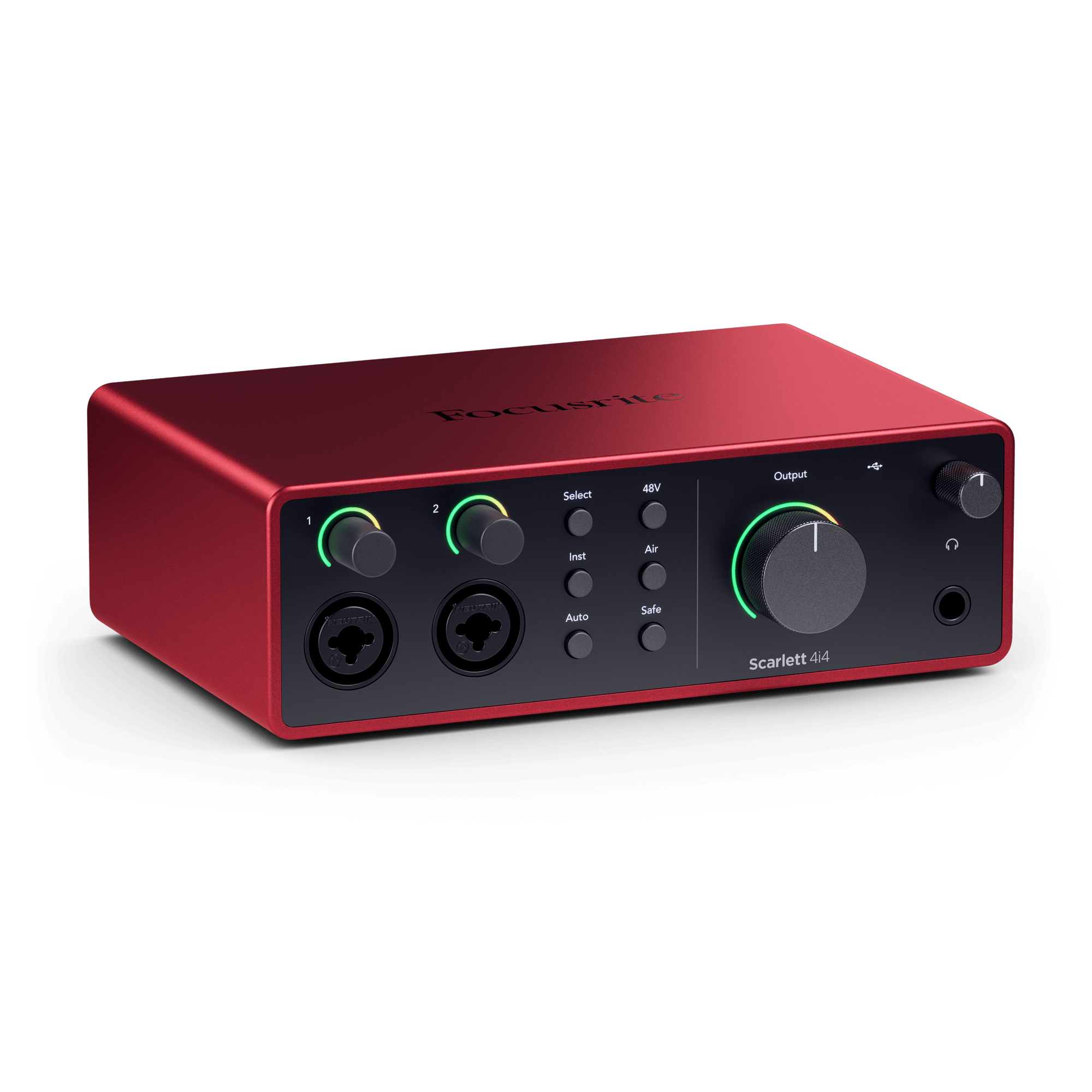
Research note: This is an independent, research-based assessment of the Focusrite Scarlett 4i4 4th Gen Review. It is structured around product documentation and the practical questions buyers should verify in their own system; it does not present unverified research as a personal hands-on listening test.
Focusrite Scarlett 4i4 4th Gen key specifications
- Interface type
- USB-C desktop audio interface
- Analog inputs
- 2 mic/line/instrument combo inputs plus 2 fixed line inputs
- Analog outputs
- 4 line outputs and 1 headphone output
- Resolution
- 24-bit / 192 kHz
- Microphone preamps
- 2 fourth-generation preamps with 69 dB gain range
- Microphone dynamic range
- 116 dB A-weighted
- Line-output dynamic range
- 120 dB A-weighted
- Air mode
- Presence and Harmonic Drive modes
- Level tools
- Auto Gain and Clip Safe
- MIDI
- 5-pin MIDI input and output
- Loopback
- Two loopback inputs
- Dimensions
- 60 × 180 × 130 mm
- Weight
- 798 g
View the official Focusrite Scarlett 4i4 4th Gen product page
Design and daily use
A well-considered design should make the Focusrite Scarlett 4i4 4th Gen Review easy to live with over months, not merely attractive in a product photograph. Control layout, build confidence, access to the main functions and the effort required for setup all shape ownership. Buyers should think about available space, cable routing, heat, charging or maintenance needs, and whether the interface remains clear when the product is used quickly rather than explored at leisure.
Sound and performance
The important performance questions are clean gain, dependable monitoring, sensible control placement and stable low-latency operation. A proper review should test microphone, instrument and line-level work rather than assuming that one connection or one sample rate tells the full story.
Features and connectivity
The feature set matters only when it supports the workflow. Front-panel access, direct monitoring, metering, loopback, bus power and software integration are more valuable when they reduce friction during recording or calls. Confirm drivers and bundled applications for the exact operating system.
Setup and system matching
For an audio interface, test it with the actual computer, operating system, microphones, instruments and monitor speakers used every day. Driver behaviour, buffer stability, gain range and control layout often have more impact than a single laboratory specification.
Strengths
- A focused proposition for the right listener or workflow
- Potential to simplify the intended audio system
- Practical value depends on matching it carefully to existing equipment
- A structured evaluation makes comparison with alternatives easier
Limitations to consider
- The best result depends on setup, source material and surrounding equipment
- Some advertised features may vary by version, region or software update
- A personal hands-on test remains important before assigning a final long-term score
- Value should be compared against alternatives that solve the same specific need
Who should buy it?
Consider the Focusrite Scarlett 4i4 4th Gen Review if its approach matches your actual listening or production habits and you can confirm compatibility with the rest of your system. It makes less sense as an impulse purchase based only on a feature list. Buyers with different room sizes, sources, comfort needs or upgrade plans should compare the alternatives with the same practical criteria.
Alternatives to consider
Compare direct alternatives in the same category, price range and use case rather than comparing unrelated audio products. The most useful comparison is the one that asks which option works best with your sources, room, headphones or speakers, and which will remain easiest to use after the initial setup.
Verdict
The Focusrite Scarlett 4i4 4th Gen Review has a clear place when its design, connectivity and intended use match the system around it. A final verdict should be confirmed through documented hands-on use, with the complete setup and listening conditions stated clearly. Until then, this research-based format provides a consistent basis for comparison without overstating what has been personally tested.
Editorial record
Sources and updates
Product specifications and factual claims were checked against Official Focusrite Scarlett 4i4 4th Gen product page ↗. Scores and buying advice follow our category-specific editorial methodology.
- Published
- July 15, 2026
- Last updated
- July 25, 2026
Compare before choosing
Two strong alternatives from the same audio interfaces category.