Research note: This is an independent, research-based assessment built from official specifications and product documentation. We have not claimed a hands-on laboratory test.
Focusrite Scarlett 2i2 4th Gen key specifications
- Interface type
- USB-C desktop audio interface
- Inputs
- 2 microphone/line/instrument inputs
- Outputs
- 2 balanced line outputs and 1 headphone output
- Resolution
- 24-bit / 192 kHz
- Microphone preamps
- 2 fourth-generation preamps with up to 69 dB gain
- Microphone dynamic range
- 116 dB A-weighted
- Air mode
- Presence and Harmonic Drive modes
- Level tools
- Auto Gain and Clip Safe
- Instrument input impedance
- 1 Mohm
- Line-output dynamic range
- 120 dB
- Loopback
- Yes
- Power
- USB bus powered (900 mA)
- Dimensions
- 47.5 × 180 × 117 mm
View the official Focusrite Scarlett 2i2 4th Gen product page
Two-channel input design
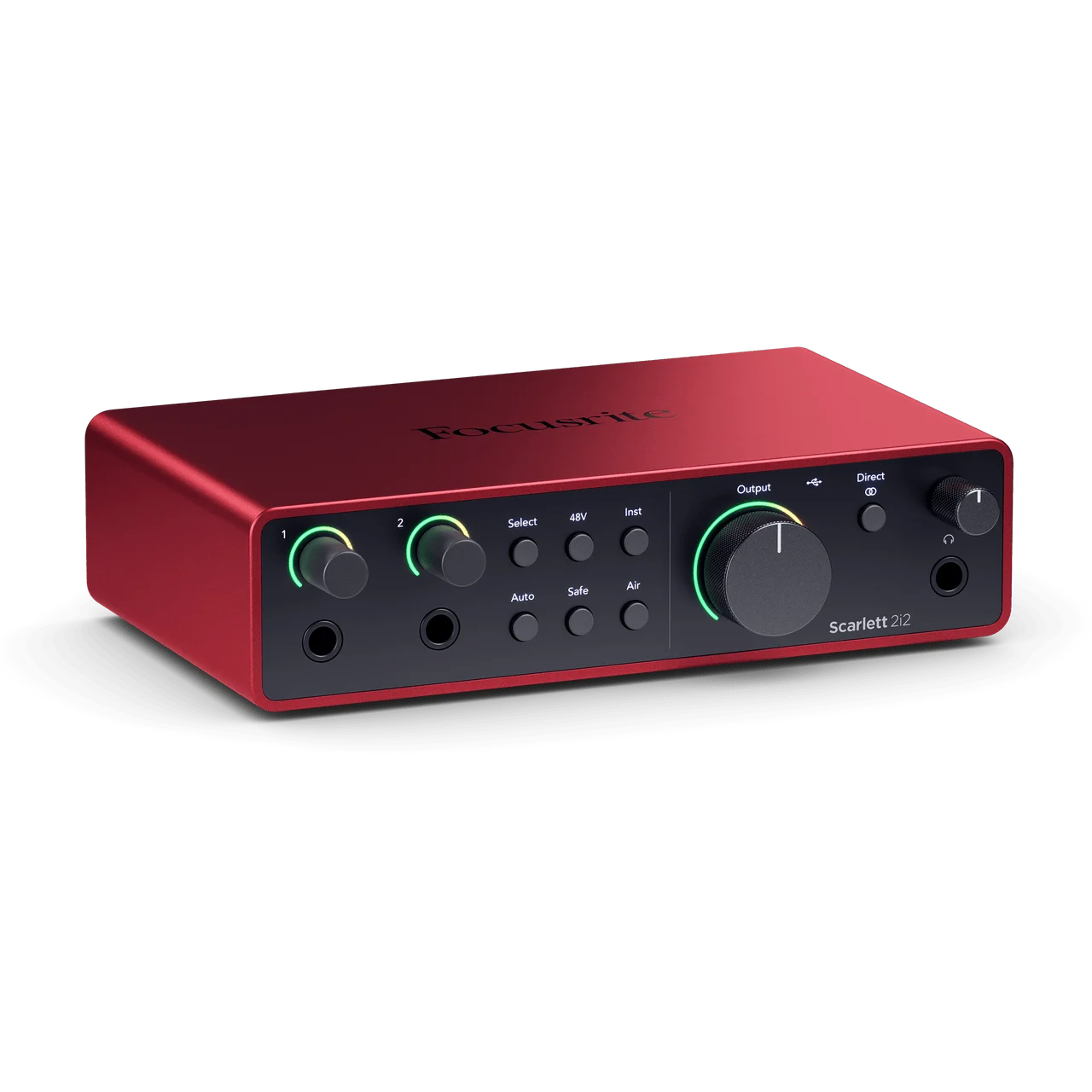
The rear XLR sockets handle microphones and the front 6.35 mm jacks accept line or instruments. Despite four physical connectors, only two analog sources can be recorded at once; inserting a front jack replaces the corresponding rear mic input. This layout keeps cables organized but must not be mistaken for a four-input interface.
Preamps, Auto Gain and Clip Safe
Each preamp offers up to 69 dB of gain, enough for many low-output dynamic microphones without a booster. Auto Gain listens to a performance and sets a starting level, while Clip Safe monitors and reduces gain before overload. These tools reduce setup stress but do not replace microphone technique or sensible monitoring.
Air modes and conversion
Air Presence changes the input response for added clarity, while Presence plus Harmonic Drive adds saturation characteristics. The interface records at up to 24-bit/192 kHz and Focusrite specifies strong dynamic range for its class. Higher sample rates increase storage and CPU use without automatically improving every production.
Monitoring and outputs
Two balanced rear TRS outputs feed studio monitors, with a large front volume control and visible output metering. The independent headphone control is convenient, though the 50-ohm specified headphone output impedance is higher than ideal for some low-impedance multi-driver IEMs. Direct monitoring supports low-latency recording.
Loopback, software and control
Loopback provides two virtual channels for computer audio, useful for streaming, podcasts and sampling. Focusrite Control 2 manages preamps and routing from desktop software, and the included software bundle helps new users begin recording. Mobile and standalone behavior should be checked against supported devices and power requirements.
Who the channel count suits
Two simultaneous inputs are ideal for vocal plus guitar, a stereo keyboard, two microphones or a podcast conversation. Drum kits, full bands and multi-mic sessions need more inputs. MIDI DIN is also absent, so older hardware controllers require a separate MIDI interface or USB connection. For stereo work, the two channels are well matched to acoustic guitar, piano, synths and interview recording. Expanding later generally means replacing the interface rather than adding analog channels, because there is no ADAT input. Buyers who anticipate drums or ensembles should purchase enough inputs at the beginning.
Who should buy it?
Buy Scarlett 2i2 4th Gen for solo music, voice work, stereo sources and two-person recording when simple gain setting and mature software matter. Choose a 4i4, 8i6-class interface or larger if you need more simultaneous inputs, MIDI DIN or multiple headphone mixes.
Alternatives to consider
Focusrite Scarlett Solo lowers cost for one-source recording; Scarlett 4i4 adds more routing and MIDI. Audient iD4 MkII emphasizes preamp and monitor quality, while SSL 2+ adds MIDI and a second headphone output. Universal Audio Volt 2 offers a simpler vintage mode.
Verdict
Scarlett 2i2 4th Gen is an excellent creator-focused interface because Auto Gain, Clip Safe, 69 dB preamps, loopback and clear hardware reduce friction without hiding fundamentals. The two-channel limit is firm despite four sockets, and headphone matching deserves attention, but the overall package remains a safe recommendation.
Primary source
Focusrite Scarlett 2i2 4th Generation official product page
Editorial record
Sources and updates
Product specifications and factual claims were checked against Official Focusrite Scarlett 2i2 4th Gen product page ↗. Scores and buying advice follow our category-specific editorial methodology.
- Published
- June 24, 2026
- Last updated
- July 25, 2026
Compare before choosing
Two strong alternatives from the same audio interfaces category.