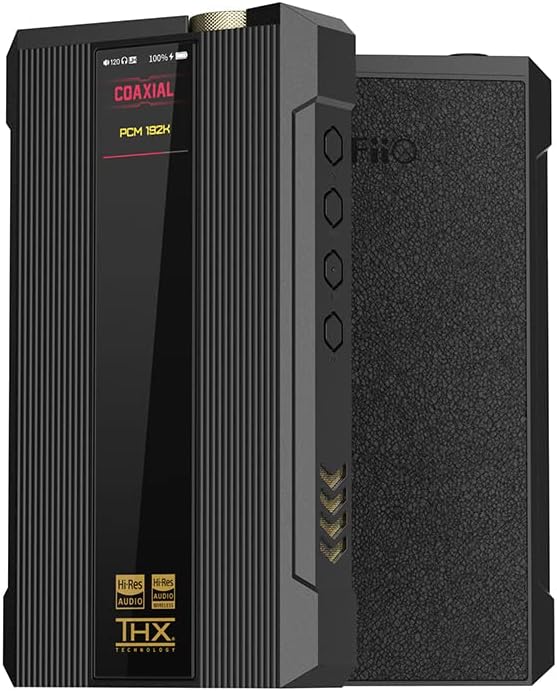
FiiO Q7 sits between a portable headphone amplifier and a small desktop system. It combines an internal battery with an external DC mode, several digital inputs, Bluetooth reception and a wide range of headphone sockets. At approximately 620 grams, it is better understood as transportable than as a lightweight phone accessory. The appeal is bringing a flexible, powerful headphone setup to another room or destination without committing to a full stack of separate components.
Research-based review. This assessment draws on manufacturer documentation and the original published evaluations linked below. Audio Review has not performed a hands-on test of this model.
A DAC and amplifier, not an independent music player
The Q7 needs a source. It does not provide local music storage or a self-contained streaming interface merely because it resembles a substantial portable player. A phone, computer or other compatible digital source supplies the content through one of the supported inputs.
That distinction helps define the real travelling package. Include the source, cables, headphones and any charging or DC equipment in the bag, rather than judging portability from the Q7 alone. For hotel or second-room use, that arrangement may be sensible. For walking with a phone, the size and extra object may be a burden. Decide where the system will be placed and how it will be controlled before treating a large battery-powered unit as interchangeable with a tiny dongle.
Power modes create different operating arrangements
The documented balanced output rises from the battery mode to the enhanced DC-powered mode, with the quoted maximum specified into a particular load. The highest figure is not available in every output, gain setting or power arrangement. It should not be interpreted as a guarantee that every headphone needs or benefits from the maximum setting.
Choose a gain and connection that provide clean playback with a useful volume range. A sensitive earphone and a demanding full-size headphone present different tasks. If the unit will spend most of its life on a desk with the external supply and cooling stand, compare a dedicated desktop alternative too. The Q7 earns its flexibility when the ability to move between battery operation and a more elaborate fixed arrangement is actually used, rather than when its largest number is the only reason for buying.
Original listening evidence and matching qualifications
Headfonics finds an energetic, broadly natural-to-neutral presentation and strong headphone drive, with some softness relative to the more expensive M17 in direct comparisons. Its tests also identify output-impedance considerations with especially sensitive balanced-armature IEMs. These are pairing observations, not evidence that every earphone will change in the same way.
Try the intended headphones at a matched listening level against a suitable alternative. Listen to quiet passages for noise and assess whether volume adjustment is comfortable near the bottom of the range. More available power is not a substitute for a good match with a sensitive load. If the existing source already supplies adequate clean level, look for practical gains in inputs and controls rather than assuming an automatic transformation in musical detail. The complete headphone and source chain remains the relevant comparison.
Inputs and sample rates should not be conflated
The USB, coaxial and optical inputs have different documented format ceilings. The most ambitious USB number is not the capability of the optical socket. Likewise, Bluetooth uses a negotiated codec with a compatible sending device; it does not turn every wireless stream into the same signal as USB.
Choose the input that fits the source and intended routine. For a television or disc transport, check that the actual digital output format is supported. For a computer, confirm the selected audio output and required driver arrangement rather than merely seeing the Q7 connected. Extreme sample-rate support can be useful for a particular file collection, but it does not establish the quality of ordinary music playback. A stable connection to the content you own matters more than a maximum format that never appears in normal use.
Phone compatibility and wireless convenience
The original Headfonics test reports successful operation with several sources but also trouble with particular phone USB connections. Its supplied short cable was directional, another detail that affected successful setup. These are reasons to check the exact source arrangement rather than assume every modern phone behaves identically.
If choosing Bluetooth for convenience, confirm the actual codec and assess delay in any video or game application. A good music connection does not establish perfect synchronisation in every workflow. Keep the wired route available if it better fits a particular source. The Q7’s range of inputs is useful because it offers choices, not because one mode is automatically best for every task. A short practical trial during the return period can settle more than several additional specification comparisons.
Controls, line mode and sensible everyday use
The knob and display provide access to volume and operating settings. Some headphone sockets also serve configured line-output roles, so confirm the selected mode and destination before connecting another component. A fixed-level line setting should not be confused with normal adjustable headphone listening.
Begin at a low level when changing headphones or moving between modes. Arrange the unit and cables so that a heavy headphone lead cannot pull it from a small table. For sustained higher-output desktop use, follow the intended supply and cooling arrangement. Battery endurance also depends on the output, gain, screen and programme conditions; the manufacturer’s separate test cases are more useful than one unconditional duration. Include the age and condition of the battery when assessing a used example. A transportable device should remain manageable through its ordinary daily steps, not only impress during a short demonstration.
Alternatives to consider
Chord Mojo 2: Mojo 2 is a useful comparison when sound adjustment and a different portable arrangement matter more than the Q7 connector and input selection. Compare the real headphone and source setup, including any wireless additions required.
iFi iDSD Diablo 2: Diablo 2 is another ambitious transportable approach. Include accessories, power modes, headphone cables and the expected use away from a socket before deciding which complete system better meets the need.
FiiO Q7 key specifications
- Role
- DAC and headphone amplifier, not a self-contained player
- DAC
- ESS ES9038PRO
- Amplification
- THX AAA 788+
- Inputs
- USB-C, optical Toslink, coaxial and Bluetooth
- Headphone outputs
- 3.5 mm / 6.35 mm single-ended, 2.5 mm / 4.4 mm balanced
- Line outputs
- Configurable, shared with 3.5 mm and 4.4 mm sockets
- Balanced power claim
- Up to 1.5 W per channel at 32 ohms in battery mode
- DC balanced power claim
- Up to 3 W per channel at 32 ohms in enhanced mode
- USB PCM / DSD
- Up to 32-bit / 768 kHz and native DSD512
- Coaxial / optical PCM
- Up to 24-bit / 192 kHz and 24-bit / 96 kHz respectively
- Battery
- 9200 mAh
- Weight
- Approximately 620 g
Verdict
Q7 is a persuasive transportable hub for a listener who needs several inputs, substantial headphone output and the option to move between battery and DC use. Original testing supports its capable performance while making source matching and sensitive-IEM checks worthwhile.
Accept the bulk, plan the complete travelling arrangement and compare a fixed desktop unit if mobility will rarely be used. With the right headphones and a verified source connection, the Q7 can replace a more fragmented setup. For a simple phone-and-earphone routine, its weight and complexity may add more equipment than the task requires.
Documentation and original reviews
FiiO official Q7 features and power arrangements · FiiO official Q7 connection, power and battery-condition specifications · Headfonics original Q7 hardware and usability evaluation · Headfonics original Q7 listening, headphone and source-matching tests
Editorial record
Sources and updates
Product specifications and factual claims were checked against Official FiiO Q7 product page ↗. Scores and buying advice follow our category-specific editorial methodology.
- Published
- November 17, 2026
- Last updated
- November 17, 2026