Research note: This is an independent, research-based assessment built from official specifications and product documentation. We have not claimed a hands-on laboratory test.
Chord Mojo 2 key specifications
- Model
- Chord Mojo 2
- Product type
- Portable headphone DAC and amplifier
- Digital inputs
- USB-C, Micro USB, optical TOSLink and coaxial / dual-data coaxial via 3.5 mm input
- Headphone outputs
- Two 3.5 mm headphone outputs
- Digital filter
- 40,960-tap WTA digital filter
- Battery life
- Approximately 8 hours
- Operating voltage
- 5 V DC
- Charging current
- 2 A
- Output power
- 600 mW at 1 kHz / 30 Ω
- Output power
- 90 mW at 1 kHz / 300 Ω
- Output impedance
- 0.06 Ω
- Dynamic range
- 125 dB
- THD
- 0.0003% at 2.5 V / 300 Ω
- Compatibility
- Works with the optional Chord Poly wireless streamer / server
- Dimensions
- 83 × 62 × 22.9 mm
- Weight
- 185 g
DAC architecture and formats
Chord uses proprietary FPGA code rather than an off-the-shelf DAC chip, with WTA filtering and a noise-shaping stage. Four-band UHD DSP tone controls and crossfeed operate in the digital domain without conventional EQ implementation. Format ceilings are compatibility limits rather than automatic proof of sound quality. Implementation, output stage, clocking and noise performance matter more than playing the largest sample-rate number.
Headphone amplification and matching
The low 0.06-ohm output impedance and specified 600 mW into 30 ohms cover many portable and full-size headphones. Two outputs can play simultaneously, but volume safety requires care when sharing headphones with different sensitivities. Power needs depend on headphone sensitivity, impedance and listening level. Low output impedance benefits most modern headphones, while gain settings help balance sensitive IEM noise against demanding full-size models.
Digital inputs and source use
USB-C and Micro-USB support high-rate computer/mobile audio, optical handles up to 96 kHz and coaxial reaches higher rates. Wireless playback requires the separately sold Poly module or a separate Bluetooth source. Buyers should confirm the exact connector required by a phone, computer, console or CD transport. USB class support and mobile power draw can affect convenience even when nominal formats match.
Line outputs and system integration
The 3.5 mm and newer 4.4 mm sockets are headphone outputs; Mojo 2 can also operate at line-level for a hi-fi system. It does not provide RCA or XLR connectors without adapters. Fixed line mode suits an integrated amplifier, while variable mode lets the unit act as a preamp for powered speakers or a power amplifier. Balanced connectors do not automatically improve every short desktop setup, but can help compatible systems.
Controls, display and daily operation
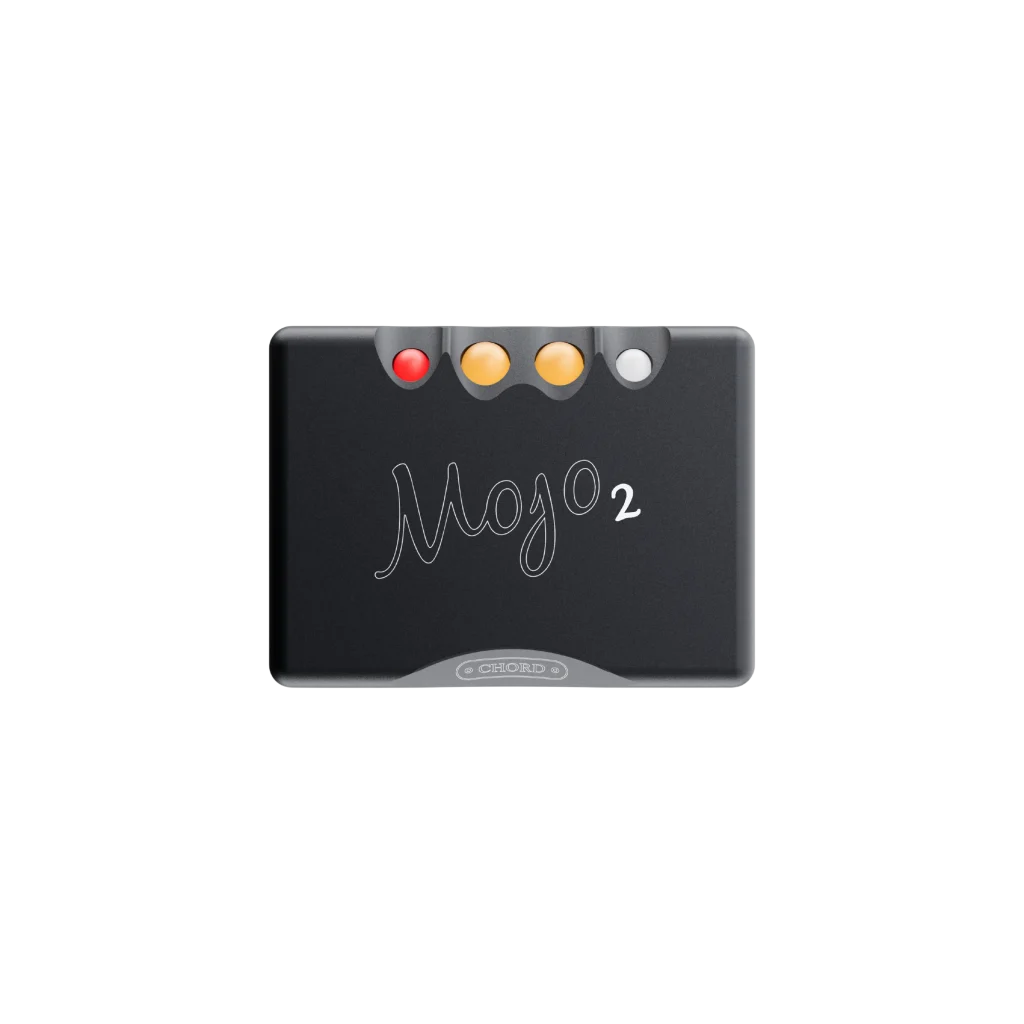
Illuminated spherical buttons encode sample rate, volume and menus through color. The system is compact and distinctive but takes learning. Battery management and switchable USB-C charging improve desktop and mobile use. Good hardware should remember gain and volume safely, make input changes obvious and avoid accidental high levels. Desktop ergonomics often matter more over years of use than small differences in published distortion.
Value and trade-offs
Mojo 2 costs far more than mass-market portable DACs, paying for custom FPGA engineering, UK manufacture and sophisticated DSP. Buyers who need Bluetooth or a conventional screen may prefer cheaper, easier products. The correct alternative depends on whether portability, streaming, balanced power, analog inputs or a remote is the priority. A device can measure well yet be wrong for the workflow if it omits one essential connection.
Who should buy it?
Buy Mojo 2 if portable wired sound quality, strong headphone drive and precise tone controls matter more than wireless convenience. It suits premium headphones and mixed mobile/desktop use. Casual phone listeners may find dongle DACs more practical.
Alternatives to consider
iFi hip-dac 3 adds simpler balanced portable use and lower cost; FiiO Q15 offers display and Bluetooth. Chord Hugo 2 is the larger step up, while desktop users can compare RME ADI-2 DAC for deeper controls.
Verdict
Chord Mojo 2 remains a uniquely capable portable DAC/amp. Its FPGA conversion, lossless tone control, crossfeed, strong output and multiple digital inputs justify serious attention. Colored-button ergonomics and no built-in wireless keep it specialized rather than universally convenient.
Primary source
Chord Mojo 2 official product page
Editorial record
Sources and updates
Product specifications and factual claims were checked against Official Chord Mojo 2 product page ↗. Scores and buying advice follow our category-specific editorial methodology.
- Published
- July 1, 2026
- Last updated
- July 25, 2026
Compare before choosing
Two strong alternatives from the same dacs & headphone amps category.