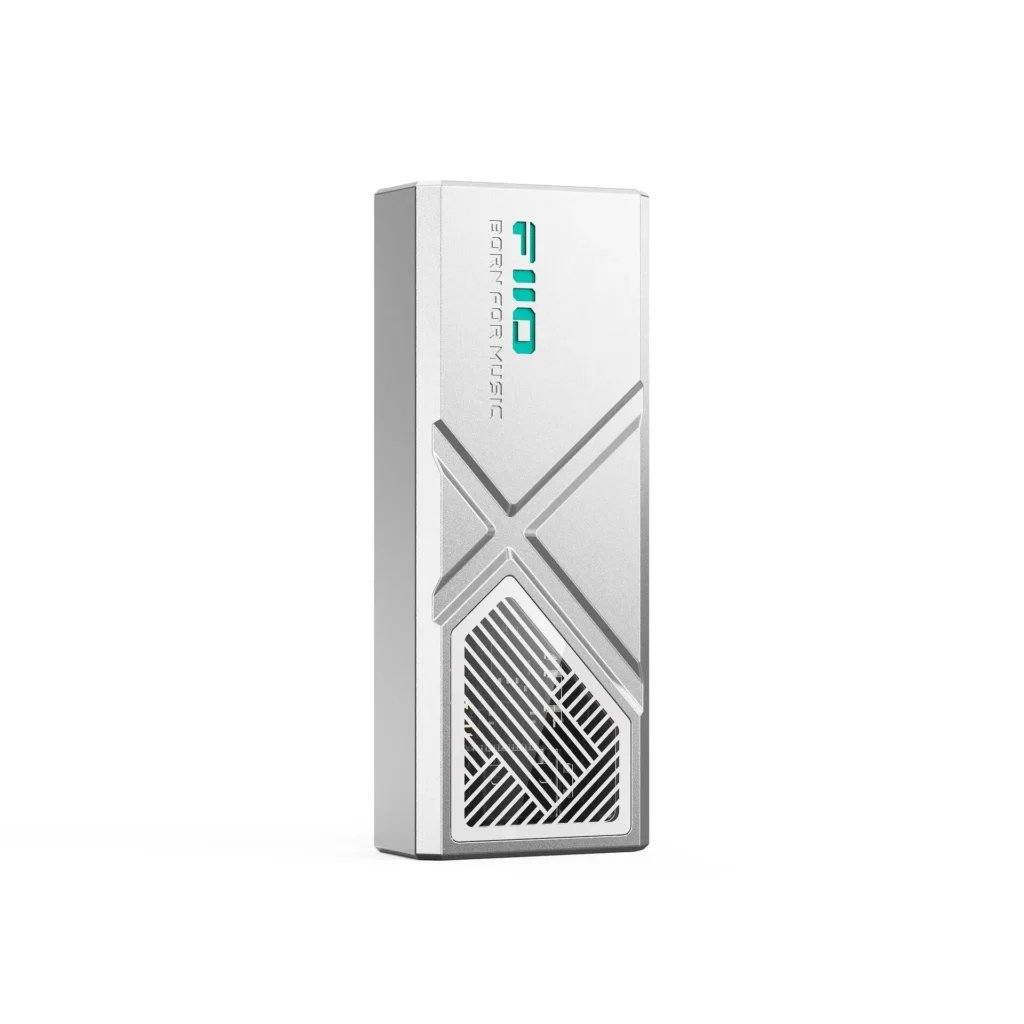
FiiO KA13 is a compact USB DAC and headphone amplifier whose main attraction is unusually substantial documented output from an affordable dongle. It offers both single-ended and balanced headphone sockets, a detachable USB cable and a higher-power desktop mode. It is still powered by the source, so the useful output cannot be separated from the phone or computer supplying it. The original listening assessment is favourable for music, with a specific compatibility reservation about some PC audio situations.
Research-based review. This assessment draws on manufacturer documentation and the original published evaluations linked below. Audio Review has not performed a hands-on test of this model.
Powerful for its size, with conditions attached
FiiO publishes different output figures for each socket, load and desktop-mode setting. The larger balanced figure is not the output available from the single-ended socket, and neither figure establishes the result with every possible headphone. Use the relevant row rather than treating a headline wattage as a universal capability.
The practical question is whether the chosen headphone reaches a comfortable level cleanly with useful adjustment range. Sensitive earphones may need very little of the available output. A demanding headphone can require more voltage or current than a casual impedance comparison suggests. Start with the lower-power arrangement where appropriate and increase capability only if the actual combination needs it. Buying headroom can be sensible, but running the highest mode by default is not a requirement for better sound.
What the original music assessment supports
Headfonics describes a broadly linear, energetic presentation with a little warmth and quiet operation in its music tests. It also reports instability with some PC game and multi-track soundtrack situations, despite ordinary music playback working well. That observation should remain a qualified report about the tested setup, rather than a claim that every computer will fail.
Compare with a familiar competent output at similar listening level. If the existing source already drives the headphones cleanly, do not assume a dramatic change simply because the KA13 contains two DAC chips. Useful improvements can instead be a suitable connector, more headroom or convenient hardware control. For a gaming-led purchase, test the actual title and audio path during the return period. The relevant outcome is dependable operation in the intended system, not only successful playback of one music file.
USB host power is part of the system
The KA13 has no internal battery. FiiO’s mobile guidance specifically notes possible high-output limitations with some iPhone arrangements, alongside general differences between phones and players. The source must provide data and adequate power through a suitable connection.
Check the correct cable and host capability before assuming that a physically matching USB plug is enough. A cable intended only for charging will not establish the audio data path. Higher output also has a cost in host energy and possible warmth. For long portable sessions, weigh that demand against the convenience of the smaller device. If the main use is permanently at a desk, a powered desktop unit may be a more comfortable arrangement than asking a phone to support sustained high-power playback.
Choose the correct headphone socket and cable
The 4.4 mm balanced socket requires a correctly wired compatible headphone cable. It is not a universal upgrade route for a headphone whose cable remains wired for a common-ground single-ended output. Use an appropriate cable intended for the headphone and amplifier arrangement.
Do not make the balanced connector the buying objective by itself. If the existing 3.5 mm arrangement supplies enough clean level, changing cables may add expense without solving a real problem. For multiple headphones, label cables clearly and turn the volume down before changing connections. A small dongle can sit close to the listener, so accidental cable strain and abrupt reconnection are worth avoiding. Connector choice should make the system easier to use safely and predictably, not turn a simple listening setup into an adapter chain.
Android configuration and the shared digital socket
FiiO’s guidance limits KA13 control through the companion app to Android, while noting that saved settings can be retained. Ordinary USB audio compatibility and app configuration are separate matters. An iPhone connection should not be described as offering the same application controls simply because the device can play music.
The 3.5 mm socket can also serve as SPDIF output when configured appropriately, with the required connection to an external decoder. It is a shared function, not a separate permanent line output. Check the mode before connecting headphones or another component. If the intention is simply listening from a phone, leave unnecessary settings alone. The additional digital role is useful for a particular system requirement, but it should not complicate the normal headphone routine.
Daily handling and value against a desktop alternative
The compact body and detachable USB cable make the KA13 easy to move between compatible sources. That portability still leaves two cables and a powered object hanging from or resting beside a phone. Arrange the device so its weight does not repeatedly pull against the source socket.
At a desk, consider where the volume controls sit and whether the cable reaches comfortably. On the move, compare the real pocket arrangement with a smaller adapter or battery-powered alternative. Look at the complete cost, including any balanced headphone cable or source adapter required. The KA13 value is strongest when its extra output and connections are actually needed. A cheaper simple adapter can be the better fit for an easy-to-drive earphone, while a powered desktop amplifier may be preferable for a fixed demanding-headphone setup.
Alternatives to consider
FiiO KA17: KA17 is worth comparing when a higher budget and a more elaborate portable arrangement are acceptable. Identify the control and power features you need before assuming an upgrade is necessary for a sensitive earphone.
iFi GO link: GO link offers a simpler small-adapter approach. Compare the required headphone connection and available level with your actual headphones rather than paying for a balanced output that will remain unused.
FiiO KA13 key specifications
- Role
- USB DAC and headphone amplifier
- DAC architecture
- Two CS43131 chips
- USB input
- USB-C
- Headphone outputs
- 3.5 mm single-ended and 4.4 mm balanced
- Balanced output claim
- Over 550 mW per channel at 32 ohms, desktop mode
- Single-ended output claim
- Over 170 mW per channel at 32 ohms, desktop mode
- PCM support
- Up to 32-bit / 384 kHz
- Native DSD support
- Up to DSD256
- Digital output
- SPDIF shared with 3.5 mm socket
- Battery
- None; USB host powered
- App configuration
- Android FiiO Control
- Weight
- Approximately 19 g
Verdict
KA13 is an appealing budget route to a flexible wired headphone output, particularly when the balanced connection and additional headroom serve an identified need. Its original music assessment is positive, and its practical limitations are understandable.
Verify host power, the actual app-control platform and the intended computer or phone workflow. Treat the published high-output figure as a mode-and-load-specific specification, not a guarantee for every headphone. When those checks line up, the KA13 can be strong value. When only a basic 3.5 mm output is required, a simpler device may make the system easier to live with.
Documentation and original reviews
FiiO official KA13 specifications and output-condition tables · FiiO official KA13 mobile-source compatibility guidance · FiiO official KA13 Android app-control limitations · Headfonics original KA13 listening and usability evaluation
Editorial record
Sources and updates
Product specifications and factual claims were checked against Official FiiO KA13 product page ↗. Scores and buying advice follow our category-specific editorial methodology.
- Published
- November 17, 2026
- Last updated
- November 17, 2026