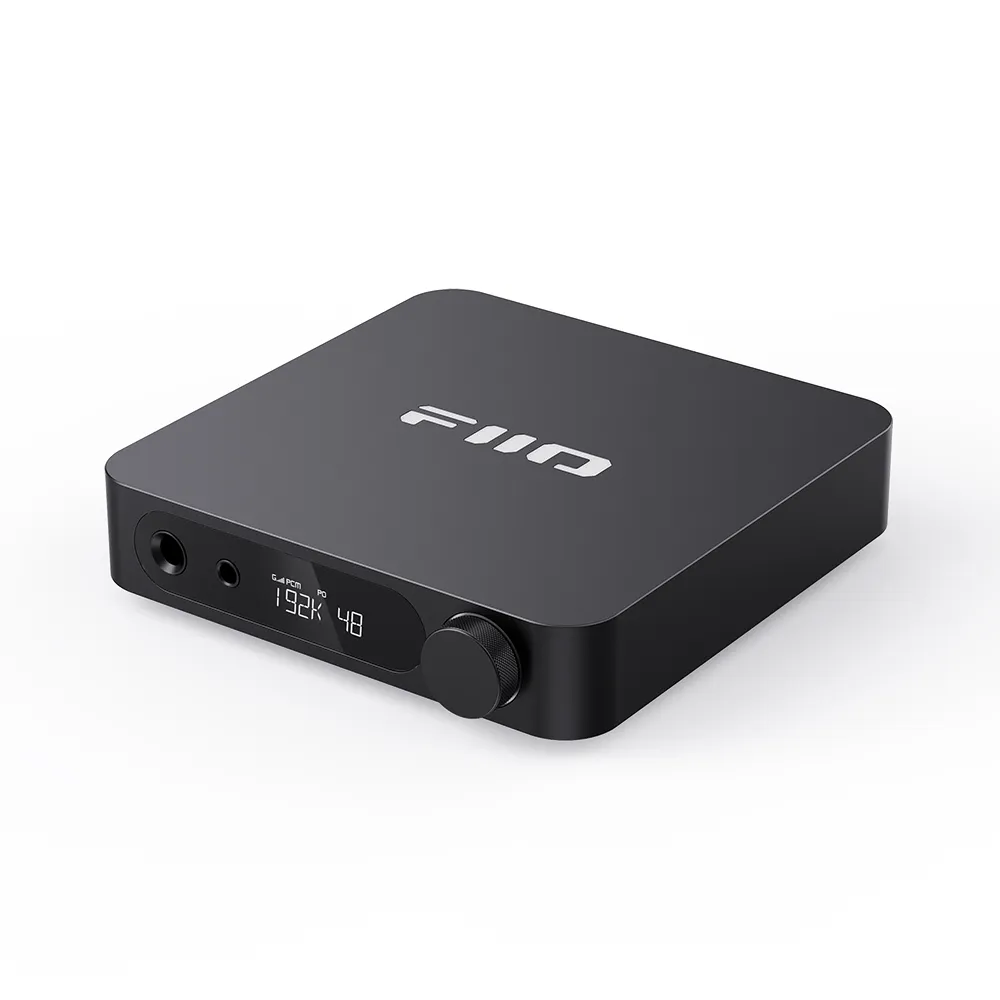
FiiO K11 is a compact desktop DAC and headphone amplifier built around useful wired connections and a physical level control. It is the original CS43198 version, not the separately reviewed K11 R2R. Its purpose is straightforward: bring digital sources and a pair of wired headphones together without a large equipment stack. The strongest upgrade argument is a missing connection, inconvenient control or inadequate existing output, rather than the belief that every external DAC must transform the music.
Research-based review. This assessment draws on manufacturer documentation and the original independent evaluations linked below. Audio Review has not performed a hands-on test of this model.
A small hub with clearly defined inputs
FiiO lists USB-C, optical and coaxial digital inputs, a stereo RCA output and front headphone sockets. The coaxial socket can also provide a digital output in USB mode. There is no analogue input or Bluetooth receiver. The external twelve-volt supply powers the unit; it is not a battery product or a simple USB-powered dongle.
Make a source list before buying. A computer, compatible television optical output and CD transport are plausible digital roles, while a turntable or analogue player needs a different input path. The RCA sockets are outputs, so their familiar shape is not permission to feed an analogue source into them. Drawing the path from source to destination can prevent buying an attractive desktop box that lacks the one function the system actually needs.
Sound quality and the upgrade claim
Headfonics’ original evaluation is positive about the K11’s clean, relatively neutral presentation and useful headphone headroom at the price. SoundGuys’ summary also highlights clean output, while being more critical of the menu experience and lightweight handling. Neither account establishes that every competent existing output will produce a dramatic audible improvement when replaced.
Our recommendation is strongest when the K11 solves a practical limitation. If a laptop socket is noisy, lacks useful level or is awkward to reach, a dedicated desktop control can be worthwhile. If the present output is already quiet and comfortable, compare carefully before expecting a new tonal personality. Use similar perceived level, the same headphone and familiar material. A louder setting can sound immediately more impressive without demonstrating better conversion or amplification.
Headphone sockets and power in context
The single-ended 6.35 mm and balanced 4.4 mm outputs offer different electrical capabilities. FiiO publishes output figures at specified loads and distortion thresholds, so a maximum quoted at thirty-two ohms should not be transferred unchanged to another headphone. Sensitivity and the desired listening level matter alongside impedance.
Start with low gain and increase only when necessary for a useful volume range. Sensitive earphones may be more demanding of quiet low-level control than a large headline wattage. A headphone must be correctly wired for a balanced output; a passive adapter does not convert any common-ground lead into a suitable balanced connection. Choose the socket and gain for an identifiable requirement. A more elaborate connection is not an automatic musical upgrade if the simpler output already works cleanly.
RCA output and powered speakers
The RCA output can be useful for a powered-speaker or amplifier arrangement, but check the chosen output mode before playing audio. A fixed line level and a variable preamplifier-style level serve different roles. The destination should have an appropriate volume control if receiving a fixed signal.
Begin with levels low and confirm whether the front knob controls the output you are using. Do not assume headphone and line settings behave identically merely because they share one enclosure. The K11 does not include a loudspeaker power amplifier, so passive speakers cannot be driven directly from its RCA sockets. This is a small signal hub; the speaker system still needs its own amplification. Getting those roles right is more useful than adding another box without a clear place in the chain.
Resolution limits and television use
The official parameter table gives different maximum formats for USB, optical and coaxial. USB supports the highest advertised file rates; optical is specified up to PCM 24-bit/96 kHz and coaxial up to PCM 24-bit/192 kHz. These input limits should not be merged into one universal number across every socket.
For television optical use, confirm the television can send a supported stereo PCM signal. A DAC’s optical input does not imply Dolby or DTS decoding, and the K11 has no HDMI eARC input. For a computer, choose the intended audio device and an appropriate USB mode before investigating a missing signal. High file-rate support is compatibility information, not evidence that ordinary recordings must be upsampled or replaced to enjoy the system.
Knob menus and the daily desk
One encoder handles volume and several menu functions. Spend a few minutes learning source selection, output mode and gain before connecting a sensitive headphone. The display can make status clearer than an unlabelled small dongle, while configurable lighting should be judged as a convenience rather than an audio-performance feature.
Check the cable routing and available space around the sockets. A compact lightweight unit can move when a stiff cable pulls against it, so keep the power and signal leads from hanging under tension. The best desktop arrangement gives easy access to the knob without cluttering the keyboard area. If you switch sources repeatedly, try that sequence during a demonstration. A capable DAC becomes less convenient when the menu procedure you use every day feels awkward.
Value against the R2R and larger alternatives
The K11 offers a coherent connection set at an accessible level, but the correct comparison depends on what is missing from the present system. A buyer who needs an analogue input or wireless reception should compare a different product, not plan around an input the K11 does not have.
Compare K11 R2R as a separate design and K7 for a different desktop package, using the actual local prices and included power accessories. Avoid paying extra to solve a hypothetical headphone requirement you may never have. Equally, spending slightly more can be sensible when it avoids an inconvenient workaround in the setup you own now. The strongest value case is a reliable everyday hub that covers the real sources, outputs and controls with minimal fuss.
Alternatives to consider
FiiO K11 R2R: The K11 R2R is a separate converter design in a similar physical format. Compare the actual functions and your listening preference at matched level rather than assuming the shared enclosure means the products are identical or that one conversion label guarantees superiority.
FiiO K7: The K7 is worth considering when its connection arrangement and amplifier package better suit the desk. Check the sources you intend to attach and the headphone requirements before paying for a larger model simply to move up the range.
FiiO K11 key specifications
- Design
- Desktop DAC and headphone amplifier
- DAC
- Cirrus Logic CS43198
- Digital inputs
- USB-C, optical, coaxial
- Headphone outputs
- 6.35 mm single-ended; 4.4 mm balanced
- Analogue output
- Stereo RCA
- Digital output
- Coaxial, in USB mode only
- Gain
- Low, medium and high
- USB maximum
- PCM 32-bit/384 kHz; DSD256
- Optical maximum
- PCM 24-bit/96 kHz
- Coaxial maximum
- PCM 24-bit/192 kHz
- Power
- External 12 V/2 A supply; no battery
- Weight
- Approximately 407 g, official specification
Verdict
The original K11 is a strong affordable desktop candidate when wired digital input, physical volume control and a choice of headphone sockets are the priorities. Its official connection limits are clear, and the original-review evidence supports a clean and capable listening role.
Choose it to solve a defined system need, with the correct output mode and headphone wiring. Compare K11 R2R and K7 where their differences matter, and look elsewhere for analogue input, wireless reception or HDMI. A simple well-matched K11 setup is a more useful purchase than a larger stack built around specifications that never affect the way you listen.
Primary documentation and independent reviews
FiiO official K11 product information · FiiO official K11 parameters and connection limits · Headfonics original K11 evaluation · SoundGuys original K11 evaluation summary
Editorial record
Sources and updates
Product specifications and factual claims were checked against Official FiiO K11 product page ↗. Scores and buying advice follow our category-specific editorial methodology.
- Published
- November 17, 2026
- Last updated
- November 17, 2026