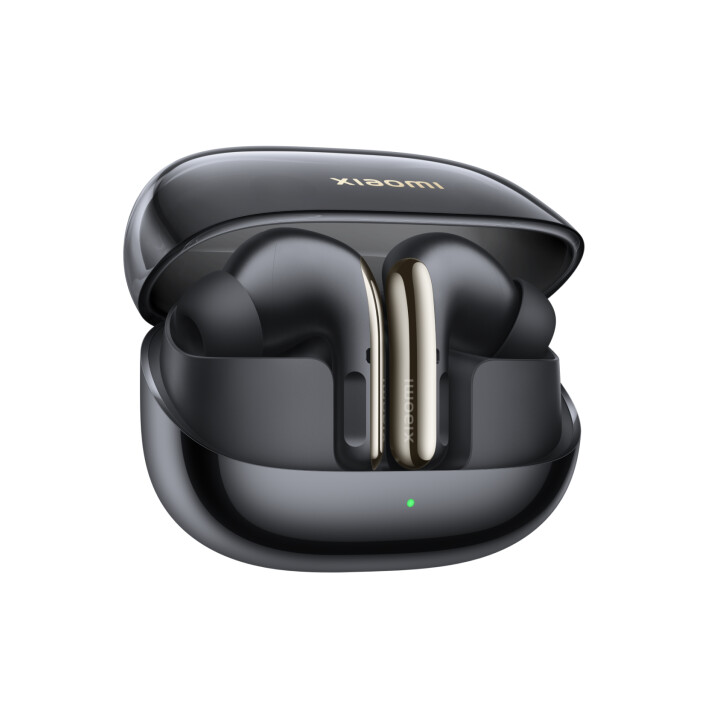
Xiaomi Buds 5 Pro places a complex driver and amplification arrangement inside a sealed premium wireless earbud. It also comes in a separate Wi-Fi edition, so identifying the version is essential before comparing features. This assessment concerns the standard Bluetooth model. Original evaluations support useful fit and cancellation, but differ substantially on the music balance. The strongest buying decision follows a direct audition and a check of the actual phone capabilities, rather than assuming the longest specification list produces the best everyday pair.
Research-based review. This assessment draws on manufacturer documentation and the original published evaluations linked below. Audio Review has not performed a hands-on test of this model.
Do not confuse the Bluetooth and Wi-Fi editions
The official specification separates M2437E1 from M2438E1, the Wi-Fi version. The advanced Wi-Fi transmission claims belong to the latter and require compatible equipment. They should not be added to a review of the standard Bluetooth pair merely because both carry the Buds 5 Pro name.
Check the model on the seller’s listing and packaging before comparing offers. A colour description can help identify a particular listing, but the explicit model is a better reference than a photograph. Confirm the required phone and current software for any special connection or processing feature. Standard Bluetooth listening, enhanced codecs and the separate Wi-Fi path are different capabilities. Assign value only to what the intended setup can actually use. A modest price difference is not automatically a bargain if the more elaborate edition introduces restrictions irrelevant to the routine. The complete purchase should be understandable before paying, rather than relying on an assumption that every advertised function works together on any recent smartphone.
Three driver types do not guarantee the preferred balance
PhoneArena hears excessive bass weight, a coarse midrange and reduced top-end openness. TechRadar instead hears strong mids and clearer treble but insufficient bass on some music. Their sharply different accounts make a universal tonal claim inappropriate, even though both question the premium value.
Try familiar recordings after establishing a stable seal and compare the current profiles at similar loudness. Include a voice, a bass instrument and a dense chorus. Check whether a preference remains consistent across several tracks instead of selecting the most dramatic first impression. A driver arrangement describes construction, not the listener’s eventual satisfaction. EQ may help a preferred balance without making every underlying reservation disappear. Someone unable to audition should use a seller with meaningful return terms and test the actual unit promptly. The useful decision follows what remains enjoyable through complete listening sessions, rather than treating planar, ceramic and dual-amplifier terminology as proof that the product must outperform a simpler alternative.
Fit and control operation need to agree
Both original reviews find the sealing-tip fit reassuring, although their case-handling impressions differ. The stems use pinch and swipe actions. TechRadar finds the squeeze less clearly confirmed than desired, making it worth checking the physical interaction rather than assuming all stem controls feel identical.
Try the supplied tips independently in each ear and then use every action needed during an ordinary day. Check whether adjusting volume or changing tracks disturbs the seal. Wear the pair for a realistic interval and include normal jaw movement. A secure short trial may not reveal pressure later, while a loose comfortable position can change the sound and cancellation. Practise removing the earbuds from the case with one hand if that is a common routine. The case’s presentation is less important than whether the pair is easy to handle repeatedly. A comfortable, predictable interaction should be part of the premium value, not an inconvenience accepted merely because the specification looks sophisticated.
ANC is a more persuasive strength than a maximum figure
PhoneArena finds the cancellation useful against common steady background sounds. Xiaomi’s largest reduction number is explicitly limited to particular test conditions and frequency ranges. It should not be represented as equal attenuation of every voice, impact and changing noise.
Try the intended commute or shared room at an ordinary playback level. Compare the available modes and check awareness during a conversation. A comfortable quieter result may be sufficient even when some surrounding sounds remain obvious. If strong isolation is the primary reason to spend more, compare a proven alternative directly instead of ranking products by their maximum quoted depth. Test a real call as well, because outgoing microphone processing and the cancellation heard by the listener are separate tasks. The most useful feature is the one that improves a repeatable everyday situation. A large laboratory headline does not independently establish the best complete music, awareness or communication experience in the actual surroundings.
Phone-dependent extras should earn their price
Xiaomi’s compatibility notes restrict certain lossless, low-latency and personalised processing functions to supported phones and software. Recording and subsequent transcription also have a particular supported workflow. Basic Bluetooth compatibility should not be confused with access to every advertised extra.
List the functions likely to be used weekly and verify each against the current official guidance. Check the app version and the source settings, then try the actual phone and computer together. An advanced feature that requires a future promise should contribute less to the purchase than one demonstrated now. Keep ordinary music, calls and switching central to the evaluation. If a recording convenience is relevant, establish the supported operating procedure before relying on it for an important task. The best feature-rich pair reduces friction rather than adding a collection of menus rarely opened. A buyer with an unsupported phone should compare the simpler usable package against competitors, not pay as though the complete ecosystem experience is automatically included.
Battery maxima exclude several headline features
The official eight-hour claim and 40-hour case-inclusive total use AAC with ANC, dimensional audio and dual-device connection disabled. That differs from some original review descriptions. USB-C and Qi charging are provided, but neither turns the cumulative total into one uninterrupted interval.
Plan around the combination of settings actually needed and allow for calls, volume and battery age. Test a representative long session during the return period. A shorter interval may still cover the routine comfortably, but it should be understood before purchase. Compare the delivered European price with alternatives and confirm the precise version, accessories and support. Buds 5 Pro is easiest to justify when its fit, useful cancellation and compatible-phone extras all serve a real purpose. It is less convincing when elaborate construction and unused transmission claims account for much of the premium while the preferred music balance remains uncertain. Choose the complete everyday result, with the specification treated as context rather than a substitute for listening.
Alternatives to consider
Nothing Ear (2024): A useful existing comparison when considering app flexibility and a different music presentation. Check the exact generation, fit and current delivered price, then test the phone functions that will actually be used rather than choosing from driver counts.
Soundcore Liberty 4 NC: Compare this established alternative when cancellation and everyday value matter most. Judge its full review against the required connections, comfort and controls. A lower or higher launch position does not permanently determine the best present offer.
Xiaomi Buds 5 Pro key specifications
- Version assessed
- Standard Bluetooth model M2437E1
- Driver system
- 11 mm dynamic, planar and ceramic units
- Amplification
- Dual-amplifier arrangement
- Earbud weight
- Approximately 5.6 g each
- Bluetooth
- 5.4
- Advanced audio
- aptX Lossless on supported sources; restrictions apply
- Connections
- Dual-device Bluetooth
- Noise control
- Adaptive ANC and transparency
- Battery claim
- Up to 8 h earbuds; 40 h including case, stated features off
- Charging
- USB-C and Qi
- Protection
- IP54 earbuds only
- Wi-Fi edition
- Separate M2438E1; not assessed here
Verdict
The Bluetooth Buds 5 Pro has a broad feature package, useful fit and credible cancellation evidence. Its divided music verdicts and source restrictions make an audition and compatibility check essential. Buy only when the actual usable functions and preferred presentation justify the present price, with the separate Wi-Fi edition kept clearly distinct.
Documentation and original reviews
Xiaomi official UK Buds 5 Pro version specifications · Xiaomi official Buds 5 Pro features and compatibility footnotes · Xiaomi official Buds 5 Pro support FAQ · PhoneArena original Bluetooth Buds 5 Pro evaluation · TechRadar original Bluetooth Buds 5 Pro evaluation
Editorial record
Sources and updates
Product specifications and factual claims were checked against Official Xiaomi Buds 5 Pro product page ↗. Scores and buying advice follow our category-specific editorial methodology.
- Published
- November 17, 2026
- Last updated
- November 17, 2026