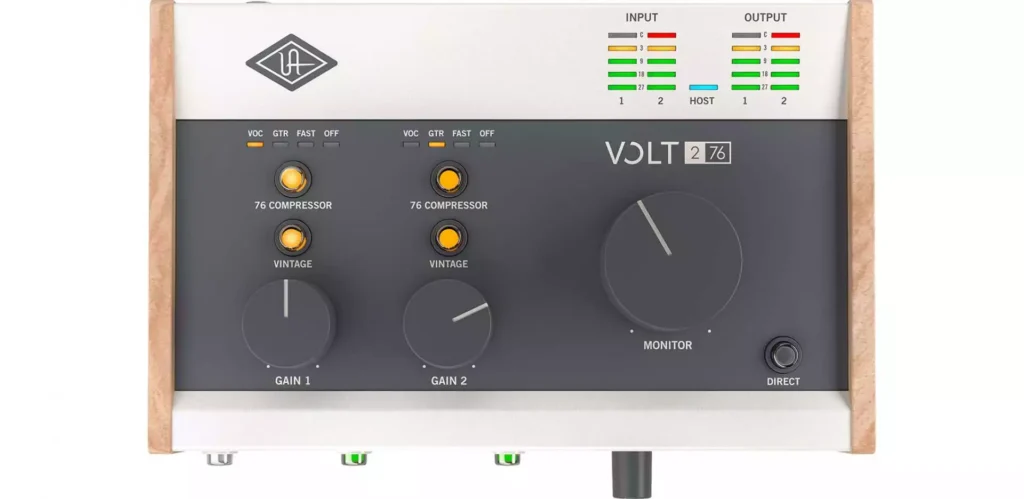
Universal Audio Volt 276 is a two-input desktop interface that adds optional analogue colour and preset compression to a straightforward recording workflow. This review concerns the original twenty-four-bit Volt 276, not a different-generation product sharing part of the name. Its appeal is hands-on simplicity: microphones and instruments connect directly, the main controls are accessible, and the performer can monitor without sending the cue through the DAW buffer. It should be chosen for that workflow rather than mistaken for a small Apollo with onboard plug-in hosting.
Research-based review. This assessment draws on manufacturer documentation and the original independent evaluations linked below. Audio Review has not performed a hands-on test of this model.
A small session is the natural fit
Two combo inputs can handle a voice and an instrument, a stereo line source or a pair of microphones. They are two simultaneous channels, not separate extra channels for every connector type. Plan the session before buying, especially if a stereo keyboard must play alongside a microphone at the same time.
There is no digital expansion path for adding an external bank of inputs. That is not a problem for a deliberately small setup, but it matters if the next project involves several microphones. A simple interface can be excellent value when its limits match the work. It becomes a less efficient purchase if it must be replaced almost immediately because the required simultaneous source count was never written down.
Sound and the original review evidence
Sound On Sound’s original test of Volt 2 and 276 is positive about clean recording quality and the usefulness of the analogue processing options. It also finds the top-panel arrangement and larger controls of the 276 convenient. Those findings support a strong beginner and small-studio shortlist, without establishing that the interface automatically improves every recording.
Microphone position, room sound and performance still determine much of the result. Start with a clean recording and compare familiar material before assigning every difference to the converter. A good interface should let the source be captured reliably at a sensible level. Spending time on the source and monitoring balance can be more valuable than choosing an input setting simply because its name refers to famous studio equipment.
Vintage mode is a creative option
Vintage mode changes the input character through an analogue circuit inspired by UA’s preamp heritage. It is not a physical valve preamp inside the small interface, and the association should not be presented as proof of an identical signal path to a large classic unit.
Make a short recording with the mode off and on, keeping enough level headroom and comparing in the mix. A little extra character may help a voice or instrument sit where intended, while another source may work better clean. Because input processing affects what is captured, a conservative choice keeps options open later. The most useful setting is the one that serves the performance, not the one with the strongest historical association on the product page.
The compressor requires a deliberate commitment
The 76 circuit offers three presets rather than the full controls of a standalone compressor. Input level influences its action, and enabling it also changes level, so recheck the gain. A preset label is a starting point, not a guarantee that every vocal or guitar benefits from the same response.
Record a louder passage before the full take and listen back for unwanted pumping or distortion. Compression printed at the input cannot simply be removed later like a plug-in on a playback track. If uncertain, use less processing or leave it off and work after recording. The appeal is a quick analogue option that can encourage a performance, with the trade-off that flexibility is intentionally lower than a fully adjustable studio processor.
Direct monitoring and the shared cue feed
The direct-monitor function provides mono or stereo placement of the input feed. Use the appropriate mode for two independent sources or a stereo source. The headphone output has its own level control but carries the same monitor signal; it is not an independently configurable performer mix.
If the performer hears a doubled or phase-like sound, check whether both direct and software monitoring are active. Choose one intended route for that source. When a software effect must be heard during performance, test the computer buffer and project load before recording. A physical direct-monitor button solves a useful latency problem, but it does not make a DAW plug-in run without delay or provide a separate cue mixer that the hardware does not contain.
Power, computer setup and software context
Use a supported USB host and check the power arrangement, particularly with tablets or adapters. The auxiliary power option can be useful where the host supply is insufficient. Confirm the current driver and operating-system requirements before a session rather than treating every USB-C socket as identical.
The old original review predates changes to UA’s software offering. Its historical comments about software compatibility should not be copied as current restrictions when the manufacturer now documents a different package. Verify present entitlement and installation requirements for any bundle. Also distinguish native plug-ins running on the computer from Apollo-style onboard DSP. A software promotion can add value, but it does not change the processing hardware inside the original Volt 276.
Value and the right alternative
The 276 is strongest for a small recording routine in which the compressor, top controls and clear meters are used regularly. If the same sources will be recorded clean with basic direct monitoring, compare Volt 2 and other two-input interfaces before paying extra for processing that remains switched off.
If growth means more simultaneous sources or independent headphone feeds, compare the necessary larger interface now. Include microphones, cables and a suitable pair of headphones in the total budget. For used hardware, inspect the inputs, gain controls and power accessories, and verify any software-transfer conditions separately. A convenient recording system that works reliably is a better outcome than a prestigious name surrounded by missing accessories or misunderstood expansion plans.
Alternatives to consider
Universal Audio Volt 2: Volt 2 is the obvious comparison when the analogue compressor and top-panel arrangement are not essential. Decide whether those functions improve your actual recording routine rather than assuming every extra control is worth the price difference.
Focusrite Scarlett 2i2 4th Gen: Scarlett 2i2 offers a different small-recording workflow. Compare gain needs, monitoring, automatic assistance and current software support rather than choosing only from a brand association or a bundled plug-in list.
Universal Audio Volt 276 key specifications
- Generation
- Original Volt 276, 24-bit model
- USB audio channels
- Two inputs / two outputs
- Preamps
- Two mic/line/instrument combo inputs
- Input processing
- Switchable Vintage mode and 76 analogue compressor
- Compressor modes
- VOC, GTR, FAST, off
- Monitor output
- Balanced stereo pair
- Headphone output
- One, separate level but shared monitor signal
- MIDI
- DIN input and output
- Maximum conversion rate
- 24-bit / 192 kHz
- Power
- USB bus power with supported host; auxiliary power option
- Digital expansion
- None
Verdict
The original Volt 276 is a well-focused small-recording interface, with useful physical controls and optional analogue shaping supported by the original evaluation. Its appeal is strongest for vocal and instrument sessions that fit two inputs.
Use the processing deliberately and keep the shared monitoring and expansion limits in view. Compare Volt 2 when simplicity and price dominate, and a more flexible interface when routing or source count will grow. The 276 is a coherent choice when its hands-on recording approach matches the way you actually work.
Primary documentation and independent reviews
Universal Audio official Volt 276 product information · Universal Audio Volt 276 official hardware manual · Sound On Sound original Volt 2 and Volt 276 evaluation
Editorial record
Sources and updates
Product specifications and factual claims were checked against Official Universal Audio Volt 276 product page ↗. Scores and buying advice follow our category-specific editorial methodology.
- Published
- November 17, 2026
- Last updated
- November 17, 2026