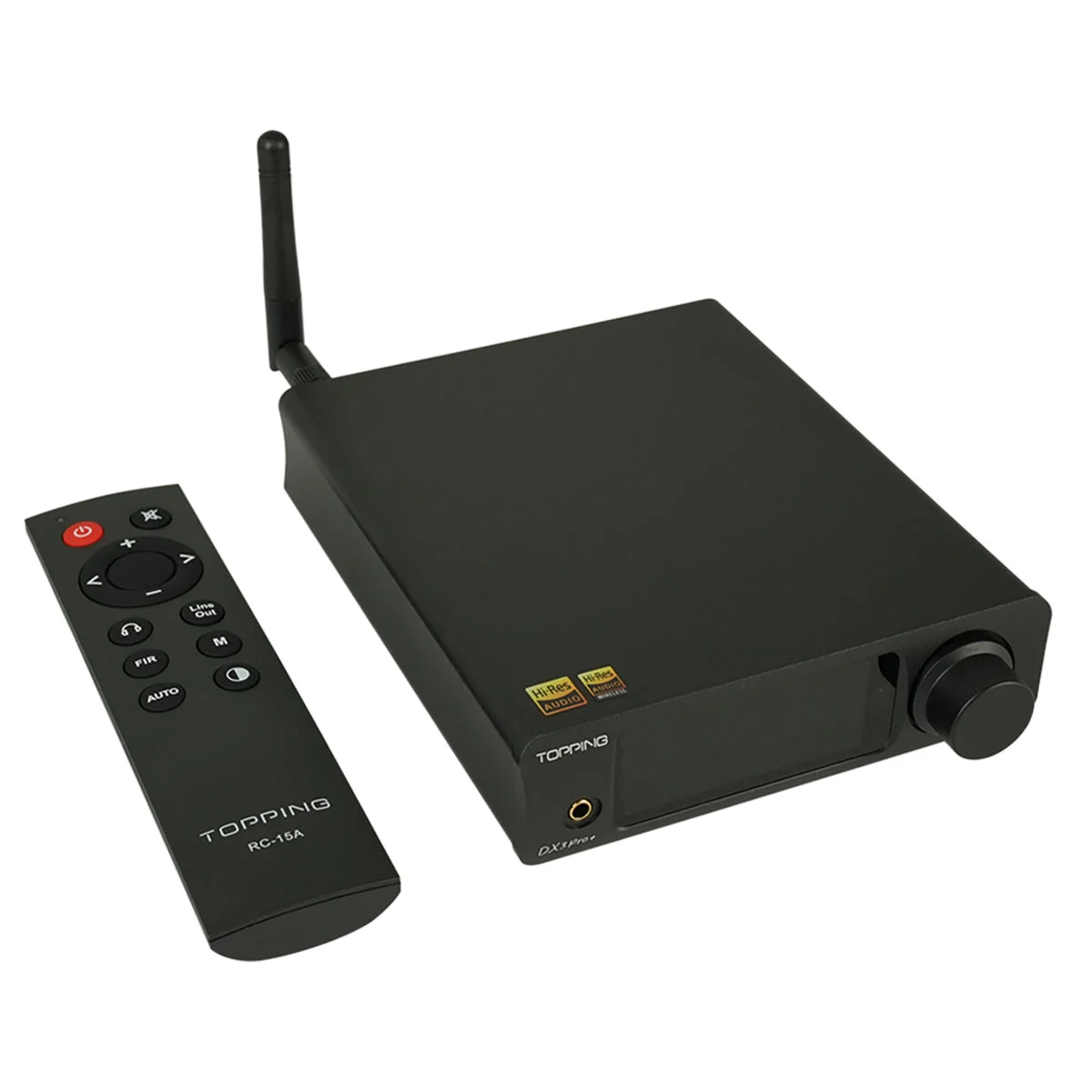
Research note: This is an independent, research-based assessment built from official specifications and product documentation. We have not claimed a hands-on laboratory test.
Topping DX3 Pro+ key specifications
- Model
- TOPPING DX3 Pro+
- DAC
- ESS ES9038Q2M
- USB decode
- PCM up to 768 kHz / 32-bit and DSD512
- Bluetooth
- Qualcomm Bluetooth receiver with LDAC, aptX HD, aptX, AAC and SBC
- Digital inputs
- USB, optical, coaxial and Bluetooth
- Analogue output
- RCA line / preamp output
- Headphone output
- 6.35 mm single-ended
- Headphone output power
- 1,800 mW × 2 at 32 Ω, 1% THD+N
- Headphone output power
- 250 mW × 2 at 300 Ω, 1% THD+N
- Headphone output impedance
- <0.1 Ω
- Headphone SNR
- 120 dB
- Headphone THD+N
- <0.00015% at 1 kHz
- RCA output level
- 2 Vrms
- Output modes
- Headphone amp, preamp and DAC mode
- Control
- Front-panel multifunction knob and remote control
- Power supply
- DC 15 V external adapter
DAC architecture and formats
The ES9038Q2M implementation supports very high PCM and DSD rates with selectable digital filters. Strong published measurements target transparent conversion rather than deliberate tonal coloration. Format ceilings are compatibility limits rather than automatic proof of sound quality. Implementation, output stage, clocking and noise performance matter more than playing the largest sample-rate number.
Headphone amplification and matching
The 6.35 mm output provides high power and very low output impedance with selectable gain, covering sensitive IEMs through many planar headphones. There is no 4.4 mm or XLR balanced headphone connection. Power needs depend on headphone sensitivity, impedance and listening level. Low output impedance benefits most modern headphones, while gain settings help balance sensitive IEM noise against demanding full-size models.
Digital inputs and source use
USB, two optical and two coaxial inputs support multiple computers, televisions and transports. Bluetooth 5.0 adds LDAC and several aptX variants, but there is no analog input for a phono stage. Buyers should confirm the exact connector required by a phone, computer, console or CD transport. USB class support and mobile power draw can affect convenience even when nominal formats match.
Line outputs and system integration
Rear RCA can operate fixed into an integrated amp or variable into powered speakers. There are no balanced XLR outputs, so professional monitors may need RCA adapters or another DAC. Fixed line mode suits an integrated amplifier, while variable mode lets the unit act as a preamp for powered speakers or a power amplifier. Balanced connectors do not automatically improve every short desktop setup, but can help compatible systems.
Controls, display and daily operation
A front display, multifunction knob and remote make it unusually convenient from a desk or sofa. Safe gain and preamp-volume habits remain important when switching between headphones and speakers. Good hardware should remember gain and volume safely, make input changes obvious and avoid accidental high levels. Desktop ergonomics often matter more over years of use than small differences in published distortion.
Value and trade-offs
DX3 Pro+ offers an exceptional mix of measurements, source switching, Bluetooth and remote control. Its missing balanced connections are the deliberate boundary separating it from more expensive models. The correct alternative depends on whether portability, streaming, balanced power, analog inputs or a remote is the priority. A device can measure well yet be wrong for the workflow if it omits one essential connection.
Who should buy it?
Choose DX3 Pro+ for a digital-only desktop or living-room headphone setup with powered speakers, several S/PDIF sources and remote operation. Analog-source and balanced-system owners need a different hub.
Alternatives to consider
FiiO K7 adds analog input and balanced headphones; iFi ZEN DAC 3 offers balanced outputs but only USB input. FiiO K11 R2R explores ladder conversion, while Topping’s DX5 series adds balanced connectivity.
Verdict
Topping DX3 Pro+ remains a highly rational digital desktop centre. It combines clean conversion, strong headphone power, excellent Bluetooth codec support, multiple inputs and remote preamp use. The absence of analog and balanced connections is clear enough to decide suitability before purchase.
Primary source
Topping DX3 Pro+ official product page
Editorial record
Sources and updates
Product specifications and factual claims were checked against Official Topping DX3 Pro+ product page ↗. Scores and buying advice follow our category-specific editorial methodology.
- Published
- July 1, 2026
- Last updated
- July 25, 2026
Compare before choosing
Two strong alternatives from the same dacs & headphone amps category.