Overview
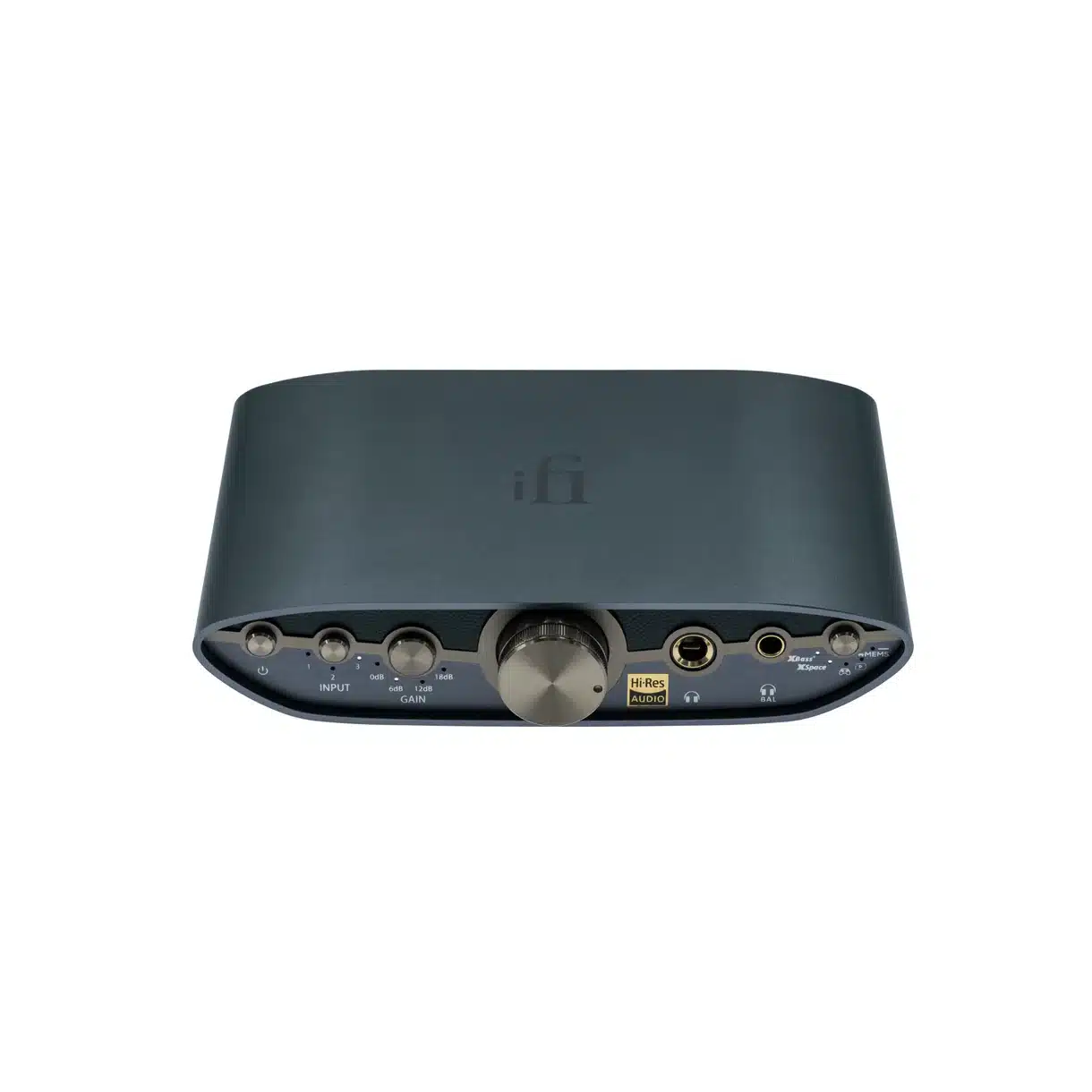
The iFi ZEN CAN 3 is an analogue headphone amplifier designed to add drive, gain flexibility and carefully chosen analogue sound-shaping to an existing DAC or streamer. It accepts single-ended RCA and 3.5 mm inputs plus balanced 4.4 mm input, and offers 6.35 mm and 4.4 mm headphone outputs. The point is not to replace a DAC; it is to give a wide range of headphones a more capable analogue partner. This is an editorial assessment built around the published specification, the product’s intended use and the surrounding market rather than a substitute for a long-term in-room or bench test. The important question is not simply whether the feature list is impressive; it is whether the design makes a convincing, usable system for the listener it targets.
Design and day-to-day use
The compact 158 x 117 x 35 mm enclosure follows iFi’s familiar desktop format, making it easy to place below a DAC or beside a laptop dock. Front controls are deliberately direct: gain selection, volume and selectable sound modes are available without navigating software. That physical immediacy is valuable for users who want to change headphones often or tune the system without opening an app. The practical appeal is in the details: control placement, the quality of the physical interface, cable routing and the way the product fits into an existing setup can matter as much as any headline specification. Buyers should consider the space around the unit, the equipment it must connect to and whether its operating style suits the way they actually listen.
Features and connectivity
iFi specifies four gain settings from 0 to 18 dB, a balanced line output and the company’s XBass+, XSpace, gaming and movie modes. It also supports compatible xMEMS IEMs. Its stated power delivery reaches 1,600 mW from the 6.35 mm output into 32 ohms and 2,000 mW from the balanced output into 64 ohms, illustrating that this is designed for more than easy portable headphones. Those options create a useful degree of flexibility, but they also reward careful system planning. A feature has genuine value when it removes friction from a regular listening habit, not when it merely looks good on a comparison chart. Before buying, verify the exact regional specification and make a short list of the sources, headphones, speakers or cartridges that will be used with it.
Sound and system matching
The ZEN CAN 3’s analogue-only approach should appeal to listeners who already like their DAC but need more control over difficult headphones. The XBass+ and XSpace circuits are best understood as optional voicing tools rather than a replacement for good matching. Used gently, they may help a lean recording, a low-bass-light headphone or a cramped mix; used indiscriminately, they can obscure what the headphone already does well. On paper, that direction should suit listeners who prefer an assured presentation over an artificially flashy one. Final results will still depend heavily on the partnering equipment and the room or listening position. Matching should therefore be treated as part of the purchase: a well-chosen source, cable or cartridge can make more difference than chasing a marginally higher specification elsewhere.
What to expect in a real setup
A sensible evaluation should begin with familiar recordings at normal listening levels, then move to more demanding material. Listen for tonal balance, control at the frequency extremes, image stability and whether the product remains satisfying over a complete album rather than a single impressive track. If it offers software, presets or calibration, start from the neutral setting and make one change at a time so that the result is meaningful.
Strengths
It offers unusually broad analogue input options, serious output power and a balanced route in a compact, approachable form. The variable gain structure is useful because it allows sensitive IEMs and power-hungry planars to be treated differently, rather than forcing every headphone through one fixed high-gain setting. Just as importantly, the product avoids forcing the buyer into an unnecessarily narrow use case. Its strongest case is made when the complete system is considered: layout, source quality, available connections and the type of music or content that will be played. That makes it a more considered proposition than a purchase driven only by a single headline feature.
Limitations to consider
There is no integrated DAC, network player or USB audio input, so budget must include a suitable source. Listeners who prefer a strictly neutral, minimal signal path may never use the enhancement modes, and those who need portable operation should look elsewhere. Its real value depends on already owning a DAC worthy of the amplifier stage. None of those points automatically rule it out, but they should shape expectations. This is not a category where the most expensive option is always the most appropriate one. Buyers who need a very different connection, a smaller footprint, more automation or a bundled accessory should compare those priorities directly before committing.
Who should buy it?
It makes sense for the headphone enthusiast who has outgrown a basic DAC output, owns more than one headphone type and wants physical control with optional tonal adjustment. It is particularly relevant when a desktop system must handle both sensitive earphones and demanding over-ear models. It will make the most sense for a listener who understands the role it will play in a system and is prepared to set it up properly. It is less compelling when bought as a shortcut around a weak source, unsuitable headphones or poorly positioned speakers. In that situation, allocating part of the budget to the rest of the chain may produce a more balanced result.
Alternatives to consider
The iFi Zen DAC range is worth considering if a USB DAC is also needed, while a Topping, JDS Labs or Schiit amplifier may suit buyers seeking a simpler feature set. Balanced desktop amplifiers from FiiO are alternatives for users who want a matching DAC ecosystem. Alternatives should be judged by their complete ownership experience, not just a specification table: warranty, app support where relevant, availability of accessories and how easy the product is to place, upgrade or resell all deserve consideration. The best alternative is the one that solves the same listening need with fewer compromises for a particular setup.
ZEN CAN 3 key specifications
- Model
- iFi ZEN CAN 3
- Amplifier topology
- Fully balanced Class A discrete analogue headphone amplifier
- Headphone outputs
- 4.4 mm balanced and 6.35 mm single-ended
- Balanced output power
- >11.5 V / 2,000 mW RMS at 64 Ω
- Single-ended output power
- >7.2 V / 1,600 mW RMS at 32 Ω
- Balanced maximum output
- >6.2 V / 1,200 mW at 32 Ω; >15.1 V / 385 mW at 600 Ω
- Single-ended maximum output
- >7.2 V / 1,600 mW at 32 Ω; >7.6 V / 98 mW at 600 Ω
- Analogue inputs
- RCA L/R, 3.5 mm single-ended and 4.4 mm balanced
- Balanced line output
- 4.4 mm; 4 Vrms at 0 dB / 200 kΩ load
- Gain settings
- 0 dB, 6 dB, 12 dB and 18 dB
- Frequency response
- 10 Hz–200 kHz (-3 dB)
- Headphone output impedance
- <2 Ω balanced; <1 Ω single-ended
- Headphone SNR
- ≥125 dB balanced; ≥122 dB single-ended
- Headphone THD+N
- <0.006% balanced and single-ended
- Sound modes
- XBass+, XSpace, XBass+ + XSpace, Game and Movie
- xMEMS support
- Yes, via 4.4 mm balanced output
- Power input
- DC 5 V / 2.5 A
- Dimensions
- 158 × 117 × 35 mm
- Weight
- 495 g
Verdict
The ZEN CAN 3 is a focused upgrade component: an adaptable, well-connected analogue amplifier that earns its place when the rest of the chain is already in good order. It is best approached as a deliberate system component rather than an isolated gadget. Confirm compatibility, audition where possible and compare it against a realistic shortlist. For the right buyer, its combination of design intent, connectivity and system potential gives it a credible place in its category.
Editorial record
Sources and updates
Product specifications and factual claims were checked against Official ZEN CAN 3 product page ↗. Scores and buying advice follow our category-specific editorial methodology.
- Published
- July 17, 2026
- Last updated
- July 25, 2026
Compare before choosing
Two strong alternatives from the same dacs & headphone amps category.