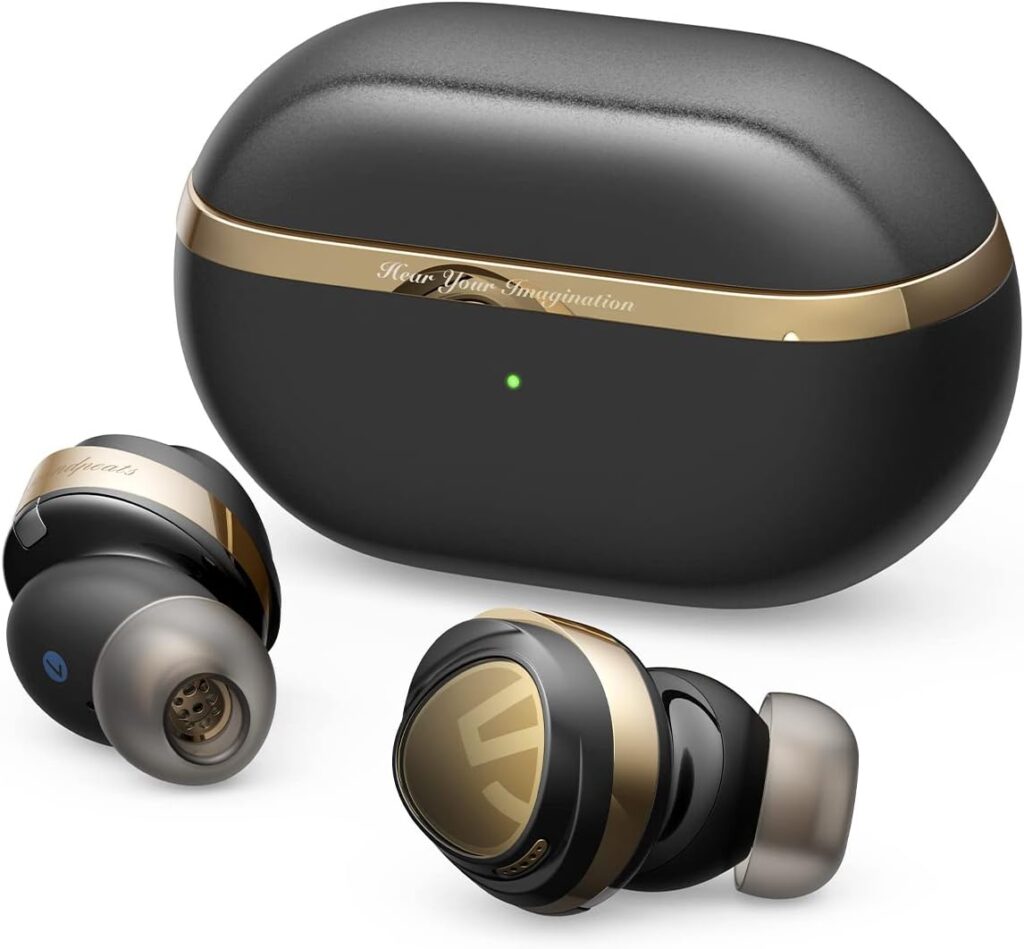
SoundPEATS Opera05 is an established hybrid model whose large shells and emphatic sound create a particular buying proposition. It combines a dynamic unit with two balanced armatures, but original evaluations differ on how successfully that package serves music. BGR is broadly positive, while Audioreviews.org is much more concerned about tonal balance and long-session fatigue. The useful recommendation is therefore for a specific taste and fit, at a sensible current price, rather than an assumption of universal flagship fidelity.
Research-based review. This assessment draws on manufacturer documentation and the original published evaluations linked below. Audio Review has not performed a hands-on test of this model.
Three drivers create a particular presentation
The official design combines one dynamic unit with two balanced armatures. BGR enjoys the sound and notes treble brightness. Audioreviews.org is more critical, describing strong bass, a thinner midrange and an upper range that can become tiring. These accounts support an audition for a particular preference rather than a neutral-tuning promise.
Try familiar voices and acoustic instruments as well as energetic electronic music. Check whether the dramatic contrast remains enjoyable after several complete tracks. An initially clear or exciting presentation may reveal itself as too insistent later. Keep volume similar to the comparison pair and avoid turning the product up simply to make a subdued voice more apparent. A bass enthusiast may value the emphasis that another listener finds excessive. The sensible purchase follows that personal result. The number of driver types is background information, not independent evidence that the balance must suit every genre or outperform a simpler contemporary alternative.
Large shells make fit a decisive question
Both original reviews identify the substantial bodies as a practical concern. BGR also finds removal from the case awkward, while Audioreviews.org questions stability and suitability for smaller ears. The shape deserves a longer personal trial before any purchase based chiefly on sound terminology.
Try both sides independently and check whether the shell itself presses against the outer ear. Changing tips can alter the seal without solving an unsuitable body shape. Include ordinary jaw movement and a walk, then listen again for consistent bass and vocal balance. A secure position should not require repeated force. Practise removing the earbuds from the case with ordinary dry fingers and returning them to the contacts. If the pair is difficult to handle every time, that matters to ownership even when the sound is appealing. A return option is especially useful for an established model with a distinctive body, because a reassuring photograph cannot show how the complete shell will sit in a particular ear.
EQ should be tested rather than assumed to fix everything
Audioreviews.org finds the available profiles and manual changes less versatile than desired, with tonal compromises remaining. That does not prove every owner will dislike adjustment, but it warns against buying an unsuitable default balance on the assumption that app EQ will necessarily transform it.
Check the current supported app and firmware for the exact unit. Keep a reference setting, change one area at a time and compare familiar music at similar loudness. Decide whether a restrained adjustment makes the result more comfortable without losing the parts of the presentation originally enjoyed. If the product needs extreme correction to suit ordinary listening, another pair may be a better starting point. An elaborate personal recipe shared online may also reflect a different seal, source or preference. Use it as an experiment rather than a guaranteed answer. The best choice is a balance that remains satisfying through the normal library, not one that only becomes acceptable after repeated adjustment every time a different recording is played.
ANC is useful when the seal is already correct
The original evaluations are generally positive about noise reduction, with Audioreviews.org finding steady lower-frequency sounds easier to reduce than nearby voices. This is a more useful description than treating a maximum attenuation number as equal isolation across the entire environment.
Try the intended setting after settling the fitting parts. Compare normal, cancellation and pass-through modes without changing music level. Check whether the result reduces the particular distraction that prompted shopping. A strong passive seal and electronic processing contribute differently, so a loose comfortable fit can produce a misleading ANC impression. Also try a brief conversation and decide whether the pass-through option is convenient enough or whether removing an earbud is simpler. A pair can offer useful cancellation without becoming the strongest travel recommendation. If the main priority is maximum isolation rather than the Opera05’s particular music character, compare that task directly with other current offers instead of assuming the older flagship position settles it.
Connections and controls need a complete routine check
The current official specification lists Bluetooth 5.3 and SBC, AAC and LDAC. Some early review specifications differ, so the present primary reference is used here. LDAC requires a compatible source and should not be described as universal lossless audio from every phone.
Check the actual handset and the functions offered by the current app. Try the control gestures with the earbuds in their preferred position and the phone out of sight. Conduct a complete call in the normal location, asking another person about intelligibility rather than judging only what is heard locally. If computer-and-phone switching is essential, verify the supported workflow directly rather than inferring modern connection conveniences from the Bluetooth version. An established product can remain a useful single-source listening pair while being less suitable for a demanding work setup. The recommendation should follow the real tasks, with neither a codec badge nor a favourable quiet-call impression standing in for a complete compatibility and communication check.
Current condition and runtime matter more than old launch status
SoundPEATS’ main Japanese specification claims up to nine hours with SBC and 33 hours including the case, while its FAQ also quotes eight hours. Those inconsistent maxima should remain qualified. They do not establish the same continuous interval with LDAC, ANC, calls or an ageing battery.
Confirm the relevant regional specification and plan around the longest session actually required. Case totals involve recharging breaks. Examine whether an offer is new, refurbished or used, with tips, charging condition and support clearly described. A historical discount against an old launch price does not independently establish value beside current alternatives. The IPX4 label also needs the manufacturer’s care limits rather than an unrestricted durability claim. Opera05 is easiest to justify when its fit is comfortable, its emphatic balance is deliberately preferred and the present price is favourable. If any of those conditions is missing, a more conventional pair may provide a simpler and more satisfying experience than an older elaborate design chosen chiefly for its former flagship description.
Alternatives to consider
Nothing Ear (2024): A useful existing comparison when sound adjustment and the complete daily interface are priorities. Check the current price, fit and supported phone functions rather than assuming a more elaborate driver arrangement automatically makes one product preferable.
Soundcore Liberty 4 NC: Compare this established alternative if cancellation and everyday convenience matter as much as music. Judge the exact features and present local offer, then test the preferred source and call routine instead of deciding from a single maximum specification.
SoundPEATS Opera05 key specifications
- Driver system
- 12 mm dynamic plus two balanced armatures
- Earbud weight
- Approximately 7.2 g each
- Bluetooth
- 5.3 in current official specification
- Codecs
- SBC, AAC, LDAC
- Noise modes
- ANC, pass-through and normal
- Manufacturer runtime reference
- Main JP specification: up to 9 h with SBC; 33 h case total
- Runtime documentation
- Official FAQ also quotes 8 h; verify regional claim
- Charging
- USB-C
- Protection
- IPX4
- App
- Sound profiles and adjustment; check current supported app
- Fit
- Substantial in-ear shells
- Model
- Opera05, not Opera03
Verdict
Opera05 has a specific appeal for a listener who likes powerful bass and bright treble and can accommodate its substantial shells. The critical listening evidence and fit concerns prevent a universal recommendation. Audition over a longer session and compare the complete present offer, with realistic battery and app expectations.
Documentation and original reviews
SoundPEATS official Opera05 specifications and FAQ · BGR original Opera05 evaluation · Audioreviews.org original Opera05 evaluation
Editorial record
Sources and updates
Product specifications and factual claims were checked against Official SoundPEATS Opera05 product page ↗. Scores and buying advice follow our category-specific editorial methodology.
- Published
- November 17, 2026
- Last updated
- November 17, 2026