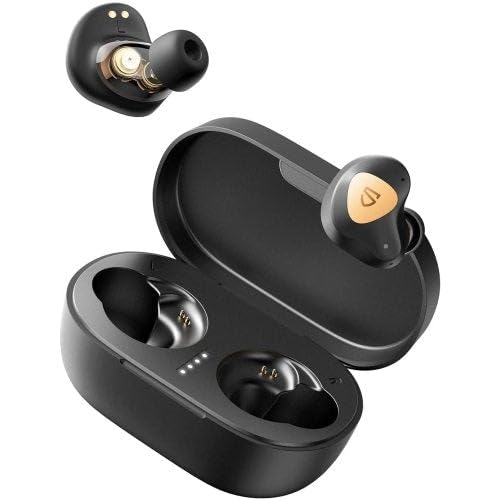
SoundPEATS Capsule3 Pro+ combines a dynamic driver with an xMEMS unit and puts music performance at the centre of an established affordable package. Original evaluations are enthusiastic about the listening result and comfortable fit, while identifying shorter continuous endurance and some app or reconnection frustrations. This is the Plus model, not the earlier standard Capsule3 Pro. Its strongest buying case is clear, enjoyable music at the right current price, with the everyday feature compromises understood before purchase.
Research-based review. This assessment draws on manufacturer documentation and the original published evaluations linked below. Audio Review has not performed a hands-on test of this model.
The hybrid arrangement has convincing listening support
SoundGuys responds positively to the overall music balance, while Scarbir particularly welcomes clear, lively treble over a comfortable tonal foundation. Their original findings support a music-focused recommendation without requiring the buyer to treat xMEMS terminology as a guarantee by itself.
Try familiar voices, a brighter acoustic recording and a dense chorus. Check whether the clarity remains enjoyable through a complete session or makes a particular recording too prominent at the top. Compare at similar loudness and use a stable seal. A listener who appreciates detail may find the presentation especially appealing, but a preference for a more restrained balance is equally valid. The driver technology is part of how the result is achieved, not a substitute for deciding whether the result suits the library. A less elaborate alternative can still be the better personal match if it communicates favourite recordings more comfortably in the ordinary setting.
EQ offers useful flexibility without needing dramatic changes
The original SoundGuys app evaluation describes a ten-band equaliser and several presets. That gives the listener a practical adjustment route instead of relying only on the default profile. It should not be confused with a guarantee of a full professional parametric editor or measurement-based correction for every ear.
Start with a reference profile and change one region at a time. Compare the same recording at similar loudness after each adjustment. If voices seem subdued, judge the words themselves rather than adding large amounts of treble automatically. If bass is preferred at a different level, try a restrained change across several tracks. A dramatic effect can be useful for one recording while becoming less suitable during a long session. The best setting is one that remains enjoyable without constant intervention. An owner already satisfied with the basic sound can reasonably leave the editor untouched. Flexibility matters because it serves a preference, not because the longest control menu automatically establishes the strongest product.
Comfort and missing automatic pause change daily use
Both original reviews find the lightweight shape comfortable in their own trials. They also confirm that removing an earbud does not trigger automatic playback pause. That omission is straightforward to manage, but it can matter to someone accustomed to frequently interrupting music for conversation.
Try each tip size independently for the two ears and check both comfort and tonal consistency after adjustment. Include ordinary jaw movement and a walk rather than deciding from a still photograph or a short seated trial. Then practise pausing and changing volume with the phone out of sight. Learn the manual pause action before removing an earbud if that will happen often during the day. A comfortable fit can be a major advantage without supplying every convenience expected from a more expensive pair. The practical question is whether the complete wearing and control routine feels easy to repeat. A return option is useful if the shape fits one ear well but creates pressure or instability on the other side.
Choose between LDAC and the switching routine
The official product page states that LDAC cannot be used with multipoint. Scarbir also reports app and reconnection friction in its older Android trial, whereas SoundGuys has a more straightforward connection experience. The difference calls for a current practical check rather than an assumption that either account applies to every phone indefinitely.
Test the actual handset and computer on present firmware. Try switching sources, receiving a call and returning to the original playback. Check the active codec after changing modes instead of assuming that a previous selection remains in place. LDAC needs source support and is a lossy format; an iPhone uses another shared codec. If switching frequently is central to the day, a dependable multipoint configuration may be more valuable than a higher-bitrate single-source setting. If one phone supplies nearly all listening, the opposite choice may be reasonable. The best mode is the one that serves the routine predictably, not the one with the most impressive label in a specification list.
Noise control and calls are useful rather than universal leaders
SoundGuys finds effective reduction of steady background noise with less convincing handling of some incidental high sounds. Its calls are more reassuring in quiet surroundings than in noise. Scarbir is also cautious about awareness and windy conversations. These limits keep the recommendation focused on music rather than every work and travel task.
Try the relevant environment at an ordinary level and compare modes before raising music volume. Check a conversation through awareness mode and decide whether pausing or briefly removing an earbud is easier. Conduct a real call with the intended application and ask the other person about intelligibility through complete sentences. A good listening signal and a clean outgoing voice are separate requirements. Someone who takes occasional quiet calls may accept the compromise readily. A buyer spending hours in busy meetings or on windy walks should compare that task directly with another model. Useful ANC can add value without proving the strongest complete communication package.
Separate regional maxima from continuous endurance
The current official Japanese reference lists 6.5 hours at its maximum, about five with ANC and AAC, and 43 hours including the case. Other published summaries vary. SoundGuys records a notably shorter continuous ANC interval in its own test, so the largest cumulative headline should not be treated as all-day uninterrupted listening.
Confirm the current regional offer if a precise manufacturer maximum is decisive. Plan around the longest session and actual codec, allowing for calls, volume and battery age. The case total requires charging breaks, and USB-C is provided without wireless charging. The official reference also lists IPX4, rather than importing a higher protection label from another review. Follow the care instructions and keep the contacts dry before charging. Compare current European price and support with alternatives. Capsule3 Pro+ is especially attractive when its music and fit are preferred and the shorter continuous intervals suit the day. It is less convincing if long uninterrupted playback or a frictionless multi-device work routine matters more than its listening strengths.
Alternatives to consider
Nothing Ear (2024): A useful existing comparison when sound adjustment and the complete daily interface are priorities. Check the current price, fit and supported phone functions rather than assuming a more elaborate driver arrangement automatically makes one product preferable.
Soundcore Liberty 4 NC: Compare this established alternative if cancellation and everyday convenience matter as much as music. Judge the exact features and present local offer, then test the preferred source and call routine instead of deciding from a single maximum specification.
SoundPEATS Capsule3 Pro+ key specifications
- Driver system
- xMEMS Cowell plus 12 mm dynamic
- Earbud weight
- Approximately 5 g each
- Bluetooth
- 5.3
- Codecs
- SBC, AAC, LDAC
- Multipoint
- Two devices; unavailable with LDAC
- Noise modes
- Adaptive ANC, transparency and normal
- EQ
- Ten-band in original PeatsAudio evaluation
- Automatic pause
- No ear-detection sensor
- Manufacturer runtime reference
- JP page: up to 6.5 h; about 5 h with ANC/AAC; 43 h case total
- Charging
- USB-C; no wireless charging
- Protection
- IPX4 in current official JP specification
- Model distinction
- Plus model; not standard Capsule3 Pro
Verdict
Capsule3 Pro+ has a strong published case for clear, enjoyable music and useful EQ at an appropriate price. Its shorter demanding-mode endurance, missing automatic pause and connection choices deserve equal attention. Test the current app and intended devices, then choose it for the actual listening and ownership experience rather than the driver technology alone.
Documentation and original reviews
SoundPEATS official Capsule3 Pro+ construction and specification reference · SoundGuys original Capsule3 Pro+ evaluation · Scarbir original Capsule3 Pro+ evaluation
Editorial record
Sources and updates
Product specifications and factual claims were checked against Official SoundPEATS Capsule3 Pro+ product page ↗. Scores and buying advice follow our category-specific editorial methodology.
- Published
- November 17, 2026
- Last updated
- November 17, 2026