Research note: This is an independent, research-based assessment built from official specifications and product documentation. We have not claimed a hands-on laboratory test.
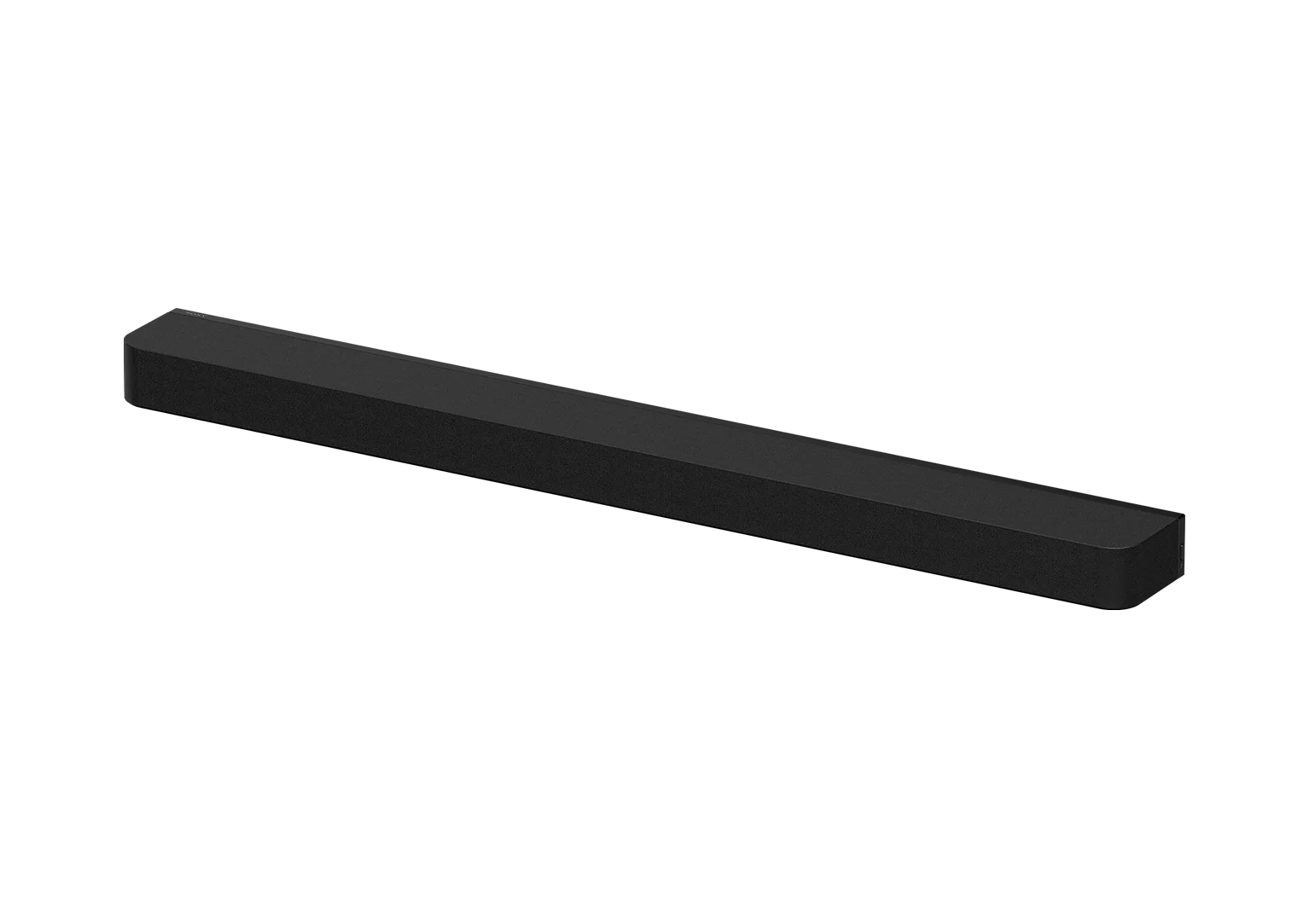
Sony BRAVIA Theatre Bar 8 key specifications
- Model
- Sony BRAVIA Theatre Bar 8 (HT-A8000)
- Speaker structure
- 5.0.2 channels; 11 speaker units
- Amplifier
- 11-channel S-Master HX digital amplifier
- Surround formats
- Dolby Atmos, DTS:X and IMAX Enhanced
- Virtual surround
- 360 Spatial Sound Mapping
- Room calibration
- Sound Field Optimization
- Wireless
- WiFi 802.11a/b/g/n/ac and Bluetooth 5.2
- Streaming
- Spotify Connect and Apple AirPlay
- Connections
- 1 HDMI input, 1 HDMI eARC/ARC output and S-Center Out
- Video passthrough
- 4K/60p, Dolby Vision and HLG
- Expansion
- Optional wireless rear speakers and up to two optional subwoofers
- Dimensions
- 1100 × 64 × 113 mm
- Weight
- 4.7 kg
Speaker architecture and surround approach
Eleven drivers combine a two-way front section, four built-in woofers, side-firing and upward-firing units. 360 Spatial Sound Mapping adds virtual positions to widen the listening area beyond ordinary beamforming. Channel labels describe processing and driver roles, not a guarantee that every room will produce discrete cinema-like positions. Ceiling height, side walls, seating distance and source mix strongly influence the result, especially for reflected height effects.
Subwoofer, rear channels and expansion
No subwoofer or rear speakers are included. Compatible Sony wireless modules can add deeper bass and physical surround, and the calibration system compensates for flexible rear placement. Buyers should include the cost, power sockets and placement of every optional component when comparing systems. A complete package can deliver more convincing envelopment, while a single bar is simpler and visually cleaner.
Dialogue, calibration and everyday TV
BRAVIA Connect guides room and seat calibration. Compatible Sony televisions add Acoustic Center Sync and Voice Zoom 3, but mixed-brand TV owners still retain the bar’s normal dialogue and field processing. These features matter as much as spectacular demo scenes because most viewing contains speech. Calibration improves consistency but cannot fully overcome a highly open room or poor source mix; manual level adjustment may still be useful.
HDMI, formats and gaming
One HDMI 2.1 input supports 8K HDR, 4K/120, VRR, ALLM and SBTM, while eARC carries TV audio. Dolby Atmos, DTS:X and IMAX Enhanced make format support broad. eARC is the preferred connection for lossless Dolby Atmos from a compatible TV. Passthrough specifications matter only when sources connect through the bar; console owners should confirm 4K/120, VRR and HDR compatibility for their exact signal chain.
Music streaming and ecosystem
Wi-Fi, Bluetooth, AirPlay 2, Spotify Connect and Sony’s app cover music and control. BRAVIA television and PlayStation integration provide convenience rather than a requirement for core operation. Ecosystem advantages can be substantial, but several branded features require a compatible television or additional speakers. Core HDMI behavior and format support should remain the deciding factors for mixed-brand households.
Installation and long-term value
Bar 8 keeps most of Bar 9’s platform while reducing driver count and price. The trade-off is less acoustic headroom and spatial precision, making the cheaper model most attractive in medium rooms. Soundbars are room systems rather than isolated gadgets: width, wall mounting, ventilation, cables and wireless-speaker positions deserve planning. A premium model earns its cost when it replaces a more complex receiver system without sacrificing the features the household actually uses.
Who should buy it?
Buy Bar 8 if you want modern HDMI gaming support and broad formats in a premium single bar, with the option to expand later. It suits medium rooms and BRAVIA owners. Complete-system buyers should compare package pricing from Samsung and LG.
Alternatives to consider
Sony Bar 9 adds thirteen drivers and greater scale. Samsung Q990D includes a subwoofer and rears, while Sonos Arc Ultra offers deeper multiroom integration. Bose Smart Ultra is strong for dialogue but lacks HDMI passthrough.
Verdict
BRAVIA Theatre Bar 8 is the rational Sony flagship alternative: it retains excellent connectivity, calibration and format support while trimming acoustic hardware. Optional components remain expensive, but as a standalone bar for mixed film and gaming use it is unusually well equipped.
Primary source
Sony BRAVIA Theatre Bar 8 official product page
Editorial record
Sources and updates
Product specifications and factual claims were checked against Official Sony BRAVIA Theatre Bar 8 product page ↗. Scores and buying advice follow our category-specific editorial methodology.
- Published
- July 1, 2026
- Last updated
- July 25, 2026
Compare before choosing
Two strong alternatives from the same soundbars category.
Samsung HW-Q990F Review
Samsung HW-Q990F research-based review covering its 11.1.4 channels, 23 speakers, included rears and compact subwoofer, 4K/120 HDMI, calibration…
Samsung HW-Q990D Review
Samsung HW-Q990D research-based review covering its complete 11.1.4 package, included rears and subwoofer, two 4K/120 HDMI inputs, calibration…