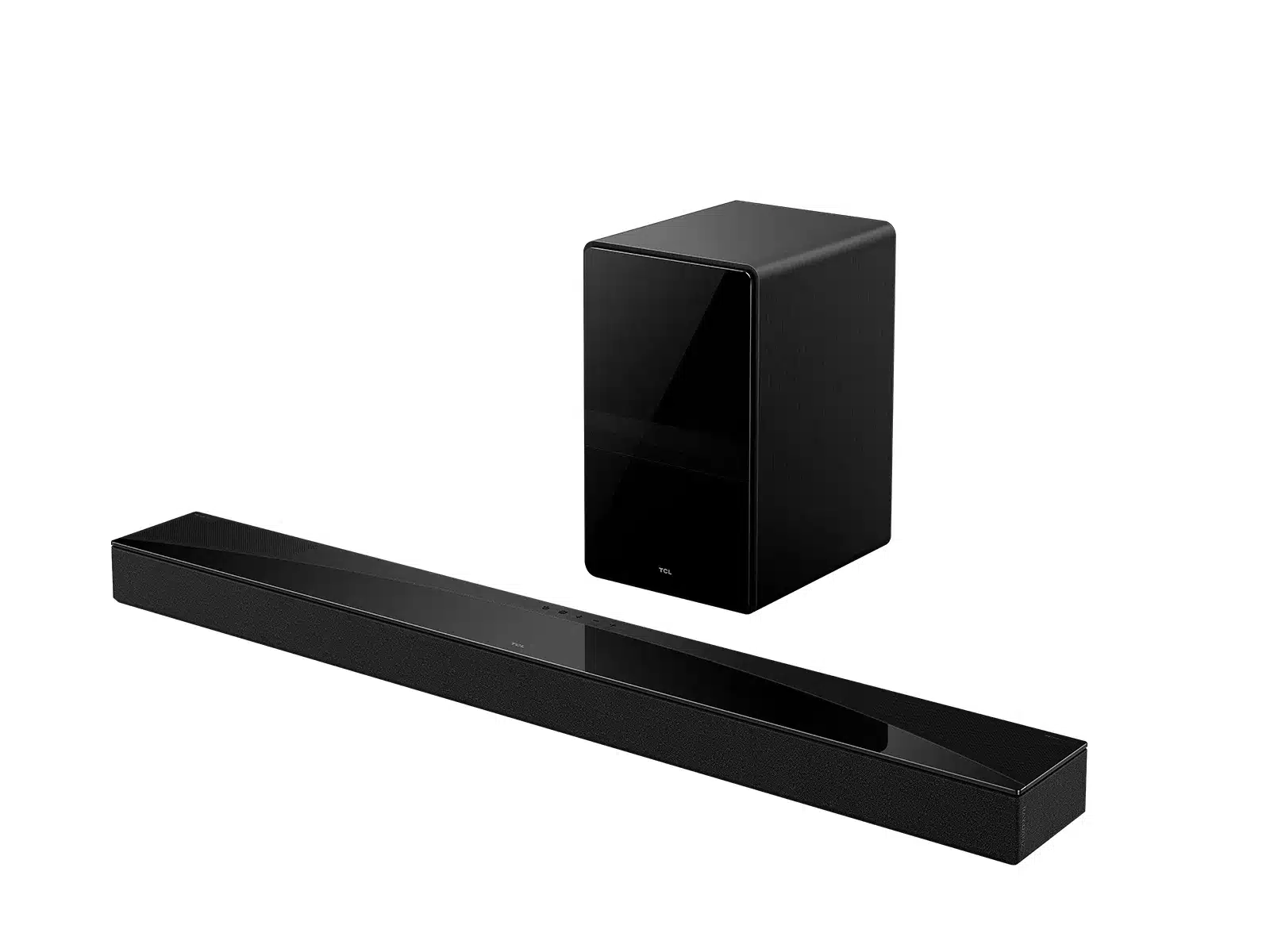
TCL Q75H is a 5.1.2-channel soundbar package designed to give a television system more scale, clearer dialogue and a credible Dolby Atmos or DTS:X presentation without the complexity of separate rear speakers. TCL lists a wireless 6.5-inch subwoofer, 620 W maximum audio power, HDMI eARC and HDMI input, plus 4K Dolby Vision passthrough. This is an editorial analysis of the published specification and intended use rather than a claim of in-room measurement. The attraction is straightforward: it is a more ambitious one-box-and-subwoofer solution than an entry-level bar, yet it remains much simpler than installing a true multi-speaker receiver system.
Design and setup
The Q75H should be treated as part of the television installation, not as a generic Bluetooth speaker. The main bar can sit beneath a TV or be wall-mounted, while the wireless subwoofer needs a nearby power outlet and a position where bass will not overwhelm the room. TCL’s Ray-Danz approach is designed to widen the front presentation, but buyers should understand that the advertised rear effect is virtual rather than delivered by physical rear speakers. That can still be effective in a modest living room, especially when seating is centred, but it will not reproduce the precise behind-you placement of a system with dedicated surrounds. Room shape and seating distance remain as important as the channel count.
Movies, dialogue and immersive formats
The 5.1.2 layout includes upward-firing drivers for height information and supports both Dolby Atmos and DTS:X. That gives the Q75H a better foundation for cinema than a basic stereo bar: effects can appear to extend above the screen, while the centre-channel focus should help keep speech intelligible during busy action scenes. Expectations should be sensible. Ceiling height, reflectivity and the main listening position strongly affect whether height effects feel distinct or simply broader. TCL also includes specialised sound modes, so users can choose a dialogue-oriented option for television, a more expansive movie setting, or a game-oriented profile. The best mode is not always the loudest; clear voice reproduction usually improves long viewing sessions more than extra bass.
Connectivity and gaming
Connectivity is one of the Q75H’s strongest practical arguments. HDMI eARC enables high-quality audio from a compatible television, while the additional HDMI input and pass-through support help it fit into a console or streaming-box setup. TCL lists support for 4K, Dolby Vision compatibility, variable refresh rate and automatic low-latency mode through its HDMI implementation. That is valuable for gamers who do not want to sacrifice modern video features simply to route sound through a bar. Optical and Bluetooth connections provide useful fallbacks, and USB playback supports common music formats. Before buying, users should confirm their TV’s own eARC and CEC behaviour because many frustrating soundbar problems are caused by a television setting rather than the bar itself.
Subwoofer and everyday use
A wireless subwoofer is a major advantage over a bar that tries to create all bass from its slim enclosure. The 6.5-inch driver should give impact to movie effects, electronic music and gaming, while leaving the main bar freer to concentrate on dialogue and upper frequencies. It also means placement matters. Start with the subwoofer near the front of the room, then move it gradually if bass sounds boomy or disappears at the sofa. TCL’s AI Sonic-Adaptation is intended to help tune playback to the room, but it should be viewed as assistance rather than magic. A few minutes spent checking levels with familiar scenes and music will often improve results more than constantly switching sound modes.
Value and alternatives
The Q75H is attractive for buyers who want an Atmos-capable upgrade but are not ready for the expense, cabling and visual clutter of receiver-based home cinema. A premium bar with physical rears will create more convincing surround placement, while a cheaper 2.1 model will cost less and take less space. The TCL sits in the middle by adding height drivers, a subwoofer and gaming-friendly HDMI features. It is best suited to medium rooms and television systems that are used for films, sport and console gaming. Music-only listeners may prefer a pair of dedicated stereo speakers, but for mixed TV use the all-in-one convenience is difficult to ignore.
Q75H key specifications
- Model
- TCL Q75H
- System
- 5.1.2-channel soundbar with wireless subwoofer
- Speaker units
- 11 individual sound units; 8-channel hardware surround
- Maximum audio power
- 620 W peak
- Subwoofer
- 6.5 in wireless subwoofer; 200 W peak bass system
- Surround formats
- Dolby Atmos and DTS:X
- Bluetooth
- Version 5.1
- Streaming
- Apple AirPlay 2
- Connections
- HDMI input, HDMI eARC, optical and USB playback
- Video passthrough
- 4K HDR, Dolby Vision, VRR and ALLM
- Sound modes
- Music, Voice, Movie, Sports, Game and Standard
- Room tuning
- AI Sonic-Adaptation via TCL Home app
- Soundbar width
- 1050 mm
Verdict
TCL Q75H is a thoughtfully specified mid-tier soundbar system with the right priorities for a modern TV room: a real subwoofer, HDMI eARC, Atmos and DTS:X decoding, plus useful video pass-through features. Its virtual surround approach means it cannot fully replace a room filled with physical speakers, and buyers should be realistic about ceiling-based height effects. But it offers a practical, relatively clean route to a far more cinematic television experience. Set it up carefully, use eARC where possible and give the subwoofer room to work; those steps should unlock most of what the Q75H is designed to deliver.
Editorial record
Sources and updates
Product specifications and factual claims were checked against Official Q75H product page ↗. Scores and buying advice follow our category-specific editorial methodology.
- Published
- July 17, 2026
- Last updated
- July 25, 2026
Compare before choosing
Two strong alternatives from the same soundbars category.
Samsung HW-Q990F Review
Samsung HW-Q990F research-based review covering its 11.1.4 channels, 23 speakers, included rears and compact subwoofer, 4K/120 HDMI, calibration…
Samsung HW-Q990D Review
Samsung HW-Q990D research-based review covering its complete 11.1.4 package, included rears and subwoofer, two 4K/120 HDMI inputs, calibration…