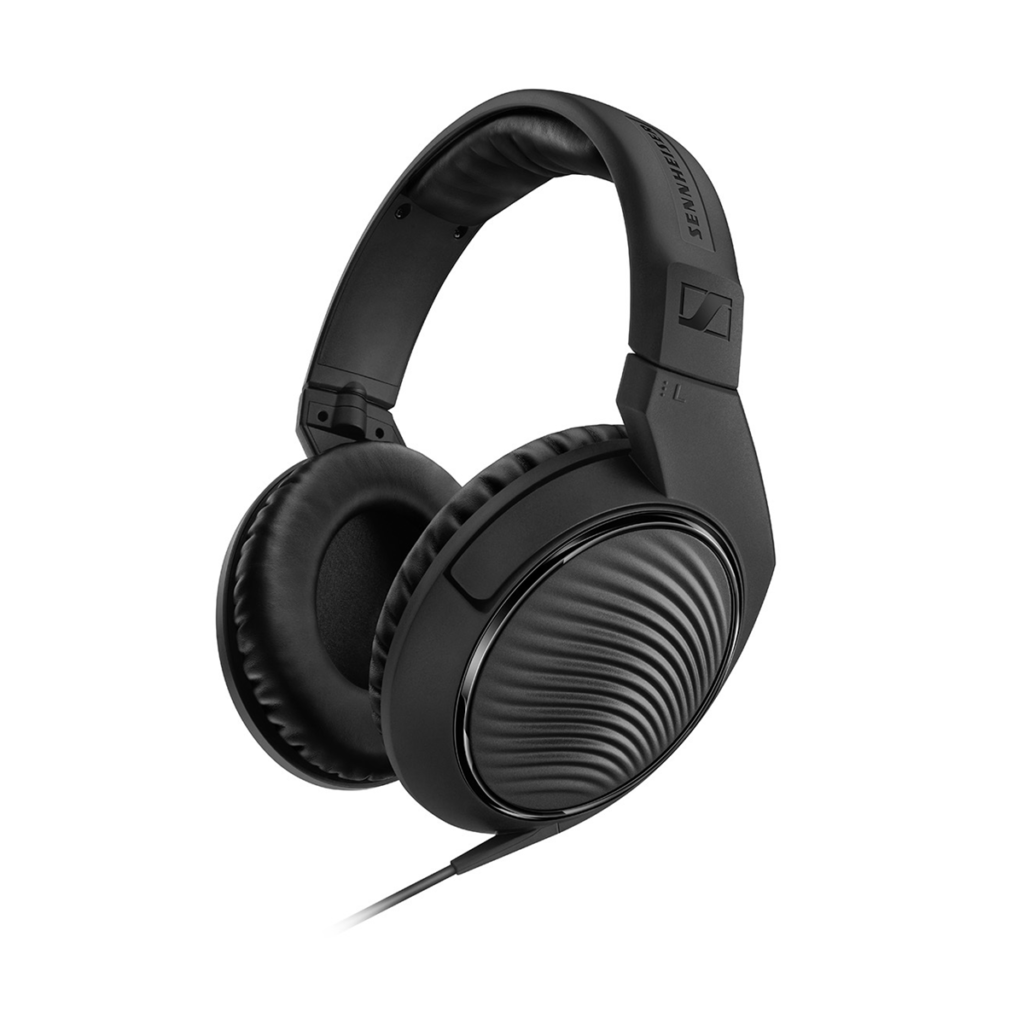
Sennheiser HD 200 PRO is an affordable closed-back headphone for students, home creators and musicians who need a simple monitoring connection. Its wired design can fit a keyboard, interface or suitable headphone output without batteries or pairing. The important qualification is that monitoring a performance and judging a finished mix are different jobs. The original listening test regards it as an enjoyable all-rounder, while raising reservations about the tonal emphasis and bass precision expected from an analytical reference.
Research-based review. This assessment draws on manufacturer documentation and the original published evaluations linked below. Audio Review has not performed a hands-on test of this model.
A clear role in a first recording setup
The closed design offers passive separation from the room and can be practical when following an instrument or vocal performance. There is no active cancellation circuit, and closed cups should not be described as preventing every trace of sound from escaping.
For recording, make a short test with the microphone and cue level you actually intend to use. Listen back for headphone bleed before committing to a full take. If the room is noisy, address the monitoring arrangement rather than simply increasing volume. The HD 200 PRO can be a manageable starting tool when the task is hearing timing, pitch and a backing track. It should be selected because it does that job acceptably in the real setup, not because the word PRO removes the need to check results.
What the original sound assessment supports
Headphonecheck describes forward, energetic mids and an enjoyable presentation, but finds the bass less precise and some dense productions too insistent. Its assessment favours basic monitoring and music enjoyment over unqualified analytical use. Those are the relevant limitations to consider alongside the accessible price.
Try material with several instruments competing in the middle range, then a simpler voice or acoustic recording. Decide whether the emphasis helps follow a performance or makes longer listening tiring. A headphone can be useful for cueing a singer while still needing another reference for final tonal balance. Keep those roles separate when assessing value. A beginner benefits more from understanding a tool’s character than from assuming that every closed studio-labelled headphone reproduces a mix without meaningful coloration.
Instrument practice without a complicated system
A wired headphone can be convenient for a digital piano, synthesizer, drum machine or other instrument that provides a suitable headphone output. Use the correct socket and adapter, and start with a low output level. A line output is not automatically a headphone output simply because a plug can be made to fit.
Check whether the cable reaches the normal playing position without pulling when turning towards a screen or music stand. For practice, sustained comfort and intelligible musical information may matter more than wireless freedom or application features. The absence of a battery makes the routine predictable. It does not mean every source will provide an equally clean or useful volume range. A brief test on the actual instrument is more informative than guessing compatibility from impedance alone.
Fit, warmth and the practical cable compromise
The padded over-ear construction is intended for everyday monitoring. The original reviewer finds the fit comfortable while noting the familiar warmth that can develop in longer closed-headphone sessions. Personal head shape and glasses still need a real fit check.
The cable arrangement is less adaptable than a detachable system. Route it away from chair wheels and avoid leaving tension at the cup connection. If a cable is damaged, repair may be less convenient than replacing a removable lead. That does not make a fixed cable unusable; it means handling and the likely working environment belong in the value calculation. A simple headphone kept at one instrument may face fewer cable hazards than one moved repeatedly between a laptop bag, desk and rehearsal room.
Use references when making mix decisions
If using the HD 200 PRO for production, learn it with recordings whose balance is familiar and compare important work on another dependable playback system. In particular, do not assume the amount of bass heard through one headphone tells the whole story of a mix.
Work at a comfortable repeatable level and take breaks before making major tonal changes. If a correction repeatedly sounds wrong elsewhere, investigate the reference and monitoring chain rather than adding more compensating equalisation. A modest headphone can still help develop useful skills when its limitations are recognised. The expensive mistake is treating it as an unquestionable measuring device. For a growing studio, keep a practice or tracking headphone if it continues to serve that role, even after another reference is added for editing or final judgment.
Buying an established model at the right price
Judge the current package and condition rather than the original launch price. Include any required adapter, pad replacement or cable repair when comparing a used example with a new pair. Test both channels and the connector while listening at a normal level.
For calls, remember that this is a headphone without a supplied microphone. For travel, consider whether the form and cable suit the bag and seat space, rather than assuming passive isolation makes it a commuter specialist. Compare alternatives by the main job: following a performance, practising an instrument, listening to music or evaluating a mix. The HD 200 PRO value is strongest when a low-cost, uncomplicated closed monitor meets a specific need. It is weaker when bought in the expectation of features or neutrality that the documented design and listening evidence do not promise.
Alternatives to consider
Audio-Technica ATH-M50x: ATH-M50x is worth comparing if the budget allows a more flexible closed headphone package. Try both on the intended interface and assess comfort, tonal balance and cable provision rather than relying on the monitoring label.
Sennheiser HD 560S: HD 560S offers an open alternative for a quiet editing or listening space. It is not a direct substitute where leakage near a microphone is the reason for choosing closed cups.
Sennheiser HD 200 PRO key specifications
- Design
- Closed-back over-ear
- Transducer principle
- Dynamic
- Nominal impedance
- 32 ohms
- Connection
- Wired analogue
- Cable length
- 2 m
- Headphone plug
- 3.5 mm stereo
- Adapter
- 6.3 mm stereo supplied
- ANC
- No
- Microphone
- No
- Battery
- Not required
- Weight without cable
- 184 g
Verdict
HD 200 PRO is a practical budget option for basic recording cues, instrument practice and straightforward wired listening. Its closed construction and simple connection can reduce the complexity of a first setup.
The original assessment gives good reason to treat it as a useful all-round tool rather than a final analytical authority. Confirm fit, cable reach and the real source connection, and cross-check important mix decisions. At an appropriately low current price it can be sensible, especially when the buyer understands the role it will retain as the rest of the system develops.
Documentation and original reviews
Sennheiser official HD 200 PRO features and specifications · Headphonecheck original HD 200 Pro listening and handling test · Sennheiser original HD 200 PRO product announcement
Editorial record
Sources and updates
Product specifications and factual claims were checked against Official Sennheiser HD 200 PRO product page ↗. Scores and buying advice follow our category-specific editorial methodology.
- Published
- November 17, 2026
- Last updated
- November 17, 2026