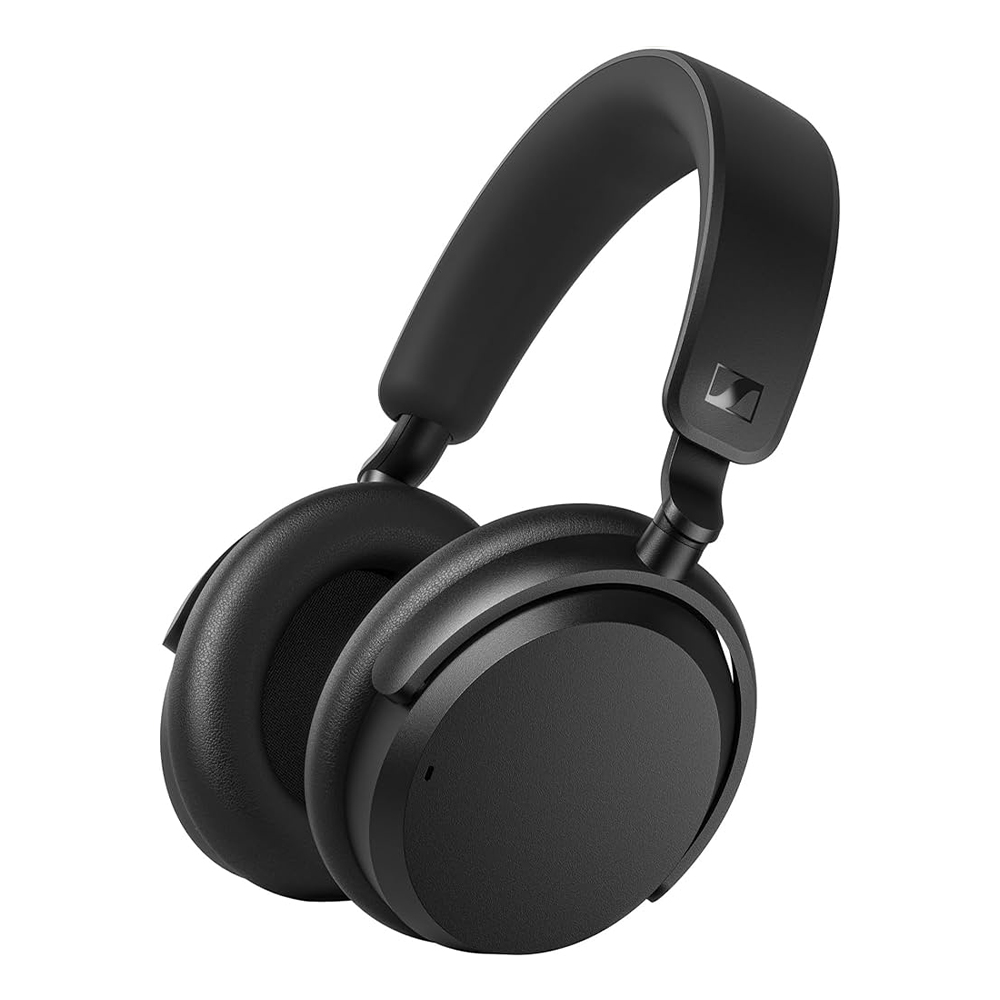
Sennheiser ACCENTUM Wireless is an everyday ANC headphone built around long endurance, physical controls and a more accessible price than the company’s premium range. This review covers the original ACCENTUM Wireless, not ACCENTUM Plus or the similarly named earbuds. Its appeal is practical, although the published listening tests do not agree that convenience automatically makes it the most exciting musical choice in its class.
Research-based review. This assessment draws on manufacturer documentation and the original published evaluations linked below. Audio Review has not performed a hands-on test of this model.
Long battery life is the clear foundation
Sennheiser claims up to 50 hours of Bluetooth playback with ANC under its specified conditions. SoundGuys recorded 46 hours and 40 minutes in its own standard test. Those are different results from different procedures, but both support endurance as a meaningful reason to consider the original ACCENTUM.
Translate that into your routine rather than treating the largest number as a promise. A working week with occasional calls is not the same usage pattern as constant loud music, and battery age also changes the result over time. Decide how often charging is acceptable and whether a reliable overnight or desk routine is available. Long runtime reduces charging frequency, but it does not remove the need to check remaining charge before a journey. Include the state of the battery when considering used or old-stock examples.
Useful cancellation with a realistic ceiling
The headphone combines hybrid ANC and a transparency mode. SoundGuys finds useful noise reduction but places cancellation below stronger premium competitors. That is a reason to assess the intended environment rather than assume every ANC label offers the same level of relief.
Try low-frequency background noise and nearby conversation separately. A successful reduction in steady rumble does not mean every voice disappears. Check the seal with glasses and normal head movement, because fit affects both isolation and tonal balance. At home, decide whether the reduction is enough to keep playback at a comfortable level while working. On a commute, consider whether stronger cancellation is worth a larger investment. The correct choice is the one that deals adequately with the actual noise problem, not the one that promises the greatest number of modes on a specification sheet.
The sound deserves more than one adjective
SoundGuys describes a bass-forward balance that benefits from adjustment and is broadly positive about value. What Hi-Fi is less enthusiastic about musical drive, finding the presentation too softened to be a wholehearted recommendation. The difference is useful evidence that personal preference matters here.
Use an energetic track and a familiar voice during an audition, then compare with another candidate at similar perceived level. Listen for whether the bass supports the music or makes vocals seem too far behind it. Check whether the presentation remains engaging after a few tracks, rather than merely comfortable in the first minute. If using EQ, make modest changes and return to the default for comparison. A sound profile should fit your listening habits, and neither a favourable brand reputation nor a long battery result can settle that preference.
App controls and physical buttons
The product information provides a five-band equaliser and sound modes, while physical buttons handle everyday operation. That gives a useful choice between setting the sound on the phone and making ordinary adjustments without looking at a screen.
Learn the controls before using the headphone in a distracting environment. Check how playback, volume, calls and transparency work with the phone or computer you actually use. If an app update changes a menu, refer to the current support instructions rather than assuming an older review’s screenshots are still exact. Keep any sound adjustments simple enough to understand later. A feature is useful when it improves a repeatable routine; it is less valuable when several overlapping presets make it difficult to remember why the headphone now sounds different.
Fit, transport and the missing case
The official weight is 222 grams, and the standard package omits a carry case. What Hi-Fi notes warmth during longer sessions, while SoundGuys flags the possibility of glasses affecting the seal. These are individual fit considerations, not proof that the headphone will be uncomfortable for everyone.
Try a session similar to normal use and assess ear space, crown pressure and warmth. Do not judge only by the lower weight compared with a large hi-fi headphone. For travel, decide how it will be protected inside the bag and include a suitable case if necessary. A low current price becomes less meaningful if essential accessories must be added immediately. With a used example, inspect the pads, hinges and charging connection, and check whether any needed replacement parts can be obtained at a sensible cost.
Codec support is not universal source compatibility
The original model lists SBC, AAC, aptX and aptX HD. A compatible headphone is only one half of a codec connection; the phone, computer or transmitter must also provide the relevant format. These entries do not establish LE Audio or an aptX Low Latency connection.
For video and games, test the intended application rather than assuming a Bluetooth version guarantees acceptable delay. For calls, make a short recording or speak to someone in the actual room before relying on the headphone for important meetings. Noisy surroundings and wind place different demands on microphones from a quiet desk. Compare the complete experience across the tasks that matter most. A model that meets music, comfort and endurance needs can still be the wrong purchase if the primary job is uncompromising call quality or a particular low-latency connection.
Alternatives to consider
Sennheiser Momentum 4 Wireless: Momentum 4 is a relevant step-up comparison when a current offer makes the gap manageable. Compare comfort, cancellation and sound rather than choosing within the same brand on battery claims alone.
Anker Soundcore Space One Pro: Space One Pro is worth an audition for another travel-oriented feature balance. Check fit and cancellation in the intended environment, and decide which presentation remains preferable over a longer session.
Sennheiser ACCENTUM Wireless key specifications
- Design
- Closed over-ear wireless
- Driver
- 37 mm dynamic
- Bluetooth
- 5.2
- Music codecs
- SBC, AAC, aptX and aptX HD
- Noise control
- Hybrid ANC and transparency
- Manufacturer battery claim
- Up to 50 hours with Bluetooth and ANC, under stated conditions
- Charging
- USB-C; approximately 3 hours full
- Weight
- 222 g
- Sound adjustment
- App-based EQ
- Controls
- Physical buttons
- Standard carry case
- Not included
Verdict
Original ACCENTUM Wireless is a sensible shortlist choice for endurance, everyday convenience and useful noise reduction at an appropriate current price. Its long battery performance has support from an original test, while app adjustment adds some flexibility to the presentation.
Audition the sound and fit, and compare cancellation where it will actually be used. The published disagreement about musical drive should encourage that comparison rather than be hidden behind a single confident score. Choose the ACCENTUM when its overall routine works for you, with the standard package and source compatibility understood before purchase.
Documentation and original reviews
Sennheiser official original ACCENTUM Wireless specifications and package · SoundGuys original ACCENTUM Wireless test and battery result · What Hi-Fi original ACCENTUM Wireless listening evaluation
Editorial record
Sources and updates
Product specifications and factual claims were checked against Official Sennheiser ACCENTUM Wireless product page ↗. Scores and buying advice follow our category-specific editorial methodology.
- Published
- November 17, 2026
- Last updated
- November 17, 2026