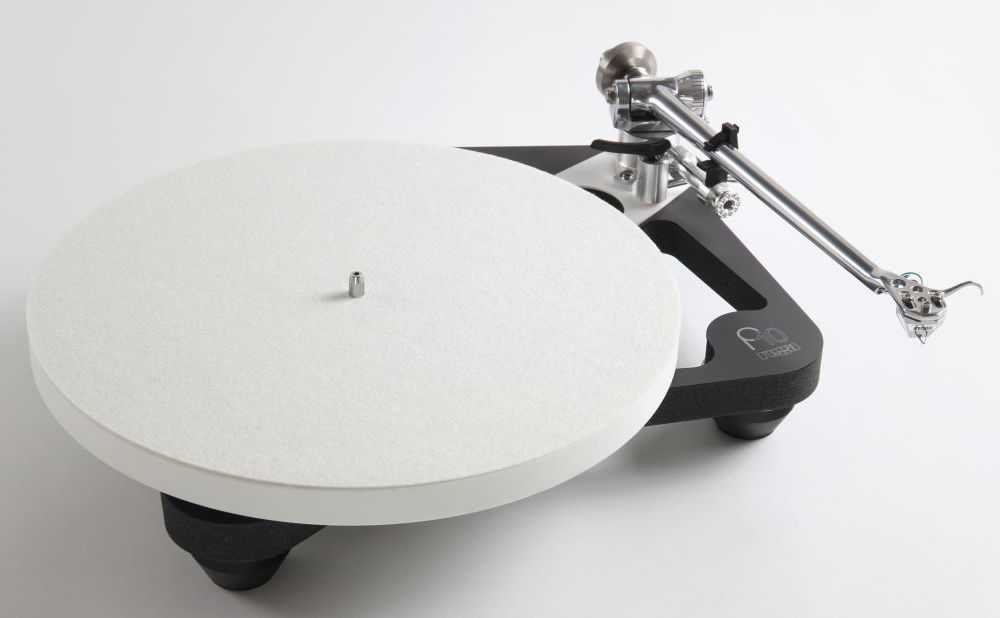
The Rega Planar 10 is a deliberately specialised turntable. Its skeletal structure, ceramic platter, RB3000 arm and dedicated P10 power supply concentrate the budget on the mechanical source rather than convenience features. It belongs in a system where record replay is a priority and where cartridge, phono stage, support and setup can receive the same care as the deck.
Rega Planar 10 — Engineering that defines the product
The Planar 10 uses a lightweight foam-core structure with a rigid laminate skin, a ceramic top brace and a ceramic-oxide platter. These details distinguish it from simply adding a more expensive cartridge to a lower model. The aim is a stable relationship between the arm and bearing with carefully controlled mass. The construction is visually striking, but its unusual materials should be treated as engineering choices rather than automatic proof of audible superiority over every alternative.
The RB3000 tonearm and matched P10 supply are part of the complete proposition. A buyer should consider the deck, arm and motor control together rather than assigning all expected performance to one conspicuous material. The ceramic platter is easy to notice, while the precision and handling of the arm are equally relevant to daily use. Inspect the product with the retailer and understand how to lift and transport its separate parts safely.
The skeletal footprint is also a practical commitment. It does not provide the broad rectangular surface or conventional hinged lid of many familiar turntables. Allow space to remove and store the cover during listening and to reach the arm comfortably. Premium engineering is of limited value if the final shelf makes every record change awkward or leaves a valuable stylus exposed to avoidable accidental contact.
Cartridge options and phono-stage matching
Rega lists Apheta 3 and Aphelion 2 moving-coil factory options. The cartridge must be specified when comparing prices, because the cost of the complete source changes materially with the package. A bare-deck listing is not directly comparable with a dealer-supplied turntable that includes cartridge installation and setup. Confirm exactly what is supplied and which checks the retailer performs before handover.
A suitable MC phono stage is essential for these low-output cartridge choices. An ordinary line input or MM-only input is not an equivalent connection. Gain, loading, noise and overload behaviour deserve attention, particularly in a system with a sensitive downstream amplifier. Follow the cartridge maker’s current guidance rather than transferring a setting from a previous cartridge merely because both are described as moving coils.
The cost of cartridge service or replacement should be understood before purchase. Frequent record use eventually consumes a stylus, however carefully it is handled. Ask about the exact service route and turnaround arrangements, and distinguish normal wear from warranty coverage for manufacturing defects. A premium cartridge should fit an ownership budget, not just the initial purchase budget. This is particularly relevant when comparing the less expensive and more ambitious factory packages.
P10 supply and the manual listening routine
The dedicated P10 supply controls the 24-volt motor and provides electronic speed changes and fine adjustment. Its inclusion is part of the source platform, but the supply is a separate component that needs shelf space and sensible cable routing. Plan the location before installation so that power and low-level signal connections remain easy to identify and the turntable can be cleaned or moved without pulling on the arm cable.
The deck is still manually operated. The listener cues the arm and returns it at the end of a side. There is no automatic record selection, built-in wireless transmission or USB recording interface. These are clear product boundaries, not inconveniences to be discovered after delivery. Buyers who want unattended playback or easy digital archiving may prefer another architecture, or should include the additional equipment required for those jobs.
Manual operation can be satisfying when vinyl is an intentional activity. It also asks for a suitable environment: stable furniture, enough light to cue safely and an area where the exposed cartridge is not routinely at risk. A demonstration should include the actual handling routine rather than only a short listening excerpt. The right premium turntable is one the owner enjoys using as well as hearing.
Installation and preserving performance
A low-mass turntable benefits from a rigid, level support and thoughtful separation from loudspeakers. Check the floor for footfall problems and the furniture for obvious resonance before considering accessories. A suitably installed wall support may be useful in some rooms. The goal is a stable mechanical environment, not the automatic purchase of the most elaborate isolation product available. Solve an observed problem with an appropriate method.
Set tracking force and bias for the actual fitted cartridge, using current instructions. Factory mounting can simplify alignment, but it does not remove every check after transport. Cartridge changes need attention to mounting height and compatibility with the arm, so a dealer’s help can be valuable if the owner lacks experience. Do not copy a setup value from a review of a different cartridge package.
Record condition remains fundamental. Clean records and an appropriately maintained stylus help the source work as intended, while worn grooves and eccentric pressings can produce problems no deck can erase. If pitch or distortion seems wrong, check several known records before attributing the result to the motor or arm. Keep the original packaging for future transport, because a premium turntable should not be moved casually with the platter and arm unprotected.
What the original review establishes
What Hi-Fi’s original Planar 10/Apheta 3 review praised its insight, rhythmic drive, dynamics and engineering. It also noted that the appearance would not suit everyone. That is a strong assessment of the named package, not an Audio Review listening result and not a direct comparison of every cartridge available today. It supports the Planar 10 as a serious audition candidate rather than a guarantee that price alone will make it the right choice.
The most useful audition uses familiar records in good condition and a phono stage of suitable quality. Include sustained notes, quiet vocal material and dense arrangements, not only recordings chosen to produce an immediate dramatic effect. Keep volume consistent across comparisons and identify any cartridge or gain changes. A louder presentation can seem more detailed or more forceful even when the difference is mostly level.
The Planar 10’s role is to preserve information from the record within the limits of the medium and the rest of the system. It should not be expected to make every recording sound equally polished. A revealing source may make differences between pressings and recording quality easier to notice. The owner should prefer the overall presentation and find it convincing over a longer session, rather than choosing only the most spectacular first minute of a demonstration.
System balance and value
This turntable is easiest to justify in an established system that already has capable amplification, suitable speakers and a quiet phono path. If the room or speaker placement presents a major unresolved problem, allocating the entire upgrade budget to the source can be disappointing. Consider what limits listening now and whether a less expensive deck would leave enough money to address that limitation properly.
The complete European price should include the cartridge, phono stage, setup and support. Compare that total with alternative approaches, including a substantial direct-drive platform and a more modest Rega with a carefully chosen cartridge. The Planar 10 offers an integrated engineering proposition rather than a collection of convenience functions. Its premium makes most sense for a frequent vinyl listener who values that proposition and expects to keep the source for a long period.
Local dealer expertise can be part of the value when it includes proper installation and a clear service route. A discount is useful, but it should not replace an understanding of what happens when the cartridge needs attention or the system moves house. Choose the Planar 10 after a meaningful audition and a realistic ownership calculation, with its manual routine and specialised role fully accepted.
Alternatives to consider
Denon DP-3000NE: Compare a substantial direct-drive source with different cartridge-handling and adjustment priorities.
Rega Planar 3: A more economical foundation when a balanced system upgrade matters more than maximising the source budget.
Rega Planar 10 key specifications
- Drive / operation
- Belt drive / manual
- Tonearm
- RB3000
- Platter
- Ceramic oxide
- Plinth
- Tancast 8 foam core with laminate skin and ceramic top brace
- Power supply
- Dedicated matched P10 supply
- Factory cartridge options
- Apheta 3 or Aphelion 2 MC; optional, verify package
- Phono stage
- External MC-compatible stage required for listed MC packages
Verdict
The Rega Planar 10 is a compelling specialist source for an established vinyl system, with ambitious construction and strong published support for the Apheta 3 package. Its price, cartridge servicing and phono-stage requirements demand planning. Buy it for frequent attentive listening after an audition, with setup and support already accounted for.
Primary documentation and independent reviews
Rega official Planar 10 product information · What Hi-Fi original Planar 10/Apheta 3 review
Editorial record
Sources and updates
Product specifications and factual claims were checked against Official Rega Planar 10 product page ↗. Scores and buying advice follow our category-specific editorial methodology.
- Published
- November 8, 2026
- Last updated
- November 8, 2026