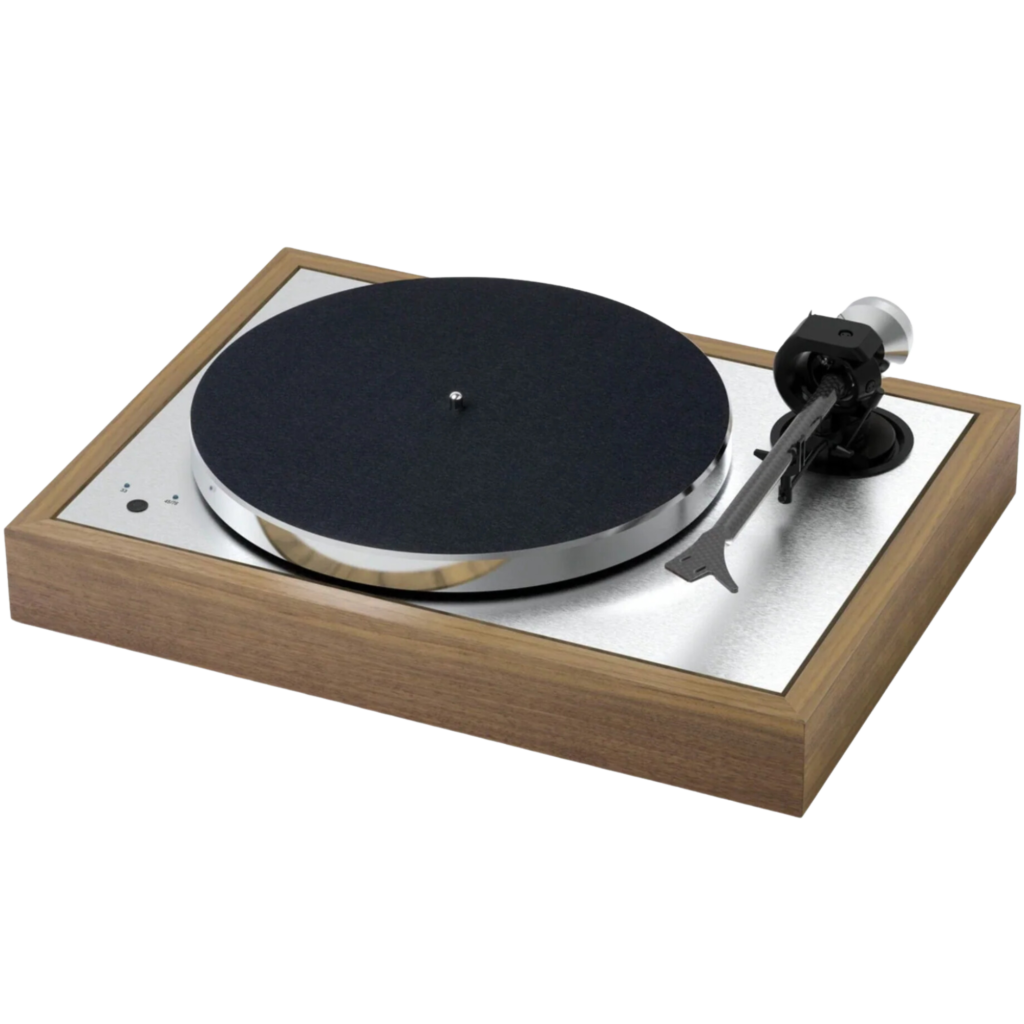
Pro-Ject The Classic EVO combines familiar turntable proportions with a fitted moving-coil package and a relatively approachable ownership brief. The visual appeal matters, but this is more than a decorative piece: the original evaluation finds an engaging presentation and a useful sense of space. Its TPE-isolated inner chassis is also different from the traditional spring suspension the styling may suggest. The recommendation concerns the Classic EVO and Quintet Red arrangement, with particular attention to phono matching, manual operation and the condition of any older example being considered.
Research-based review. This assessment draws on manufacturer documentation and the original published evaluations linked below. Audio Review has not performed a hands-on test of this model.
An engaging presentation deserves a long audition
AVForums’ original assessment finds enjoyable, spacious playback and a slightly distinctive character. Its Rega comparison favours the rival’s immediacy and punch, while appreciating the Pro-Ject’s relaxed appeal across longer sessions. The evidence supports a taste-sensitive recommendation rather than a universal claim of neutrality.
Play familiar records that cover both intimate material and stronger rhythmic changes. Listen for whether the music remains interesting after the first impression has passed. An attractive tonal balance should work across the actual collection rather than one flattering demonstration track. Compare at a similar volume through the same supporting equipment where possible. The cartridge and phono stage are part of the result, so a different complete chain cannot establish the contribution of the deck alone. A listener who values forceful attack should test that priority deliberately. Someone more interested in comfortable extended sessions may make a different choice. The useful outcome is a preference that survives ordinary listening, not a quick judgement based only on detail or visual familiarity.
Classic styling should fit the actual room
The frame-like plinth and metal-finished inner surface create the model’s visual identity. Its isolation uses TPE elements rather than a conventional sprung assembly, and the supplied cover is a practical part of the package.
Measure the intended support with the cover raised and leave enough access to handle records naturally. Consider where the phono cable and power lead will run, rather than deciding solely from the closed dimensions. A turntable is used physically every time a side changes, so an awkward shelf can undermine an otherwise appealing design. Keep the support stable and level and avoid placing it where a loudspeaker makes the furniture vibrate. The isolation arrangement is not an assurance against every room problem. The most satisfying installation makes the deck easy to see, reach and maintain without clutter. Its appearance can reasonably influence the purchase, provided the arrangement also works as a listening station rather than forcing the owner into an inconvenient routine.
The moving-coil package sets the phono requirement
The evaluated version uses an Ortofon Quintet Red moving-coil cartridge. Its phono-level output needs suitable external equipment; an ordinary line input or a basic MM-only input is not the intended complete connection.
Identify the exact phono stage and available settings before purchase. Ask the dealer to establish an appropriate configuration for the fitted cartridge, including a quiet grounding arrangement. Include that equipment in the cost comparison if it is not already owned. An existing compatible stage can make the package straightforward, while a new system may require more planning than its simple appearance suggests. Do not choose a phono stage only because its price seems proportional to the turntable. Practical matching and a reliable quiet result come first. If comparing different configurations, keep playback levels sensible and account for gain differences. A louder presentation can create an immediate impression without proving an improvement. The most useful starting point is a correctly matched complete system that can serve as a reference before any further spending.
Arm adjustment offers flexibility with a setup cost
The arm permits adjustments including height and azimuth, while the original review finds the thread-and-weight anti-skate arrangement fiddly. These facilities offer useful setup scope, but they should not be confused with automatic calibration.
Have the supplied cartridge checked after transport and retain a record of the correct settings. If the installation is unfamiliar, competent dealer help can be better value than trial-and-error changes. Avoid moving several adjustments at once when investigating a concern, because that makes it difficult to identify the cause. A future cartridge should be chosen around the arm, available adjustment and phono equipment together. Do not assume that a more expensive cartridge will fit the system’s priorities automatically. Before planning an upgrade, listen to the intact fitted package for long enough to understand it. Flexibility is valuable when it solves an identifiable problem. It can otherwise become a distraction from enjoying records, especially for an owner who chose the model mainly for its accessible visual and operational character.
Manual playback remains a deliberate choice
Electronic speed selection simplifies changing between supported speeds, but the arm operation remains manual. AVForums also notes unhurried initial spin-up and small speed controls. These are relevant everyday observations even when they do not determine the musical recommendation.
Try the physical routine before committing. Check that the controls are easy to reach, the cueing action feels comfortable and the owner is happy to attend to the end of a side. A listener accustomed to automatic return should compare that difference explicitly. For historic record formats, establish the appropriate cartridge or stylus setup rather than assuming a speed setting alone makes every disc suitable. The desired system is one that encourages regular use with the actual collection. Someone who enjoys manual interaction may find this part of the appeal. Someone who wants to start a record and leave the room may prefer a different operating arrangement. Neither preference is less legitimate; it simply changes how much value this particular model offers.
Older-stock value depends on identity and condition
The distributor’s retained information is useful because the model is no longer an ordinary current-stock proposition there. The original EVO must be distinguished from other Classic versions and later replacement packages. This review does not imply that every present listing contains the same cartridge or hardware.
Check the model label, fitted cartridge, stylus history, belt condition and completeness of the packaging. Ask whether the cover, cable and adjustment accessories are included. For a used example, arrange a proper working demonstration and appropriate transport rather than treating a clean photograph as evidence of mechanical condition. Compare the full ready-to-play cost with a supported current alternative. A good older package can make sense, but a low headline price can disappear after service and missing parts. Avoid buying with an immediate chain of speculative upgrades in mind. The strongest value is a coherent supplied system whose sound, appearance and manual routine already suit the owner. Improvements can then be considered against a known baseline rather than used to rescue a purchase that was never the right fit.
Alternatives to consider
Rega Planar 6: Planar 6 is a relevant manual comparison. Match the cartridge and phono equipment as closely as practicable, then compare the complete installed system rather than bare-deck prices.
Technics SL-1200GR2: SL-1200GR2 provides a contrasting direct-drive route. Consider the cartridge, setup service and daily operation required for the actual package, alongside musical preference.
Pro-Ject The Classic EVO key specifications
- Version
- The Classic EVO with Quintet Red package reviewed here
- Drive
- Manual belt drive
- Speeds
- 33⅓ / 45 / 78 rpm supported; appropriate stylus needed for record type
- Isolation
- TPE-separated inner chassis, not conventional spring suspension
- Platter / subplatter
- Aluminium with TPE platter damping / aluminium
- Arm
- 9-inch carbon/aluminium sandwich
- Effective length / mass
- 230 mm / 13.5 g
- Cartridge
- Ortofon Quintet Red MC in evaluated package
- Output
- RCA phono level; suitable external MC stage required
- Arm adjustment
- VTA and azimuth; thread-and-weight anti-skate
- Size / weight
- Approximately 462 × 131 × 351 mm / 10.5 kg
Verdict
The Classic EVO remains an appealing research-based shortlist choice for its engaging musical evidence, thoughtful proportions and adjustable arm. The Quintet Red’s phono needs, fiddly anti-skate and manual routine require planning. Confirm the precise version and condition before buying older stock. It is most convincing as a complete package to enjoy, with its visual appeal supporting a system that also works naturally every day.
Documentation and original reviews
Henley Audio official distributor Classic EVO specification archive · AVForums original The Classic Evo evaluation
Editorial record
Sources and updates
Product specifications and factual claims were checked against Official Pro-Ject The Classic EVO product page ↗. Scores and buying advice follow our category-specific editorial methodology.
- Published
- November 17, 2026
- Last updated
- November 17, 2026