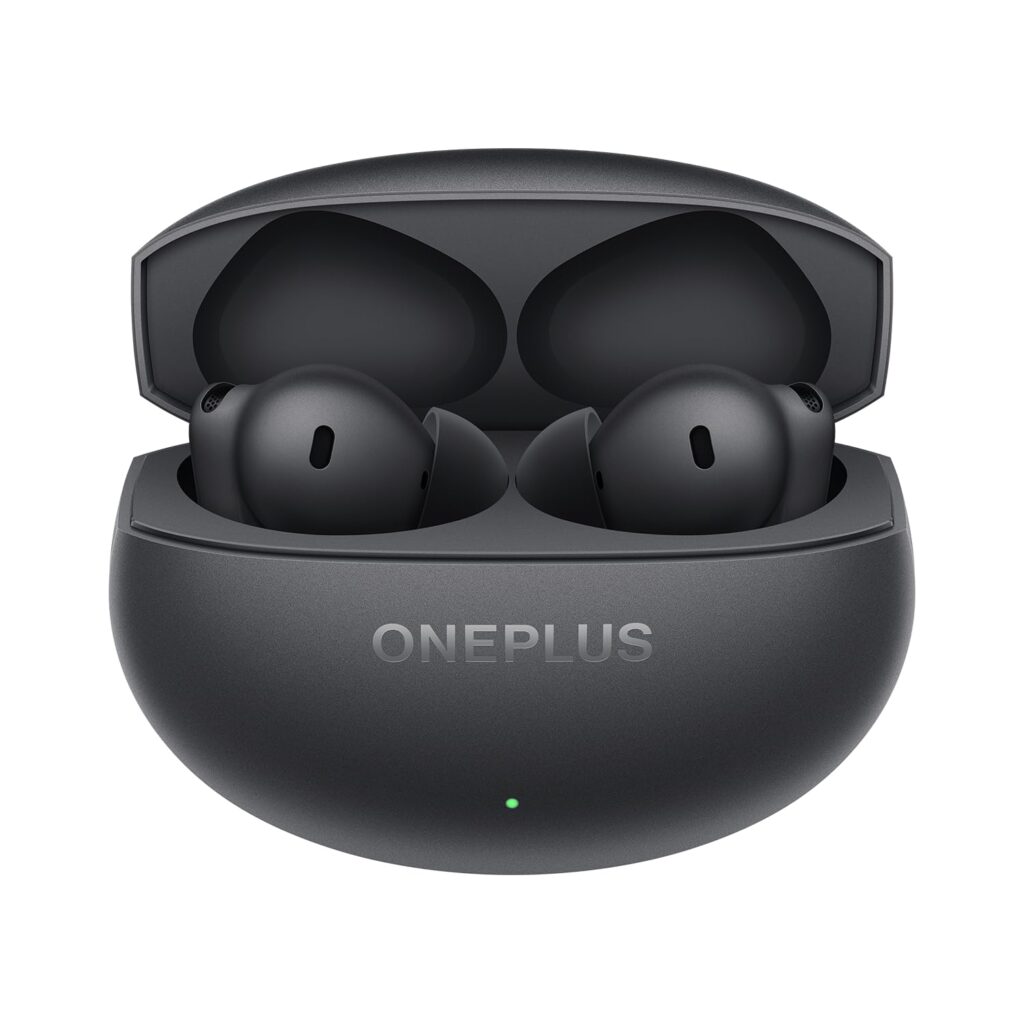
OnePlus Buds 4 develop the regular Buds line with dual drivers, adaptive noise controls and convenient volume swipes. They are distinct from Buds Pro 3 and offer a mix of broadly available Bluetooth functions and extras tied to supported OnePlus phones. The useful buying question is how that complete package behaves with the source actually owned, rather than whether every advertised capability is technically present somewhere in the ecosystem.
Research-based review. This assessment draws on manufacturer documentation and the original published evaluations linked below. Audio Review has not performed a hands-on test of this model.
Sound is a strong starting point
SoundGuys’ original evaluation is enthusiastic about the default tuning, while noting a sub-bass emphasis and the scope for adjustment. Tom’s Guide also praises the sound and controls even though its overall judgement is more qualified. That agreement makes sound a stronger foundation for the recommendation than a claim that every feature is class-leading.
Listen to familiar music before enabling every enhancement. Compare the default with modest EQ changes and check whether voices, bass lines and percussion remain in the balance you prefer. A personalised profile can be worth trying, but it should earn its place through an audible preference rather than a persuasive name. Keep the original setting available for comparison. The aim is a presentation that remains enjoyable over a whole session, with adjustments that make sense to the listener rather than an escalating collection of effects.
ANC findings require an honest comparison
SoundGuys measures strong overall noise reduction, whereas Tom’s Guide is disappointed by cancellation in its practical evaluation. Those are different test experiences, so it would be misleading to turn either into a universal promise of silence or a blanket claim that ANC is ineffective.
Check the fit first, then assess the actual commute or work environment. Low-frequency rumble, conversation and wind are different challenges, and the effect can change with tip seal and head movement. Try transparency and adaptive operation as well as maximum cancellation. Decide whether automatic changes are helpful or whether a predictable fixed setting suits the task better. During an audition, keep playback moderate enough to judge the reduction itself. A headphone that makes the environment more manageable can be useful without preventing every external sound from reaching the listener.
The long battery figure has specific conditions
The UK specification gives eleven hours from the buds and 45 including the case with AAC, ANC off and 50% volume. With AAC and ANC on, those claims fall to six and 24 hours. LHDC with ANC brings them to 5.5 and 22 hours. SoundGuys measured 5 hours 31 minutes with ANC in its own test.
Choose the figure relevant to the planned settings and distinguish continuous listening from recharges supplied by the case. A long meeting or flight cannot use the case reserve without a listening break. Leave a margin for calls and battery ageing, and check practical charging habits before prioritising the largest total. The USB-C case does not provide wireless charging, which may be unimportant for one household but a daily inconvenience for another already using charging pads.
Know which features need which phone
The official footnotes restrict Steady Connect and AI Translation to supported OnePlus devices and software. LHDC high-resolution operation needs a compatible Android source and is not supported on iOS. Other functions, including sound adjustment through HeyMelody where supported, have a broader route.
Confirm the exact phone and software before buying for a named extra. General Bluetooth music and calls should be evaluated separately from an ecosystem function. If translation is important, check available languages and the required application rather than assuming the earbuds themselves perform every task independently. A good core listening experience can remain worthwhile without every bonus feature, but the value calculation should reflect what is actually available. Do not pay a premium for an advertised function that the current source cannot use.
Controls, multipoint and the daily routine
The stems support volume swipes and configurable taps. Official information also provides dual-device connection and notes that some commands, such as single-tap playback, require manual activation. That makes initial setup part of the experience rather than a detail to skip.
Try music, a phone call and the return to a computer application using the devices normally carried. Check whether notifications interrupt as expected and whether the preferred gesture can be triggered without loosening the fit. Two connected devices do not guarantee that all applications behave identically or that separate music streams mix together. If a control causes repeated accidental changes, simplify the mapping. A reliable small set of commands is more useful than enabling every option and then needing to reach for the phone to correct unexpected behaviour.
Fit, protection and interactive use
The official IP55 rating applies to the earbuds, not the case, and resistance can diminish with age. A low-latency mode is also advertised, but its number comes from manufacturer testing rather than a guarantee for every game and source.
Try each tip size and check comfort over a realistic session. For exercise, assess stability with the movements involved and dry the buds appropriately before returning them to the case. For video or games, test the actual application rather than assuming a Bluetooth version certifies timing. If interactive delay is critical, compare a connection designed specifically for that task. Finally, compare the current selling price with alternatives that meet the same needs. Buds 4 are most persuasive when their sound, controls and available phone functions form a coherent everyday package.
Alternatives to consider
Nothing Ear (2024): Nothing Ear offers another configurable everyday option. Compare the complete phone experience, fit and controls rather than choosing by the highest advertised codec resolution alone.
Technics EAH-AZ80: EAH-AZ80 is a useful more expensive audition when a current offer makes the comparison relevant. Decide whether any improvement in the complete listening and working routine justifies the total price difference.
OnePlus Buds 4 key specifications
- Drivers per side
- 11 mm woofer and 6 mm tweeter
- Bluetooth
- 5.4
- Music codecs
- LHDC 5.0, AAC and SBC
- Noise modes
- ANC, Adaptive, Transparency and off
- Connections
- Dual-device support
- Protection
- IP55 earbuds; case not covered
- Manufacturer AAC playback
- 11 hours buds / 45 hours total, ANC off
- Manufacturer AAC playback with ANC
- 6 hours buds / 24 hours total
- Manufacturer LHDC playback with ANC
- 5.5 hours buds / 22 hours total
- Charging
- USB-C; no wireless charging
- App route
- OnePlus settings or compatible HeyMelody app
- Phone-specific extras
- Steady Connect and AI Translation on supported devices
Verdict
Buds 4 offer a strong combination of documented sound quality, useful adjustment and practical controls. Their recommendation is strongest when the phone compatibility is understood and the listener has checked cancellation and fit in the intended environment.
Separate the core Bluetooth experience from the supported-OnePlus extras, and use the correct battery mode in comparisons. At an appropriate current price they deserve a serious audition, but no feature headline should replace a check of the daily routine. Choose them when the complete package works for the devices and listening habits already in use.
Documentation and original reviews
OnePlus official UK Buds 4 specifications · OnePlus official Buds 4 feature compatibility and battery footnotes · SoundGuys original Buds 4 sound, ANC and battery test · Toms Guide original Buds 4 review and differing ANC findings
Editorial record
Sources and updates
Product specifications and factual claims were checked against Official OnePlus Buds 4 product page ↗. Scores and buying advice follow our category-specific editorial methodology.
- Published
- November 17, 2026
- Last updated
- November 17, 2026