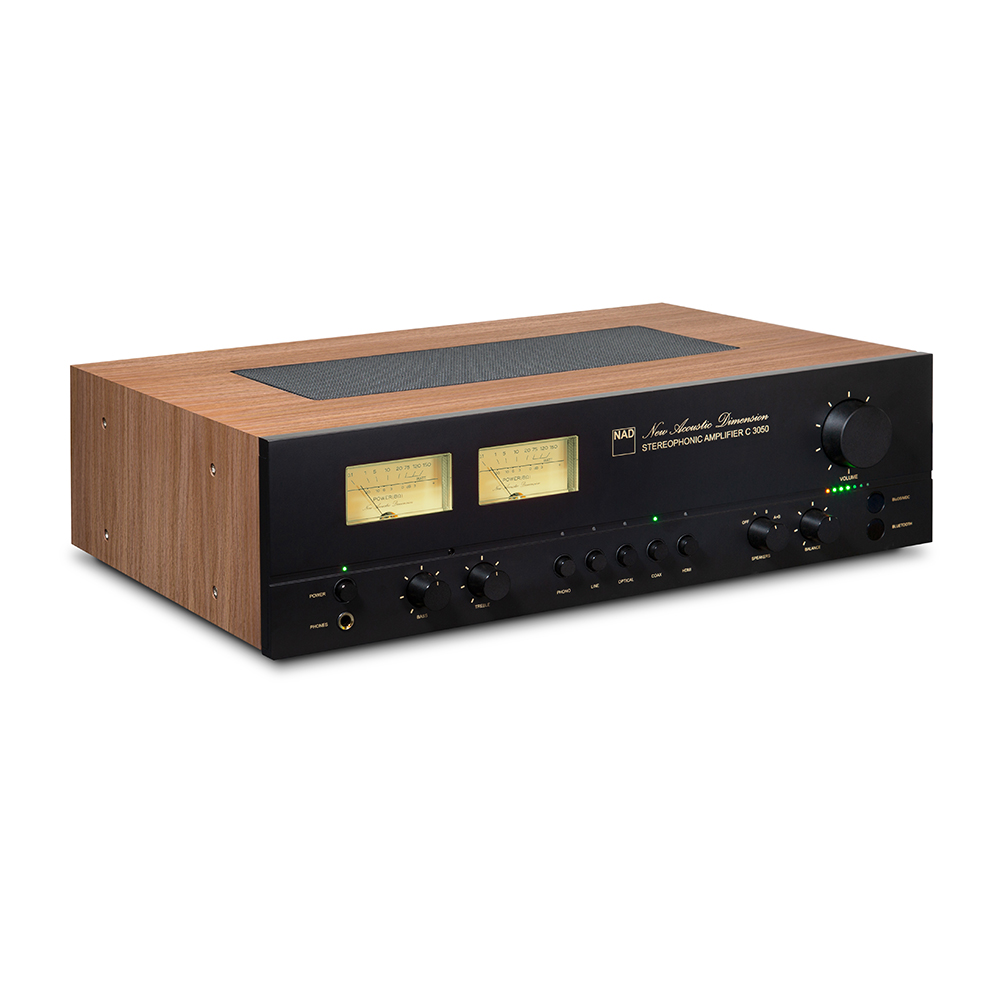
The NAD C 3050 combines retro styling with a modern stereo amplifier and useful television and vinyl connections. It can also become a streaming and room-correction system, but those functions depend on the optional MDC2 BluOS-D module. That configuration distinction is more important to the buying decision than the illuminated meters on its front panel.
NAD C 3050 — Design: nostalgia without a vintage signal path
The walnut-finished cabinet, original-style logo and VU meters make the C 3050 a component intended to be seen. That can be a practical advantage in a shared living room, where a conventional black equipment stack may be unwelcome. The appearance does not mean the amplifier is a restored vintage model, however. It is a modern integrated design with current source requirements, configuration choices and power amplification inside.
Placement should respect both the visual appeal and the working needs. Keep ventilation clear and allow space for the rear plugs. If the cabinet is displayed prominently, consider how the television, turntable and speaker cables will be routed. The meters are an enjoyable part of ownership, but they are not a substitute for checking the actual speaker load or setting a comfortable listening level. An attractive component still needs to fit the room and daily routine.
Power and a suitable speaker system
NAD specifies 100 W per channel continuously into 8 or 4 ohms, measured across the audio band with both channels driven at the stated distortion. That is a useful, clearly described manufacturer rating rather than our own bench result. It suggests an amplifier intended for a proper two-speaker system, but speaker sensitivity and listening distance still determine the practical requirement. A large room and a low-sensitivity speaker are a different demand from a nearby listening position with an efficient pair.
Choose loudspeakers that suit the room before assuming more amplifier power solves the problem. Bass that is too heavy near a wall can remain too heavy with a stronger amplifier. Likewise, an awkward speaker position can compromise clarity even when plenty of headroom is available. Establish the physical arrangement, then assess normal listening levels and the need for a subwoofer.
Speaker A/B connections offer flexibility, not independent source zones. If two pairs are used together, check the combined load requirements rather than filling the terminals simply because they are available. For many living rooms, one pair positioned well is the strongest starting point. The C 3050’s broad appeal should not encourage a more complex system than the room actually needs.
Vinyl, television and analogue source limits
The base amplifier includes an MM phono input, a line-level input, optical and coaxial digital connections, plus HDMI eARC. That makes a record player and television natural partners. The moving-magnet qualification matters: a low-output MC cartridge requires suitable matching equipment rather than being assumed compatible. If the turntable already supplies line level through an active built-in phono stage, use the normal line input instead of applying phono equalisation twice.
The single ordinary analogue line input deserves attention when several legacy sources are involved. A CD player, external DAC and tape source cannot all be assigned separate normal line inputs without an additional plan. Digital outputs from suitable players can help, but the correct connection depends on the equipment. Make a source list before purchasing rather than relying on the impression of a generously equipped rear panel.
HDMI eARC provides a more integrated television route than a simple optical DAC arrangement. Confirm the TV’s relevant socket, audio format settings and control behaviour during setup. This is still a stereo system, not a multichannel AV receiver. Buyers wanting centre, rear and height speakers should plan around equipment designed for those channels instead of assuming the presence of HDMI supplies them.
BluOS and Dirac: identify the actual package
The optional MDC2 BluOS-D card adds network streaming and Dirac Live Limited Bandwidth correction. NAD’s current page also ties the C 3050’s bidirectional Bluetooth function to that card. Do not assume a base amplifier contains the same wireless functions as a module-equipped review sample or the C 3050 LE. A listing should make the installed configuration explicit.
The included Dirac licence with the module covers correction up to 500 Hz; full-bandwidth correction is a paid upgrade according to NAD’s current support page. This is not the same as having every Dirac product or bass-control option included. Decide what the package provides before comparing its price with an integrated streamer that arrives fully equipped.
Room correction can be a meaningful addition because it addresses the listening environment rather than relying on an amplifier swap to change balance. It still needs careful measurements and a sensible target. Begin with reasonable speaker placement, keep the microphone positions consistent with the intended listening area and compare corrected and uncorrected playback at similar levels. A room correction system cannot make every seat identical or restore bass that a small speaker cannot produce cleanly.
Sound quality and the original review
AVForums evaluated the standard C 3050 and found an enjoyable combination of tonal richness, refinement and liveliness. It also noted that the module-equipped and base arrangements were not identical experiences, alongside limitations in the analogue input count and some control presentation. That is useful evidence for considering the complete configuration rather than simply importing the reputation of the limited edition.
Those are original listening observations in that review’s system. They do not mean every room or speaker produces the same balance, and they are not Audio Review listening results. For an audition, use the intended sources and familiar recordings. Compare the amplifier at a similar volume to alternatives and include music that exposes both low-level articulation and larger dynamic changes. The meter movement should be an enjoyable visual detail, not the basis for judging performance.
For an owner of a good existing integrated amplifier, the C 3050 should solve a concrete need. HDMI control, appropriate speaker drive, an MM input or the optional room-correction path can justify a change. A cosmetic attraction can also be legitimate, but it should be recognised as part of the purchase rather than disguised as a guaranteed sound improvement.
Value and who should buy it
The strongest buyer wants a visible living-room stereo component for vinyl and television, with the option of integrated streaming. Buying the module at the outset can make sense if BluOS and Dirac are central to the plan. Leaving it out can also be sensible if an existing streamer already provides everything needed. The modular design offers a choice, not an obligation to buy every option.
Compare current EU prices for the exact configuration, including VAT, installation where needed, any Dirac licence upgrade and local support. A base price beside a fully equipped rival can be misleading. Someone with many analogue sources or a strong preference for a large status display may prefer another layout. The C 3050 earns its place through the combination of appearance, useful core connections and a clear expansion path, provided those strengths match the actual system.
Alternatives to consider
NAD C 700 V2: A different NAD approach for a buyer prioritising a compact streaming system and screen rather than full-width retro presentation.
WiiM Amp Ultra: Compare this when integrated network playback, television use and a smaller physical package matter more than the traditional cabinet and meters.
NAD C 3050 key specifications
- Type
- Stereo integrated amplifier
- Continuous output
- 100 W/channel into 8 or 4 ohms, both channels driven
- Core sources
- MM phono, line, optical, coaxial, HDMI eARC
- Expansion
- One MDC2 slot
- Network / Bluetooth
- MDC2 BluOS-D module required as documented
- Dirac with module
- Limited Bandwidth up to 500 Hz; Full Bandwidth paid upgrade
- Other connections
- Headphone, subwoofer, pre-out/main-in and speaker A/B
Verdict
A distinctive and capable living-room amplifier for vinyl and television, with useful optional streaming and room correction. Check the installed BluOS-D module, licence scope and source count carefully; the base C 3050 and a fully equipped version are different buying propositions.
Primary documentation and independent reviews
NAD official C 3050 configuration and specifications · NAD current Dirac support and licence requirements · AVForums original standard C 3050 review
Editorial record
Sources and updates
Product specifications and factual claims were checked against Official NAD C 3050 product page ↗. Scores and buying advice follow our category-specific editorial methodology.
- Published
- November 8, 2026
- Last updated
- November 8, 2026