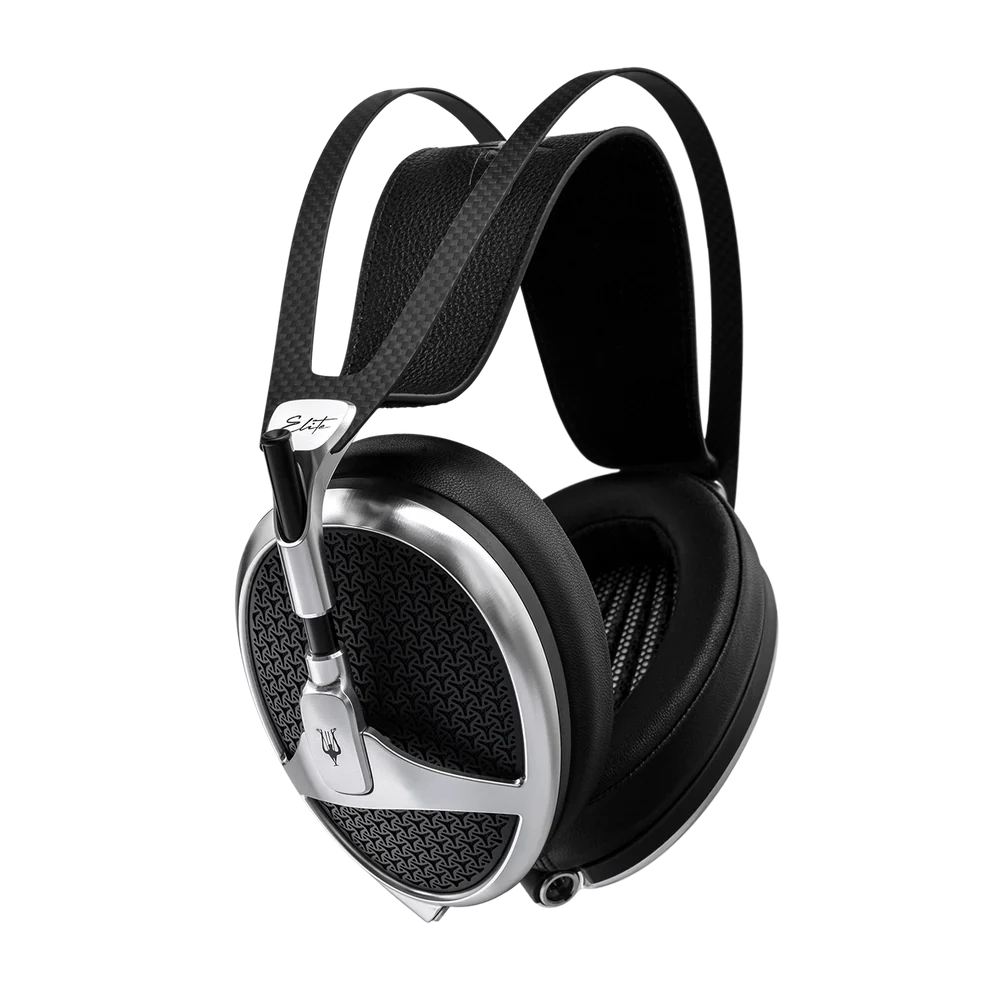
Meze Elite is an established high-end open planar headphone whose appeal combines a relaxed presentation with carefully finished construction. It belongs in a quiet listening setup where leakage and the absence of isolation are acceptable. The product also needs a more precise buying conversation than its name alone suggests: finishes, pads and supplied accessories have varied. A review of the original release is useful evidence, but it does not prove that every later bundle arrives with the same pads or case.
Research-based review. This assessment draws on manufacturer documentation and the original published evaluations linked below. Audio Review has not performed a hands-on test of this model.
A planar design built for a deliberate purchase
Meze’s official overview identifies the Rinaro MZ3SE driver and Parus diaphragm, together with an aluminium frame and a suspended headband structure. These engineering details help explain the product’s identity without establishing a universal listening advantage over every dynamic alternative.
At this price, ask what the complete design contributes to the intended experience. A comfortable frame and serviceable pads can be as important over years of ownership as an impressive technical description. Conversely, a listener who prefers another headphone’s tonal balance should not feel obliged to choose Elite because of its materials. Treat the construction story as context for an audition. The useful question is whether familiar music and normal listening sessions make the investment feel worthwhile, not whether a driver acronym appears more sophisticated than the one used by a less expensive competitor.
Smoothness and space with a preference attached
Headfonics’ original evaluation finds a spacious, easy-going presentation with articulate bass and natural vocals. It presents the Elite as smoother than a clinical reference, while describing cleaner organisation than the original Empyrean. That comparison concerns the products and pads tested at the time, not every subsequent model carrying a related name.
Use that evidence to choose audition material. Try acoustic recordings, dense mixes and bright productions, checking whether the relaxed balance remains engaging. Someone seeking strongly forward vocals or the sharpest possible leading edge may prefer a different tuning. A smooth presentation should not be confused with missing every fine detail, but it is still a listening preference. Match levels during comparisons and listen beyond the initial impression. The best result is a headphone that makes the existing collection enjoyable rather than one that wins only with a few carefully selected demonstration recordings.
Pads are a meaningful part of the product
The original Headfonics test compares the release-era Hybrid and Alcantara pads and reports changes in bass body and vocal presentation. The current Tungsten package instead lists Hybrid and Angled Alcantara pads. The word Alcantara alone does not make the original and later pad geometries identical.
Audition the cushions that actually come with the offer and ask which ones are fitted to a demonstration pair. Keep the attachment surfaces clean and seat both pads correctly after a change. If buying used, inspect wear and confirm that original parts have not been replaced with a visually similar substitute. Pad swapping can be enjoyable, but it also makes casual comparisons unreliable when the listener does not know which configuration was used. Record the preferred arrangement and compare consistently before deciding that a source or cable has changed the sound. A simple configuration check can answer a question that would otherwise lead to unnecessary spending.
Premium comfort still needs a long trial
The current Tungsten specification lists 433 grams, and the original evaluations are positive about Meze’s weight distribution and spacious ear openings. The physical experience remains personal. A suspended headband can distribute pressure well while still fitting some heads more comfortably than others.
Try the headphone in the position used at the listening chair or desk, with normal eyewear. Notice crown pressure, pad heat and whether a cable pulls during movement. Check the adjustment range rather than relying on a photograph. Ask about replacement pads, headband parts and regional servicing before treating a long-lasting construction claim as a guarantee that every part will always be immediately available. The headphone’s high price makes comfort more important, not less: a luxurious object that is rarely worn because it becomes tiring does not provide good value simply because its finishing is excellent.
The room and source both matter
Elite is open-backed and passive, so nearby sound remains audible and music can escape into the room. Its official impedance and sensitivity are relatively accommodating, but those figures do not mean that every headphone socket provides the same noise level, output quality or adjustment range.
Begin with a quiet location and a competent source. Check clean playback on quiet recordings, useful volume travel and the exact connection. The current Tungsten package lists a conventional 6.3-millimetre source cable; older or alternative offers may differ. There is no requirement to buy a balanced amplifier simply because the headphone is expensive. Compare proposed upgrades at similar loudness and identify the problem being solved. If the existing source already works well, an audition of another headphone may be a more useful comparison than changing upstream components by default.
Current packages and luxury value
Meze’s older Aluminium listing is marked discontinued, while the separate Tungsten listing remains an active offer. Those signals should not be collapsed into a claim that every Elite variant has the same availability. The current package also lists an ABS carrying suitcase, which differs from some early review descriptions.
Confirm the finish, pads, lead, case and warranty with the seller. Compare the full current European price with alternatives that also fit the room and comfort requirements. Elite can make sense as a luxury listening purchase for someone who values its sound, finish and ownership design together. It is less persuasive when the main requirement is isolation, portability or a strict monitoring reference. A high editorial sound assessment does not make the investment necessary. The preferred headphone is the one whose complete experience remains rewarding after the initial excitement of buying a flagship-level product has passed.
Alternatives to consider
Meze 109 Pro: A useful less expensive comparison for home listening if an open design suits the room. Judge comfort and the preferred tonal balance alongside the total system price.
Sennheiser HD 800 S: Consider this established open alternative when perceived space and long-session fit are central priorities. Compare at similar loudness rather than assuming that one driver technology must win.
Audeze LCD-X: Another serious planar option for home listening and production-oriented use. Check weight, the actual source and preferred presentation before deciding which approach suits the routine.
Meze Elite key specifications
- Design
- Open-back circumaural planar
- Driver
- Rinaro MZ3SE Isodynamic Hybrid Array
- Diaphragm
- Rinaro Parus
- Impedance
- 32 ohms
- Sensitivity
- 101 dB SPL/mW at 1 kHz
- Weight
- 433 g for current Tungsten listing
- Headphone connection
- Dual four-pin mini-XLR
- Current Tungsten pads
- Angled Alcantara and Hybrid
- Current Tungsten cable
- Mini-XLR to 6.3 mm PCUHD
- Current case
- ABS suitcase
- ANC, Bluetooth and microphone
- None
- Frequency response
- 3 Hz–112 kHz (manufacturer specification)
Verdict
Meze Elite offers a strong published case for smooth, spacious open listening with unusually thoughtful construction and pad serviceability. It should be auditioned as a complete physical and acoustic experience rather than selected on materials or historic flagship status alone.
Confirm the actual variant and pads, try a realistic listening session and use a suitable quiet room. The substantial price remains a personal value decision. For a listener whose preferences align, it can be a long-term luxury choice; different isolation, comfort or tonal priorities can justify a very different recommendation.
Documentation and original reviews
Meze official Elite driver and construction overview · Meze official current EU Elite Tungsten specifications and package · Meze official older Aluminium variant listing · Headfonics original Elite design and comfort evaluation · Headfonics original Elite sound and original pad comparison
Editorial record
Sources and updates
Product specifications and factual claims were checked against Official Meze Elite product page ↗. Scores and buying advice follow our category-specific editorial methodology.
- Published
- November 17, 2026
- Last updated
- November 17, 2026