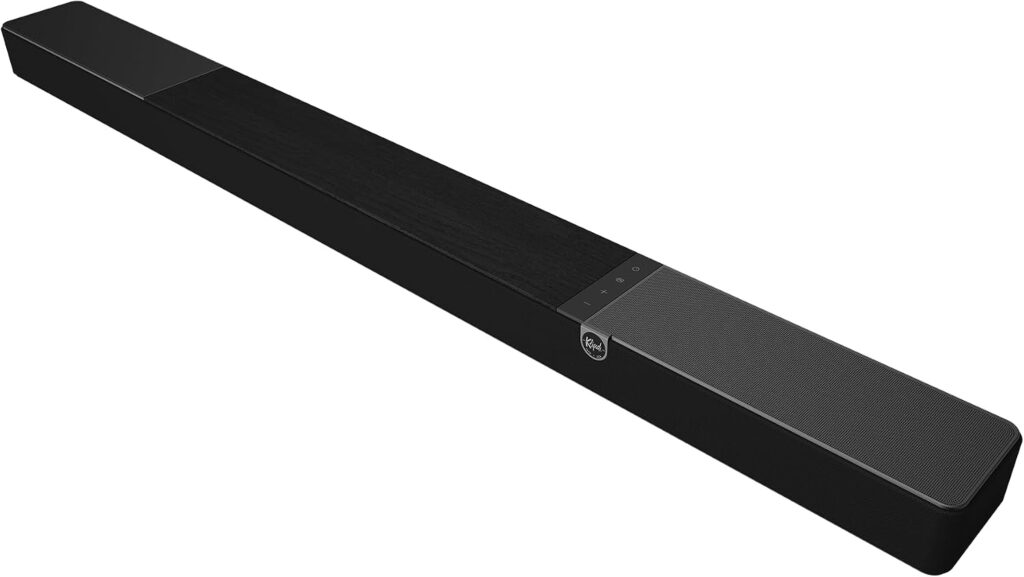
Klipsch Flexus Core 300 is a substantial 5.1.2 soundbar with physical up-firing drivers, network music and built-in Dirac Live calibration. It is a broader platform than the simpler Core 100, with optional Flexus rear speakers and external bass available for a fuller system. That modular approach makes configuration especially important when interpreting reviews. This research-based assessment distinguishes the documented bar from an original test using optional Sub 200 and Surr 200 components, and considers whether its room-correction and connection advantages justify the complete installed cost.
Research-based review. This assessment draws on manufacturer documentation and the original published evaluations linked below. Audio Review has not performed a hands-on test of this model.
Dirac is a meaningful attraction, with setup attached
TechRadar’s original evaluation of the expanded system reports a substantial improvement in midrange clarity after Dirac Live calibration, compared with a fuller and less clear uncorrected balance. It also finds the corrected system immersive and detailed. Those are useful observations about that tested installation, rather than a guarantee that every room or standalone setup will produce the same change.
Treat calibration as part of installation rather than a logo that works without attention. Arrange the room for ordinary use, position the speakers deliberately and follow the current Klipsch Connect Plus instructions in a quiet environment. Compare a known passage before and after the correction at a sensible level. Listen for clearer speech, more coherent bass and a stable balance, rather than simply a louder or more impressive result. Keep a usable reference setting so changes can be assessed rationally. Room correction can be valuable, but it should not be expected to rescue an unsuitable speaker position or replace the physical components required for the intended surround layout.
The basic bar and expanded system are different purchases
The Core 300 itself uses a 5.1.2 arrangement with built-in bass, front and side drivers, and physical up-firing full-range units. Compatible external bass and surrounds are optional. A review or demonstration with those extra components should not be described as the performance of the bar-only package.
Ask which exact configuration is being demonstrated and compare it with the one being bought. If rear effects are a priority, plan their positions and power provision before treating expansion as straightforward. If the room only supports a front bar, audition the standalone version with ordinary dialogue and a demanding film passage. Physical height drivers still depend on placement and the room’s reflecting surfaces, so keep their paths unobstructed. A large enclosure may produce scale at the front without placing a real speaker behind the sofa. The modular design is useful when it follows an informed plan. It is less helpful when the initial purchase is judged from a much more expensive complete system and the missing components become a surprise afterwards.
A richer music platform than the smaller Core models
The official product and manual document AirPlay, Google Cast, Spotify Connect and Tidal Connect, with network setup through Klipsch Connect Plus. Bluetooth offers another source route. These are useful independent playback facilities, rather than merely remote control for a Bluetooth-only bar.
Test the normal service accounts and phones during the return period. Check playback start, handover between users, volume adjustment and returning to television audio. Do not assume that a service subscription is included or that every application sends identical formats through every route. Compare the available music mode with the film setting using a familiar vocal and a dense arrangement. The system should remain coherent over a complete album, not only during a dramatic soundtrack demonstration. A buyer who already uses a particular multiroom platform should verify actual grouping compatibility rather than assuming that all networked speakers interoperate. Convenient streaming strengthens the Core 300’s living-room role when those routines remain easy for everyone using it.
Source connections need a deliberate plan
The current specification documents HDMI source passthrough, an eARC television output, optical and an RCA subwoofer output. It identifies the HDMI path as a modern passthrough implementation, but the exact requested picture and gaming modes should still be confirmed with current manufacturer guidance and the actual source equipment.
Choose whether a console or player connects directly to the bar or through the television based on the required video and audio features. Test those two aspects separately, including synchronisation and recovery after standby. A picture appearing correctly does not prove that the expected multichannel soundtrack is reaching the system. Avoid adding converters before establishing the capabilities of the existing display. If an external active subwoofer is planned through RCA, follow the documented level and connection requirements rather than assuming an arbitrary cable solves integration. A clear source map is more useful than a long socket list. It also makes future changes easier when another player, console or television replaces part of the system.
A large bar needs more than available width
At approximately 1372 mm wide, 78 mm high and 126 mm deep, with a weight around 8.5 kg, the Core 300 needs deliberate furniture or mounting provision. The official specification identifies an optional mounting bracket rather than implying every installation accessory is included in the bar package.
Measure screen clearance, cable space and the intended support. Keep the front and upward paths clear and make sure normal remote operation remains possible. Place any optional rear and bass components before running calibration rather than moving them immediately afterwards. Wireless signal links reduce some cabling but do not remove the need for power and secure locations. The display and remote can simplify ordinary adjustments, while the app handles deeper setup. Test the tasks repeated most often: volume, input changes, a preferred listening mode and returning from standby. A premium platform should become easier to live with after setup, not require constant intervention. Room fit and household usability belong alongside the sound assessment.
Value must be calculated for the intended configuration
Original coverage of the Core 300 often includes optional bass and rear speakers, making bar-only prices an incomplete comparison. Its distinctive appeal is the combination of calibration, physical height and modular expansion. That combination should be weighed against the final price of competing complete packages.
Add every required speaker, transport accessory, stand and mounting provision to the calculation. Confirm current regional warranty and the exact package contents rather than relying on an old launch offer. A buyer who already owns a suitable active subwoofer may face a different comparison from someone starting from nothing. Likewise, someone who values Dirac and will perform the setup carefully may reasonably prioritise it over a cheaper bundle with another calibration approach. Do not assume the software makes all speaker layouts equivalent, or that a more expensive final system automatically suits the room better. The Core 300 is strongest when its particular facilities solve real requirements. A simpler package can be the better choice when those facilities would remain unused.
Alternatives to consider
Samsung HW-Q990F: Compare the complete supplied surround package against the Klipsch configuration with its intended optional components, not against the bar-only price.
Sennheiser AMBEO Soundbar Max: Another substantial premium platform to audition for room presentation and music. Check its connections, dimensions and expansion approach against the actual installation plan.
Klipsch Flexus Core 300 key specifications
- Base arrangement
- 5.1.2 single soundbar with built-in bass
- Physical height
- Two discrete up-firing full-range drivers
- Other driver roles
- Front array with horn-loaded tweeter; side-firing drivers
- Calibration
- Built-in Dirac Live; Klipsch Connect Plus setup
- Formats
- Dolby Atmos; DTS:X
- HDMI
- Source passthrough; eARC television output
- Other connections
- Optical; Bluetooth; RCA subwoofer output
- Network playback
- AirPlay; Google Cast; Spotify Connect; Tidal Connect
- Dimensions
- Approximately 1372 × 78 × 126 mm
- Weight
- Approximately 8.5 kg
- External subwoofer / surrounds
- Optional compatible components
- Control
- Remote; display; Klipsch Connect Plus
Verdict
Flexus Core 300 is an ambitious soundbar platform with useful network music, physical height and a serious calibration feature. Original expanded-system evidence supports its clarity and immersion, but the bar-alone and complete-package decisions should remain distinct. Plan the layout, perform the setup carefully and compare the full installed cost. That is where its premium case can be assessed fairly.
Documentation and original reviews
Klipsch official UK Flexus Core 300 product and expansion information · Klipsch official current Core 300 specification sheet · Klipsch official Core 300 manual including Dirac and streaming setup · TechRadar original Core 300 with Sub 200 and Surr 200 evaluation
Editorial record
Sources and updates
Product specifications and factual claims were checked against Official Klipsch Flexus Core 300 product page ↗. Scores and buying advice follow our category-specific editorial methodology.
- Published
- November 17, 2026
- Last updated
- November 17, 2026