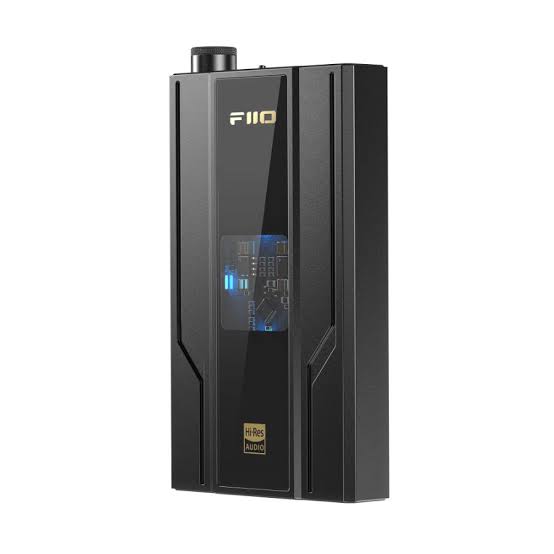
FiiO Q11 is an affordable portable USB DAC and headphone amplifier with its own battery, physical volume control and both single-ended and balanced outputs. It is a different proposition from a tiny phone-powered dongle or a Bluetooth receiver. This research-based review considers positive original evidence for a natural, punchy presentation while examining the cable, gain and battery details that determine everyday usefulness. Its modest price can be appealing, but low-volume control and actual headphone matching matter more than the largest power figure on the product page.
Research-based review. This assessment draws on manufacturer documentation and the original published evaluations linked below. Audio Review has not performed a hands-on test of this model.
Natural and punchy is the strongest original-review theme
Headfonics’ original evaluation describes a neutral, natural and non-fatiguing presentation with useful dynamic energy. It also notes that staging and the finest detail do not match more ambitious equipment. Its practical reservations include the limited application features and missing legacy analogue input and bass boost. These observations are not Audio Review listening results.
Try the intended earphones or headphones rather than assuming the same result from a different model. Compare familiar voices, a bass line and music with quiet ambience at matched volume. An amplifier with more available level may sound initially more impressive simply because it is louder. Check whether the improvement is actually cleaner control, a more useful volume range or lower noise than the existing source. The original evidence makes the Q11 a sensible budget candidate. It does not establish that every phone output is inadequate or that every headphone requires this additional box. Choose it for a demonstrated benefit in the real listening chain.
Battery power changes the portable routine
FiiO specifies an internal battery and claims more than thirteen hours of operation under documented conditions. The parameter table identifies a light-load test rather than a guarantee for every headphone, volume and output combination. Battery capacity is not the same as measured endurance in a buyer’s use.
Plan the charging routine before deciding that a battery-powered device is more convenient than a dongle. It can reduce dependence on the phone’s power during intended mobile operation, but it is another item to charge and carry. For a used unit, ask about age, storage and practical endurance rather than relying on the original specification alone. Test the intended output and typical listening level over a realistic session. A battery that is satisfactory for a desk or short commute may not suit a long journey. The Q11’s independent supply is a meaningful design choice when it improves the routine. It should not be advertised as unlimited playback or an automatic audible advantage over every properly functioning phone-powered alternative.
The intended cables distinguish phone use from computer use
The official quick-start explains that the supplied mobile connections and computer cable have different power and data roles. The rear USB-C connector handles the source connection, but a visually similar cable is not proof of identical operation.
Use the documented arrangement for the actual phone, tablet or computer, and confirm that playback and charging behave as intended. Check recognition after reconnecting and returning from sleep. With a computer, select the Q11 as the audio device and follow official driver requirements for the desired mode. Avoid treating optional ASIO setup as necessary for every ordinary playback task. A phone stack can be less comfortable than a small dongle, especially with a case and stiff headphone cable. Try the physical arrangement in a pocket or on a desk before buying accessories to hold it together. The best cable is one that provides the intended supported function and is mechanically convenient, not simply the most expensive replacement.
Gain and low-volume balance need an actual headphone check
The Q11 has low and high gain. Its own quick-start notes possible potentiometer channel imbalance at very low settings and recommends an appropriate low-gain operating range. This is particularly relevant for sensitive earphones, even when the available maximum output is generous.
Begin with low gain and assess quiet listening, left-right balance, background noise and the range of comfortable adjustment. Headphone sensitivity matters alongside impedance, so a broad manufacturer impedance recommendation does not settle every pairing. Try more demanding headphones with real music and sufficient headroom rather than assuming that a balanced output drives everything equally well. A volume-knob position is not a percentage of available power. If the listening range is too compressed, another device may be more convenient even if it has a smaller headline output. The Q11 is most useful when the actual headphones sit comfortably within its gain and control range. That practical match is a better guide than a maximum rating copied without its load and distortion conditions.
Balanced output and SPDIF each need the correct connection
The 4.4 mm socket provides a balanced headphone route, while the 3.5 mm connection also has a documented SPDIF output role with suitable configuration and cable. Neither should be confused with an analogue line input or a universal adapter connection.
Use a correctly wired balanced headphone cable supported by the headphone. Do not join independent negative channels through a common-ground adapter. A single-ended connection can remain entirely suitable and should not be dismissed merely because the balanced output has a larger rating. Compare at matched level if both proper routes are available. For SPDIF use, confirm the receiving DAC and required adapter rather than assuming a standard stereo analogue cable performs the job. Decide whether that digital-output role is actually needed before paying for extra accessories. The Q11 does not provide Bluetooth, a standalone analogue amplification input or a hardware bass boost. Its source focus is simple USB listening, with the additional digital route serving a specific supported purpose.
Budget value depends on the finished portable chain
The Q11 can provide useful conversion and headphone drive at a modest price, but the complete arrangement includes the phone or computer, suitable cable, headphone and charging routine. Its bulk and battery care should be weighed against its available control and output.
Compare current offers with all necessary accessories included. Check correct model identity, both headphone sockets, gain switch, volume operation and battery condition on a used or demonstration unit. Do not assume Q11 and similarly named older Q-series models have identical functions. A wireless receiver may be more convenient for someone moving frequently, while a tiny dongle may better suit a pocketable setup with easy-to-drive headphones. A desktop combined unit can be a better fit if portability is rarely used. The Q11 has the clearest value case when independent battery operation and physical wired listening solve a real need. Positive original musical evidence supports that choice without requiring exaggerated claims about universal headphone power or automatic improvements to every source.
Alternatives to consider
iFi hip-dac 3: Compare the physical size, source-cable routine and sound-adjustment facilities with the actual headphones. Include current accessories and battery condition in a used comparison.
FiiO BTR15: Consider a wireless-capable portable route if freedom from a phone cable is more important than the Q11’s particular battery-and-USB arrangement. Check the exact listening mode required.
FiiO Q11 key specifications
- Role
- Battery-powered portable USB DAC/headphone amplifier
- DAC
- Cirrus Logic CS43198
- USB audio
- Supported PCM up to 32-bit/384 kHz; DSD256
- Headphone outputs
- 3.5 mm single-ended and 4.4 mm balanced
- Manufacturer 32-ohm output
- At least 165 mW/channel single-ended; 650 mW/channel balanced at stated THD+N below 1%
- Digital output
- Shared 3.5 mm SPDIF route with appropriate cable and setting
- Gain
- Low and high
- Battery
- 2600 mAh; manufacturer claims over 13 hours under specified light-load conditions
- Power / data
- USB-C; intended mobile cables and computer cable have documented roles
- Size / weight
- Approximately 60.5 × 105.7 × 16 mm; 150 g
- Not provided
- Bluetooth reception, analogue line input or hardware bass boost
Verdict
Q11 is a sensible research-based budget portable choice for wired USB listening with independent battery power. Confirm low-volume balance, actual headphone demands and the intended cable routine. Its limited extras and physical bulk are clear trade-offs. A properly matched chain can make it useful without needing to treat every balanced power claim as a universal recommendation.
Documentation and original reviews
FiiO official Q11 product and operating claims · FiiO official Q11 detailed parameters and battery conditions · FiiO official Q11 quick-start and cable instructions · Headfonics original Q11 evaluation · Headfonics original Q11 listening and pairing evaluation
Editorial record
Sources and updates
Product specifications and factual claims were checked against Official FiiO Q11 product page ↗. Scores and buying advice follow our category-specific editorial methodology.
- Published
- November 17, 2026
- Last updated
- November 17, 2026