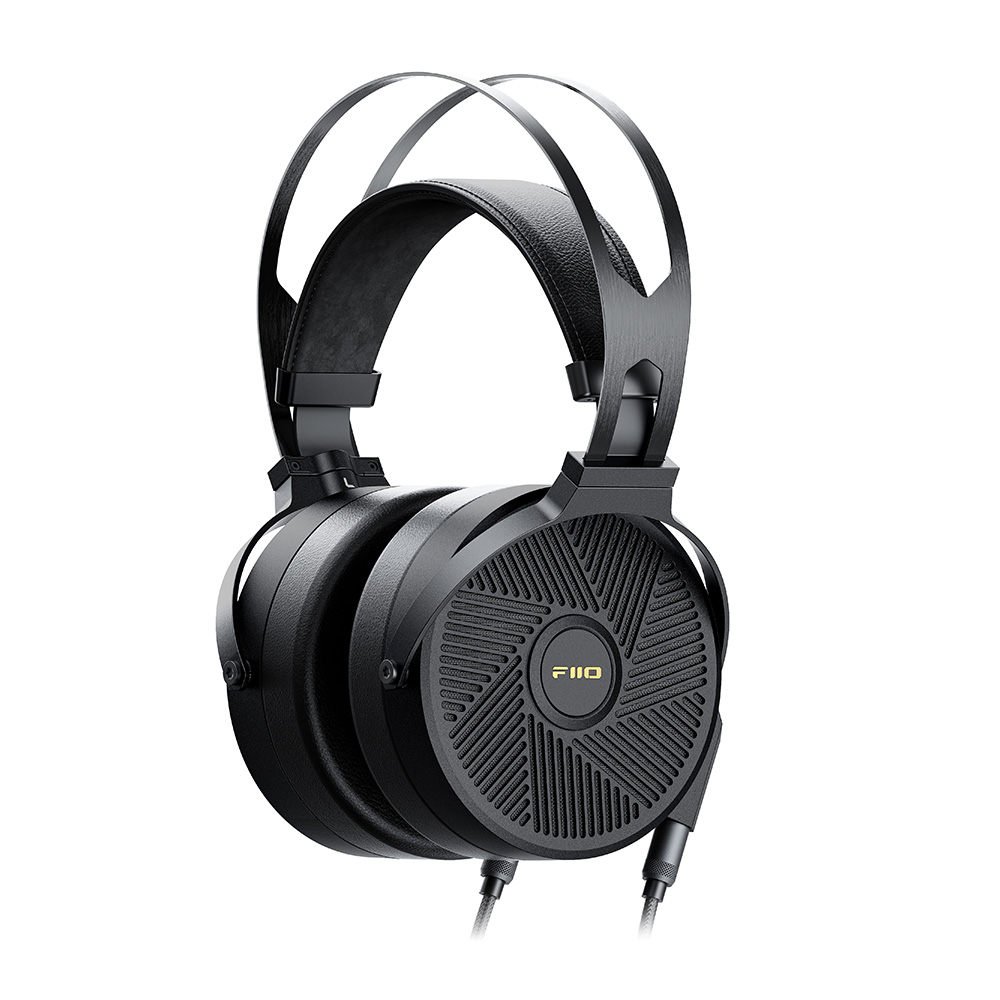
FiiO FT5 is an enthusiast headphone with an unusually complete accessory argument. Instead of expecting the buyer to assemble several cables and try aftermarket pads immediately, it supplies multiple source connections and two pad materials. That makes the package attractive, but the listening recommendation rests on more than the box contents. Its open planar design needs a quiet environment, and its substantial weight should be checked in person before it becomes your regular evening headphone.
Research-based review. This assessment draws on manufacturer documentation and the original independent evaluations linked below. Audio Review has not performed a hands-on test of this model.
The home-planar proposition
The FT5 uses a 90 mm planar magnetic driver in an open enclosure. Its stated 36-ohm impedance and 456 g weight describe a very different product from a small wireless travel headphone. FiiO uses a metal frame with cups that can move to accommodate the head, and includes a rigid carrying case.
These choices suit a dedicated listening station where there is space for the headphone and its lead. They are less suited to listening while walking between rooms or working beside other people. Decide where the product will spend most of its time before comparing specifications. A headphone with a convincing musical reputation can still be the wrong purchase if its physical and acoustic format does not match the place where you actually listen.
Sound quality and the original test
TechRadar’s original evaluation is positive about the FT5’s spacious presentation, rhythmic energy and detail. It describes a mildly warm overall character with a little extra midrange presence, rather than an absolutely flat balance. Its reviewer also finds the headphone capable of keeping complex recordings organised. These findings support a music-listening recommendation without establishing identical results for every listener.
Our interpretation is that the FT5 is worth auditioning for someone who wants an engaging home headphone and does not equate enjoyment with a deliberately stark presentation. Use familiar vocals and bass lines to decide whether the balance suits you. The most useful demonstration reveals both a recording’s structure and its musical flow. A short burst of apparent detail is less persuasive if ordinary albums become tiring after half an hour.
What the two pad sets change
FiiO supplies suede and protein-leather pads and documents them as different acoustic options. Treat that choice as part of the headphone’s design, rather than assuming one set is merely a spare. Pad material, seal and distance from the ear can influence the result, so changing pads should be a deliberate listening comparison.
Start with the supplied configuration, then change only the pads and keep the source setting constant. Allow time to settle the fit again. If you change volume, EQ and pads together, it becomes impossible to know which change you preferred. There is no requirement to keep switching once you have a satisfactory baseline. A second set is useful flexibility, but enjoying the music should not depend on continuously adjusting the equipment between tracks.
Connection flexibility without cable folklore
The supplied 1.5-metre lead offers interchangeable 3.5 mm and 4.4 mm source plugs, with adapters covering 6.35 mm and four-pin XLR. That is a useful practical package for owners of several headphone sources. Check each connector is fully engaged and use the correct arrangement for the socket in question.
Balanced connectivity can provide access to a different amplifier output, but the connector itself is not a promise of better sound. Compare the actual output noise, usable level and volume adjustment. Nor should the material description of a cable displace the more basic questions of length, flexibility and secure contact. The included options are valuable because they can avoid an unnecessary purchase and make moving between systems convenient, not because every change of plug must produce a dramatic musical difference.
Amplification and sensible system planning
A nominal impedance figure alone does not specify all the power a headphone needs. Sensitivity, the listening material and the source’s clean output capability also matter. Begin with a competent output and test whether it reaches your usual level comfortably with headroom for quieter recordings. The FT5 should be assessed as part of that complete arrangement.
An external DAC and amplifier can be useful when the existing device lacks an analogue socket, produces audible noise or has awkward volume control. Those are identifiable reasons to add hardware. Buying an expensive amplifier before establishing any limitation can divert funds from a better-fitting headphone. If you use EQ boosts, reduce the digital preamp as needed and compare without clipping. More power does not repair an unsuitable pad seal or a tonal balance you dislike.
Weight, fit and realistic listening time
At 456 g before the cable, the FT5 deserves a longer comfort assessment than a quick shop fitting. TechRadar is positive about the way its headband distributes the weight, but that does not settle the question for every head and neck. The overall mass remains present even when pressure on the scalp is well managed.
Try the headphone in your normal chair and move as you would while choosing music. Check glasses, jaw movement and the space around the ear. If you frequently need to lift a cup to relieve pressure, that is more important than an attractive material specification. A lighter dynamic headphone may be the better long-session purchase even if you enjoy the FT5’s sound during a brief comparison. Comfort determines how much of the musical performance you will actually use.
Room requirements and ownership
The open rear structure lets external noise enter and music escape. For a shared office or travel, passive openness is a fixed limitation, not something a source setting can turn off. A quiet room is particularly helpful for low-level listening, where household noise otherwise masks parts of the recording.
Store the headphone so the cups and grille are protected, and keep the lead away from furniture that can strain it. The rigid case is useful when carrying it between locations, although it adds bulk to the total package. Before purchase, check the supply of matching replacement pads and local service. Long-term value depends on fit, maintainability and regular use more than the launch price or how impressive the original packaging looks.
Alternatives to consider
HiFiMAN Sundara: Sundara is an established open-planar reference at a comparable enthusiast level. Compare current local prices and fit, then decide whether the FT5 accessory package and particular balance provide a meaningful advantage for your listening routine.
HiFiMAN Ananda Nano: The Ananda Nano offers another open-planar approach with a different cup geometry. A personal fit comparison is especially worthwhile because ear space and pressure distribution can be more decisive than the headline driver specification.
FiiO FT5 key specifications
- Design
- Open-back planar magnetic
- Driver
- 90 mm
- Nominal impedance
- 36 ohms
- Weight without cable
- 456 g, published specification
- Cable
- 1.5 m detachable dual-entry
- Source connections
- 3.5 mm and 4.4 mm interchangeable plugs
- Adapters
- 6.35 mm and 4-pin XLR
- Supplied pads
- Suede and protein leather
- Included storage
- Rigid carrying case
- ANC and microphone
- None
Verdict
The FT5 is a persuasive home-listening package, supported by a positive original evaluation and useful supplied connection choices. Its pad options provide a sensible route to personal preference without an immediate accessory hunt. The main reservations are physical: a substantial weight and an open enclosure that require the right setting.
Compare Sundara and Ananda Nano, audition for long enough to assess comfort and use a source that meets the actual requirement. Choose the FT5 when its presentation and complete package suit your routine at the current local price. If the fit is tiring or the room is unsuitable, a different format will provide a more useful improvement than adding electronics around it.
Primary documentation and independent reviews
FiiO official FT5 product information · FiiO official FT5 launch details · TechRadar original FT5 evaluation
Editorial record
Sources and updates
Product specifications and factual claims were checked against Official FiiO FT5 product page ↗. Scores and buying advice follow our category-specific editorial methodology.
- Published
- November 17, 2026
- Last updated
- November 17, 2026