Research note: This is an independent, research-based assessment built from official specifications and product documentation. We have not claimed a hands-on laboratory test.
Bose SoundLink Max key specifications
- Model
- Bose SoundLink Max Portable Speaker
- Sound
- Stereo; full-range speakers; SimpleSync
- Water and dust resistance
- IP67
- Battery life
- Up to 20 hours
- Charging time
- Up to 5 hours
- Charging interface
- USB-C in/out
- Bluetooth
- Version 5.4; up to 9 m range
- Microphone
- No
- App
- Bose app
- Dimensions
- 120 × 265 × 105 mm
- Weight
- 2.22 kg
Sound architecture and intended scale
Its three-transducer array is designed to produce a wider, more spacious presentation than a basic mono driver, while two passive radiators reinforce bass. Adjustable bass, midrange and treble are available in the Bose app. This hardware should be judged against the cabinet size and intended listening distance, not against a separated stereo system. A single portable enclosure can create a broad presentation, but true left-right imaging still requires a second compatible speaker or a conventional pair. Placement, nearby walls and playback level will change bass balance more than small codec differences.
Portability and physical design
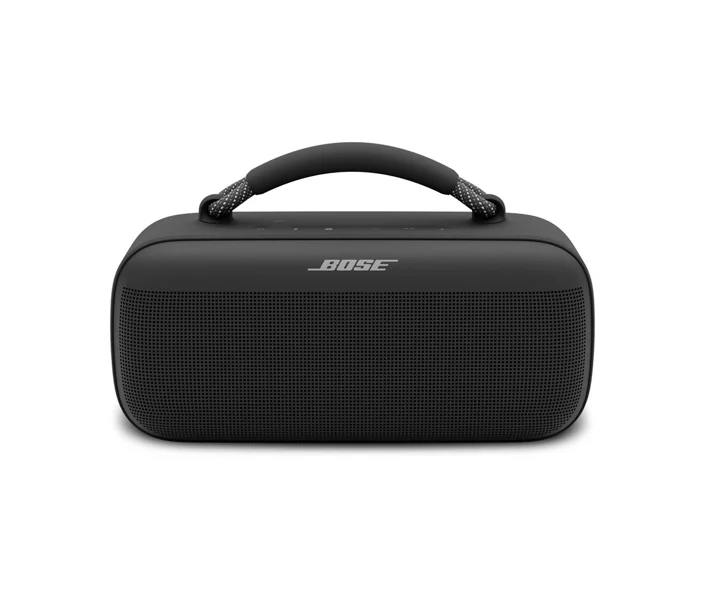
The enclosure weighs just under five pounds and includes a removable rope handle. It is comfortable for car-to-patio movement, but the optional shoulder strap is more realistic for longer carries. The practical question is not whether the product is technically portable, but how often its weight and shape will suit the journey. A larger cabinet buys acoustic headroom and bass; a smaller one is more likely to leave the house. Buyers should match the format to real use rather than choosing the biggest specification sheet.
Battery and charging
Bose quotes up to 20 hours and allows the USB-C port to charge a phone. That power-bank use reduces speaker runtime, while an AUX input offers a useful wired source option. Manufacturer battery figures are measured under controlled conditions and fall with high volume, heavy bass, calls or device charging. They are best treated as a ceiling rather than a guarantee. Charging accessories also vary by region, so the box contents and required power adapter should be confirmed before purchase.
Weather protection and care
IP67 protection covers dust and controlled freshwater immersion, and the corrosion-resistant housing is intended for outdoor knocks. It floats for retrieval, although the grille may face downward in water. An IP rating describes specific laboratory exposure, not unlimited use in every environment. Ports should be dry before charging, and salt, chlorine or sand should be cleaned according to the maker’s guidance. These safeguards make outdoor ownership easier, but they do not remove the need for ordinary care.
Connectivity, app and ecosystem
Bluetooth 5.3 supports SBC, AAC and aptX Adaptive on compatible Snapdragon Sound devices. The Bose app handles EQ and updates; higher-quality codec support is mainly relevant to compatible Android hardware. App support can add EQ, updates and grouping, while ecosystem features may depend on compatible phones, Wi-Fi networks or another speaker of the same generation. Buyers replacing an older model should verify grouping standards instead of assuming cross-generation compatibility. A stable basic Bluetooth connection remains the most universally useful feature.
Value and trade-offs
SoundLink Max charges premium money for acoustic scale, finish and straightforward operation. It is more portable than JBL Boombox 4 but substantially larger and costlier than SoundLink Flex. The strongest purchase is the one whose compromises align with the intended setting. Paying for output that never gets used wastes money and luggage space; choosing too small a model can lead to distortion and short runtime at constant maximum volume. Alternatives below frame those trade-offs rather than treating every portable speaker as interchangeable.
Who should buy it?
Buy SoundLink Max for patios, holidays and medium rooms when a compact speaker lacks weight but a full boombox is excessive. It suits Android users with aptX Adaptive and buyers who value an AUX input. Frequent hikers should choose something lighter.
Alternatives to consider
JBL Xtreme 4 offers a replaceable battery, Auracast and lower pricing; Sonos Move 2 adds Wi-Fi and multiroom features. Bose SoundLink Flex 2nd Gen is far easier to pack, while JBL Boombox 4 is the step up for maximum outdoor output.
Verdict
Bose SoundLink Max is a refined middle-heavy portable speaker with convincing bass, useful wired and wireless inputs and strong protection. Its price and 2.13 kg weight narrow the audience, but the design makes sense for listeners who want premium room-filling sound without carrying a boombox.
Primary source
Bose SoundLink Max official product announcement
Editorial record
Sources and updates
Product specifications and factual claims were checked against Official Bose SoundLink Max product page ↗. Scores and buying advice follow our category-specific editorial methodology.
- Published
- July 1, 2026
- Last updated
- July 25, 2026
Compare before choosing
Two strong alternatives from the same portable speakers category.