Research note: This is an independent, research-based assessment built from official specifications and product documentation. We have not claimed a hands-on laboratory test.
Bose Smart Ultra Soundbar key specifications
- Model
- Bose Smart Ultra Soundbar
- Speaker system
- 5.0.2-channel configuration with 9 total speakers including center tweeter and 2 upward-firing transducers
- Audio formats
- Dolby Atmos
- Spatial processing
- Bose TrueSpace and PhaseGuide technology
- Room calibration
- ADAPTiQ
- Dialogue processing
- A.I. Dialogue Mode
- Wireless
- WiFi and Bluetooth 5.0; 9 m Bluetooth range
- Streaming
- Spotify Connect and Apple AirPlay 2
- Voice control
- Amazon Alexa built in; Works with Google Assistant
- Connections
- HDMI eARC and optical
- Expansion
- Compatible with Bose bass modules and wireless surround speakers
- Dimensions
- 58 × 1045 × 107 mm
- Weight
- 5.75 kg
Speaker architecture and surround approach
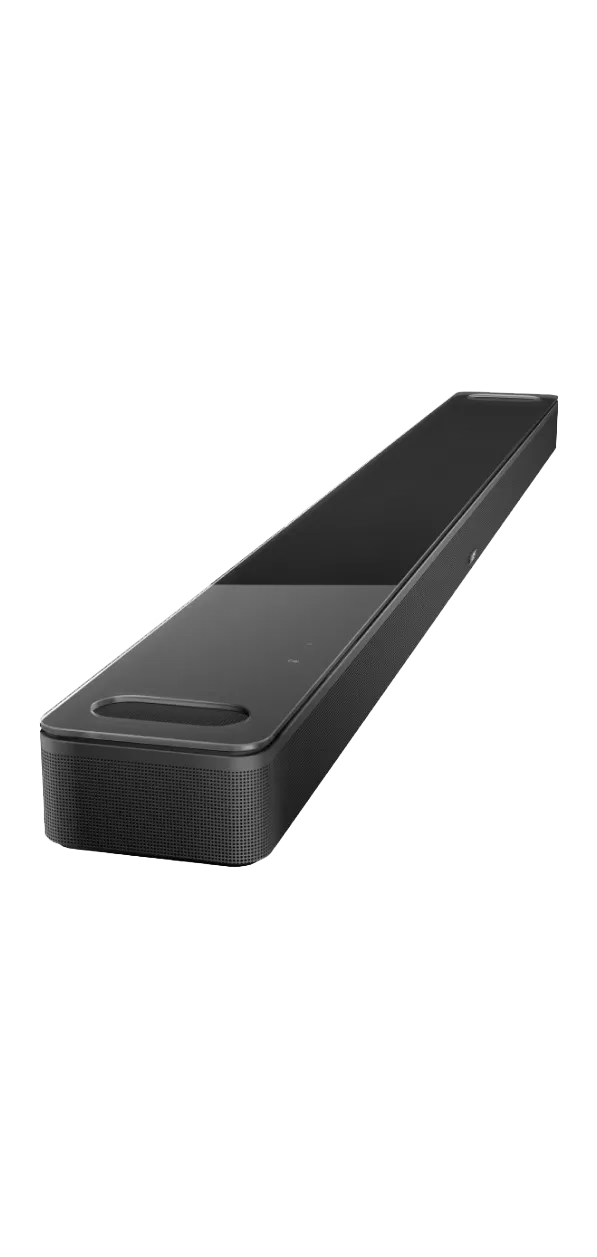
Custom arrays, low-profile drivers and two upward-firing dipole transducers support Dolby Atmos, while TrueSpace processing can spatialize other content. The one-box design creates width and height but cannot place effects behind the listener like physical rears. Channel labels describe processing and driver roles, not a guarantee that every room will produce discrete cinema-like positions. Ceiling height, side walls, seating distance and source mix strongly influence the result, especially for reflected height effects.
Subwoofer, rear channels and expansion
Bose Bass Module 500/700 and Surround Speakers are optional, allowing gradual expansion. Those additions improve impact and envelopment but turn an already premium bar into an expensive multi-box system. Buyers should include the cost, power sockets and placement of every optional component when comparing systems. A complete package can deliver more convincing envelopment, while a single bar is simpler and visually cleaner.
Dialogue, calibration and everyday TV
AI Dialogue Mode continually adjusts tonal balance to emphasize speech without simply raising the centre level. ADAPTiQ measures the room at several listening positions and is important for controlling tonal balance. These features matter as much as spectacular demo scenes because most viewing contains speech. Calibration improves consistency but cannot fully overcome a highly open room or poor source mix; manual level adjustment may still be useful.
HDMI, formats and gaming
The bar connects by HDMI eARC or optical and has no source passthrough input. Dolby Atmos works through a compatible eARC television, while DTS format support and gaming passthrough flexibility are weaker than on Samsung and Sony rivals. eARC is the preferred connection for lossless Dolby Atmos from a compatible TV. Passthrough specifications matter only when sources connect through the bar; console owners should confirm 4K/120, VRR and HDR compatibility for their exact signal chain.
Music streaming and ecosystem
Wi-Fi, Bluetooth, AirPlay 2, Chromecast, Spotify Connect and integrated voice features create broad music access. SimpleSync can pair compatible Bose headphones or speakers, adding ecosystem utility. Ecosystem advantages can be substantial, but several branded features require a compatible television or additional speakers. Core HDMI behavior and format support should remain the deciding factors for mixed-brand households.
Installation and long-term value
The bar’s price pays for design, dialogue technology and polished software rather than included rear speakers or a subwoofer. It fits buyers who prefer a clean single-bar start and may expand later. Soundbars are room systems rather than isolated gadgets: width, wall mounting, ventilation, cables and wireless-speaker positions deserve planning. A premium model earns its cost when it replaces a more complex receiver system without sacrificing the features the household actually uses.
Who should buy it?
Choose Smart Ultra if dialogue clarity, design and simple streaming are priorities and you do not need HDMI passthrough. It suits Bose households and medium rooms. Buyers seeking maximum Atmos per euro should consider complete packages with included rears.
Alternatives to consider
Sonos Arc Ultra offers deeper multiroom integration and stronger modular surround options; Samsung Q990D/Q990F include subwoofer and rears. Sony BRAVIA Theatre Bar 9 supports HDMI 2.1 passthrough and broader format handling.
Verdict
Bose Smart Ultra Soundbar is refined and unusually strong for speech, with convincing width and useful streaming. It is not the value leader because expansion costs quickly mount and HDMI flexibility is limited. For a clean premium bar where dialogue matters most, it remains appealing.
Primary source
Bose Smart Ultra Soundbar official announcement
Editorial record
Sources and updates
Product specifications and factual claims were checked against Official Bose Smart Ultra Soundbar product page ↗. Scores and buying advice follow our category-specific editorial methodology.
- Published
- July 1, 2026
- Last updated
- July 25, 2026
Compare before choosing
Two strong alternatives from the same soundbars category.
Samsung HW-Q990F Review
Samsung HW-Q990F research-based review covering its 11.1.4 channels, 23 speakers, included rears and compact subwoofer, 4K/120 HDMI, calibration…
Samsung HW-Q990D Review
Samsung HW-Q990D research-based review covering its complete 11.1.4 package, included rears and subwoofer, two 4K/120 HDMI inputs, calibration…