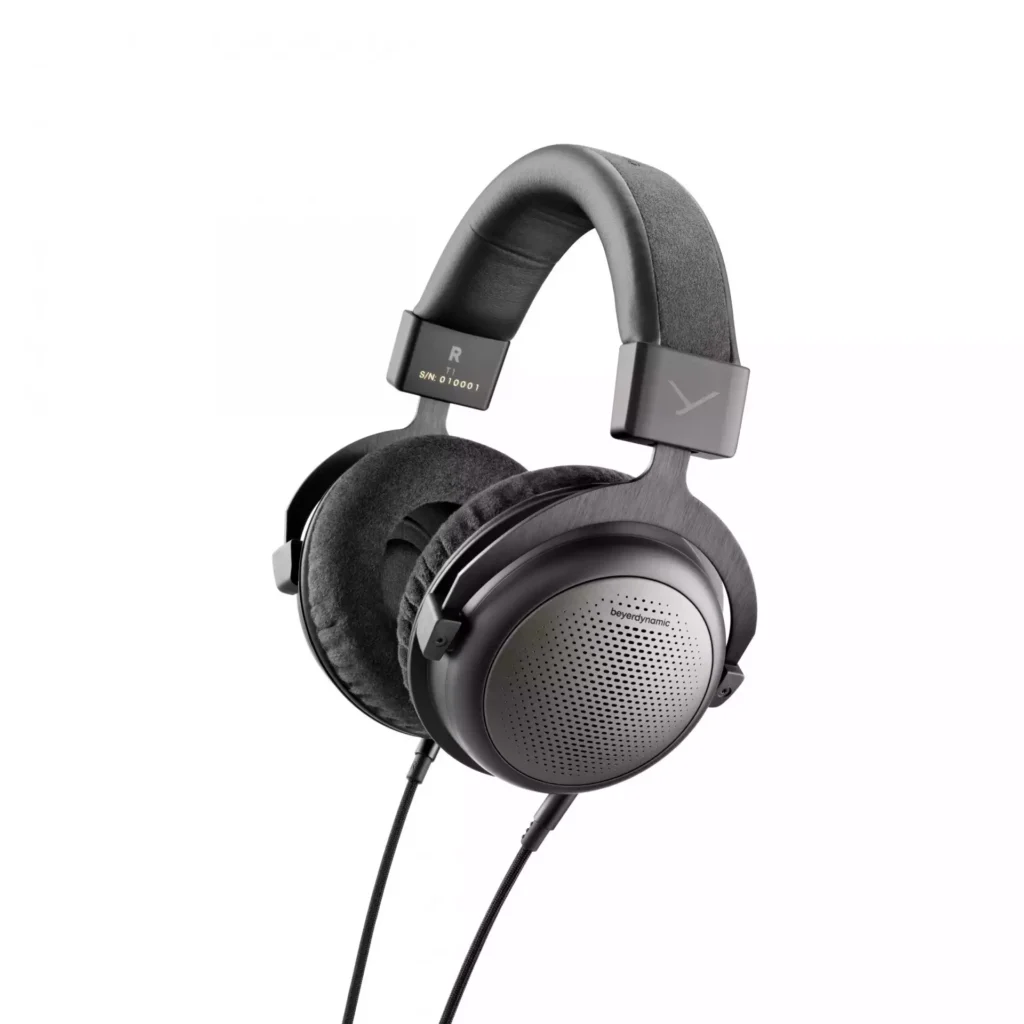
Beyerdynamic T1 3rd Generation is an open wired headphone designed for deliberate music listening at home. The third-generation name is essential: this model uses a 32-ohm nominal impedance, unlike the high-impedance T1 versions that shaped its earlier reputation. It is a premium listening tool rather than a headset, and it asks for a quiet setting in which its strengths can be appreciated without competing with the room.
Research-based review. This assessment draws on manufacturer documentation and the original published evaluations linked below. Audio Review has not performed a hands-on test of this model.
The listening room comes first
An open headphone allows playback into the surroundings and outside sound toward the listener. The T1 therefore needs a different environment from a closed working headphone or an ANC travel model.
Before comparing electronics, decide whether your normal listening place actually provides enough quiet. Try an ordinary listening level while someone else occupies the room and consider both their comfort and yours. A headphone that is impressive in a private demonstration can be unsuitable beside a television, a conversation or a sleeping partner. Raising volume is not the right way to overcome that mismatch. If privacy or isolation is a firm requirement, choose the design around it first. The open format is most persuasive when the room already supports relaxed listening and when sound leakage will not turn a good session into a household compromise.
A meaningful change from older T1 models
The official third-generation specification gives 32 ohms, a detachable three-metre lead and a weight of 360 grams without cable. It also identifies replaceable velour cushions and tilted Tesla drivers. Those facts should be matched to the exact listing, not assumed from the T1 name alone.
With used stock, ask for a clear generation identification and inspect the cable, pads and product markings. An earlier version may still be an attractive headphone, but it belongs in a different source-matching discussion. Do not pay for a product described as third generation merely because the title includes a generic flagship photograph. If the listing cannot establish the version, seek clarification from the seller before comparing its price with confirmed examples. A clearly identified purchase is the starting point for any meaningful judgement of value.
What the original review says about sound
What Hi-Fi’s original test praises the third-generation T1 for control, musical organisation and vocal information. It reports a somewhat rounder, less bright top end than the preceding version while retaining an even-handed presentation. Its findings support an extended audition, rather than a promise that every listener will hear the same ideal balance.
Use a mixture of familiar recordings, including material that becomes congested and recordings whose appeal depends on a convincing voice. Listen at a comfortable level and compare candidates at similar perceived loudness. Try an entire piece rather than switching every few seconds, then return to a short passage if a difference needs clarification. The point is to discover whether the presentation continues to involve you, not to identify the maximum number of new details in a track during the first minute.
A capable source, sensibly chosen
The lower impedance makes the third-generation T1 a different practical proposition from its predecessors, but it cannot certify every output device. What Hi-Fi still regards a good source as important to hearing what the headphone can do.
Check the output you intend to use for clean playback, useful volume control and adequate headroom on quiet recordings. More maximum power is not automatically more useful once those needs are met. If considering a source change, identify the problem it solves and compare at matched level. Connectivity, noise and convenience are legitimate reasons to choose another device; a vague expectation that a luxury headphone requires equally luxurious electronics is less helpful. Keep the complete system budget visible, especially if the alternative is spending more on a headphone whose tonal balance you prefer less.
Comfort and wearing parts deserve time
The velour-pad arrangement is intended for home listening, but individual fit still determines whether a long session remains pleasant. The weight is not negligible, and head shape, ear position and glasses can change the experience.
During an audition, adjust the headband properly and note whether pressure develops at the crown or around the ears. Look down, turn your head and sit in the position you normally use. A headphone may fit well while upright yet become less stable when reclining. For a used example, inspect the cushion foam and covering rather than only the outer grille. Appropriate replacement parts should be included in the total cost where needed. A premium product that remains comfortable and serviceable can justify continued ownership, while a poor fit is difficult to compensate for through any change of electronics.
Living with a long, double-sided cable
The three-metre supplied lead is appropriate for a chair near a home system, with detachable connections and a conventional headphone plug plus adapter. It is less convenient if the source sits directly beside a laptop and the cable must repeatedly be packed away.
Plan a route that avoids chair wheels, sharp bends and tension on the cup sockets. If another length is needed, verify compatible wiring and connections rather than buying from connector appearance alone. Keep the listening arrangement simple enough to use spontaneously. A headphone can have excellent published sound evidence yet spend little time in use if connecting it requires moving furniture or untangling leads. The T1’s value is stronger when it fits naturally into the room, the source and the amount of uninterrupted listening time available.
Alternatives to consider
Sennheiser HD 800 S: HD 800 S is a useful alternative audition for a dedicated quiet listening room. Compare spatial presentation, tonal preference and the whole source arrangement rather than assuming one flagship must suit everyone.
Sennheiser HD 660S2: HD 660S2 offers another open route at a different purchase level. Compare sustained enjoyment and fit before deciding whether a larger premium budget brings a worthwhile personal benefit.
Beyerdynamic T1 3rd Generation key specifications
- Generation
- Third
- Design
- Open-back over-ear
- Transducer
- Tilted dynamic Tesla drivers
- Nominal impedance
- 32 ohms
- Weight without cable
- 360 g
- Cable
- Detachable double-sided, 3 m
- Source plug
- 3.5 mm with 6.35 mm adapter
- Pads
- Replaceable velour and memory foam
- ANC / Bluetooth
- Neither
- Microphone
- No
View the official Beyerdynamic T1 3rd Generation product page
Verdict
T1 3rd Generation is a persuasive premium candidate for a quiet private room, supported by an original evaluation that values information, control and musical communication. The revised impedance and serviceable wired arrangement make practical sense, provided the exact generation is confirmed.
Compare it with suitable open alternatives and allow enough time to judge fit and tonal preference. Historical praise should open the audition, not close the decision. Choose the T1 when its presentation and everyday arrangement are worth the total investment to you, with leakage and source requirements understood before purchase.
Documentation and original reviews
Beyerdynamic official T1 third-generation specifications · What Hi-Fi original T1 third-generation listening evaluation
Editorial record
Sources and updates
Product specifications and factual claims were checked against Official Beyerdynamic T1 3rd Generation product page ↗. Scores and buying advice follow our category-specific editorial methodology.
- Published
- November 17, 2026
- Last updated
- November 17, 2026