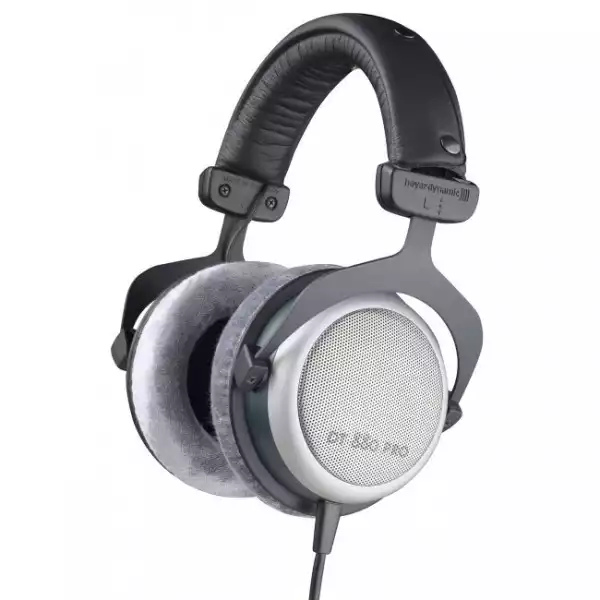
Beyerdynamic DT 880 Edition is an established semi-open headphone whose appeal lies in detailed listening at home. This assessment concerns the classic grey 250-ohm version evaluated by Headphonecheck. It is not a new release, and the manufacturer’s current European listing warns that the grey 250-ohm variant is no longer the normal stocked option. That makes version checking as important as comparing prices.
Research-based review. This assessment draws on manufacturer documentation and the original published evaluations linked below. Audio Review has not performed a hands-on test of this model.
Understand the version before comparing offers
The original technical sheet lists 32-, 250- and 600-ohm versions. The current product page points buyers seeking 250 ohms toward the Black Edition. The sonic evidence used here concerns the older grey 250-ohm sample, so it should not be relabelled as a new Black Edition test.
Ask a seller for the exact model identification, impedance and photographs of the supplied headphone. With used stock, a generic box or abbreviated listing is not enough. Confirm that the pads are appropriate for the version and ask whether they have been replaced. This is particularly important when the appeal is a specific historical model rather than simply any headphone carrying the DT 880 name. A clear listing and a useful return policy are more valuable than an uncertain bargain whose identity becomes apparent only after delivery.
What the original listening evidence supports
Headphonecheck’s original 250-ohm evaluation is positive about detail, clear vocal reproduction and the ability to present recorded space. It finds the overall presentation coherent across different styles and regards the model as useful beyond casual background listening. That supports its continued place on an audition list, without turning a decade-old test into a current comparison against every recent release.
Use recordings that reveal the qualities you need: a small acoustic ensemble for placement, dense music for separation and familiar speech for tonal judgement. Keep perceived level similar between candidates. A headphone that exposes detail should still be comfortable with the material you normally play, including less polished recordings. Do not buy an analytical reputation in the abstract. The useful outcome is an intelligible, enjoyable presentation that remains convincing after the novelty of hearing small details has passed.
Semi-open is a room requirement
The semi-open construction allows sound to pass between the cups and the surroundings. It should be treated as a quiet-room choice, not as a substitute for a closed monitoring headphone or effective travel ANC.
Before choosing it for a shared home, try playback at an ordinary level while someone sits nearby. Also check how much household noise reaches you. A semi-open label does not specify a universal amount of isolation, and it cannot guarantee discretion beside a sleeping partner or a live microphone. If the listening environment routinely forces higher volume, reconsider the type of headphone before selecting an amplifier. An open or semi-open design is most useful when the room already permits comfortable listening, rather than when the headphone is expected to overcome environmental noise.
Source matching for the 250-ohm model
The impedance figure identifies the version, but it does not alone establish how loud or cleanly a particular source will play. The 250-ohm model deserves a check with the intended headphone output before purchase.
Try quiet recordings as well as heavily mastered music and leave room for ordinary level adjustment. If the source runs out of useful output, compare a competent alternative rather than assuming the headphone itself is defective. Conversely, if the existing system already provides clean playback at a comfortable level, there is no automatic requirement to add a costly amplifier. Calculate the whole purchase when comparing with an easier-to-accommodate alternative. The DT 880’s value changes if a new output device is necessary, particularly when the initial attraction was a low used price.
Edition versus PRO is a practical distinction
Beyerdynamic’s support information says corresponding PRO and Edition models with the same impedance do not differ noticeably in sound. Its comparison instead identifies differences such as fit pressure and the Edition’s straight cable versus the PRO’s coiled arrangement.
Choose those details according to the job. A coiled lead may be useful near a working interface but create unwanted pull in another setup. A straight lead can suit a chair beside a hi-fi system, provided excess length is routed safely. There is little reason to pay more simply because one label appears more serious. Check fit and condition first, and do not turn the home-versus-studio marketing distinction into an unsupported claim that one version necessarily reveals more musical information.
A fixed cable and an older-model purchase
The classic Edition uses a fixed single-sided lead rather than a detachable socket at the cup. That keeps operation simple, but cable wear deserves attention when inspecting an older pair.
Check the plug, strain relief and the point where the lead enters the cup, without bending anything aggressively. Listen for interruptions during ordinary movement and inspect the pads and headband for compression or deterioration. Obtain the price of appropriate wearing parts before deciding that used stock is inexpensive. A clean-looking exterior does not prove that the cable or cushions are in good condition. For a new old-stock purchase, confirm local warranty handling and return terms. These practical details are especially important for a headphone whose core appeal is long-term straightforward listening rather than new connectivity features.
Alternatives to consider
Sennheiser HD 560S: HD 560S is another candidate for quiet-room wired listening. Compare fit and tonal preference with your actual source, including the complete cost if the DT 880 needs a different headphone output.
Beyerdynamic DT 900 PRO X: DT 900 PRO X offers a newer open studio arrangement with detachable cabling. It is relevant when source compatibility and cable serviceability matter more than keeping the classic Edition format.
Beyerdynamic DT 880 Edition key specifications
- Version assessed
- Classic grey DT 880 Edition, 250 ohms
- Design
- Semi-open over-ear
- Transducer
- Dynamic
- Cable
- Fixed, single-sided 3 m straight
- Source plug
- 3.5 mm with 6.35 mm adapter
- Pads
- Velour
- Wireless / ANC
- Neither
- Microphone
- No
- Battery
- Not required
- Availability
- Check exact version; original grey 250-ohm stock limited
- Weight without cable
- 290 g
Verdict
The classic 250-ohm DT 880 Edition remains an interesting quiet-room candidate where its fit, sound and source requirements align. Its original evaluation supports detailed, spacious listening, while the simple wired format avoids batteries and software dependence.
Buy the exact version deliberately, with realistic expectations about availability and fixed-cable upkeep. Compare the complete system cost with HD 560S and DT 900 PRO X, then choose the headphone whose balance remains comfortable over time. Historical reputation is a useful starting point, but identity, condition and the actual listening setup determine whether this particular purchase makes sense.
Documentation and original reviews
Beyerdynamic DT 880 Edition official product and availability notice · Beyerdynamic original Edition technical sheet with impedance versions · Beyerdynamic explanation of PRO and Edition differences · Headphonecheck original classic DT 880 Edition 250-ohm test
Editorial record
Sources and updates
Product specifications and factual claims were checked against Official Beyerdynamic DT 880 Edition product page ↗. Scores and buying advice follow our category-specific editorial methodology.
- Published
- November 17, 2026
- Last updated
- November 17, 2026