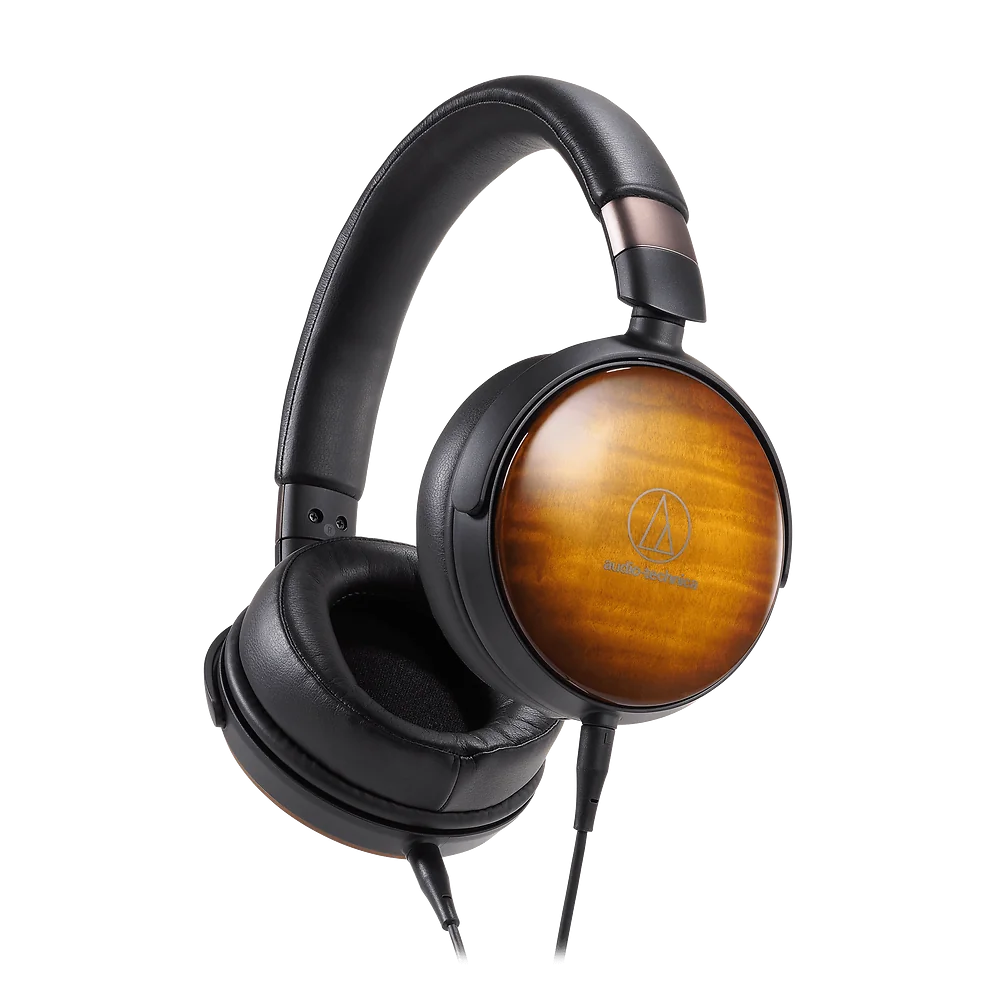
Audio-Technica ATH-WP900 is the original flame-maple portable closed headphone, not the later WP900SE. It combines low weight with a deliberately lively sound and two short detachable cables. It remains an interesting proposition for wired music listening, but neither its wood finish nor its portable brief should be confused with modern wireless travel functionality. The original model is marked as production completed on Audio-Technica’s Japanese page, making actual stock, condition and regional service part of the buying decision.
Research-based review. This assessment draws on manufacturer documentation and the original published evaluations linked below. Audio Review has not performed a hands-on test of this model.
Identify the original model before comparing
The WP900’s official construction uses a maple housing with a flame-maple surface, finished through the manufacturer’s collaboration with guitar maker Fujigen. The 53 mm dynamic driver and portable design belong to this particular model. A current WP900SE review is not automatically evidence for the original headphone.
Check the exact model name, photographs and invoice description before buying remaining stock or a used pair. Do not rely on an advertisement that drops the suffix from a newer product. Regional availability may differ, so the Japanese production status should not be turned into a claim that every European dealer has no stock. Ask about warranty and service for the offered unit. The finish is a genuine part of the appeal, but identifying the correct product is what makes the technical data and published listening evidence applicable in the first place.
The sound is intentionally entertaining
Headfonia’s original listening evaluation describes strong low bass, an elevated upper range and a recessed lower midrange. It finds the result engaging, with a warmer tilt and an airy impression for a compact closed model. That supports a leisure-listening character rather than a neutral monitoring claim.
Try male and female voices as well as bass-led material. Decide whether the energy makes familiar music more enjoyable or leaves important vocal body too distant. A short demonstration can flatter a lively balance, so include an acoustic recording and a dense mix before judging. Keep loudness consistent against an alternative. The right listener may actively prefer this presentation, while another may want less bass emphasis or more central midrange presence. Neither preference is settled by the appearance of the cups. Buy the WP900 because the tuning works with the actual collection, not because wood is assumed to guarantee a particular sound.
Portable dimensions still require a fit trial
The official weight is approximately 243 g without the lead, and the cups rotate flat for storage. Those details give the WP900 a clear practical distinction from heavier home headphones. The cushions and headpad use synthetic contact materials rather than making the whole exterior a wooden structure.
Try ear clearance, clamp and the headband during a realistic listening session. Check the fit with normal glasses and while looking down at a phone or reading. A light headphone can still create pressure if the cup shape is wrong for the ears. On a used pair, inspect the pad surface and shape, because worn cushions change the ownership experience. Ask for the correct replacements instead of assuming any similarly sized pad is equivalent. Portability should include comfortable wear as well as the ability to put the headphone into a bag. A smaller outline is useful only when it also fits the listener.
Two cables do not make every output interchangeable
The manual lists two 1.2 m leads: one with a 3.5 mm stereo source plug and one with a 4.4 mm balanced plug. Both use A2DC connections at the headphone. The provided options are convenient, but a balanced output requires the appropriate cable and wiring.
Choose the lead according to the actual source rather than assuming that one termination guarantees better sound. Do not improvise an adapter that shorts or misroutes an amplifier output. Follow the manual’s straight connector handling and use the supplied or manufacturer-approved replacements. Measure the route to the listening position: a short portable cable can be awkward beside a larger home system. If a suitable longer arrangement is needed, include its cost before purchase. A2DC is not a generic substitute for every small coaxial-looking connector. Correct cable identification matters more than an unsupported promise about an exotic conductor material.
Closed construction is not electronic isolation
The closed cups make this a different practical option from an open home headphone, but the WP900 has no ANC or Bluetooth. Passive attenuation depends on the fit and noise. It should not be advertised as providing the complete travel experience of a modern noise-cancelling model.
Consider where it will actually be used. A quiet train seat, a desk and an aircraft cabin create different demands. Check whether enough of the music remains audible at a comfortable level in the intended environment. The 38-ohm impedance and 100 dB/mW specification also need to be considered with the source, rather than turning the portable brief into a universal phone guarantee. Test quiet tracks and background noise through the intended adapter or player. There is no battery to charge in the headphone itself, but the connected device still determines practical listening time and whether a suitable analogue output is available.
Condition and service shape current value
The standard package includes a pouch rather than a rigid protective case. For a headphone with a decorative wood finish, carrying arrangements deserve thought. Pack it where heavy objects cannot press directly on the cups, and follow the manufacturer’s care guidance.
Compare the exact current European offer with closed alternatives, including warranty, replacement parts and return rights. An old launch price should not be used as a present-day value guarantee. On a used unit, inspect both wood surfaces, hinges, A2DC sockets and the supplied cables. Confirm that the package has not lost one of the useful leads. The WP900 is most persuasive when its lightweight construction, appearance and lively sound all matter. It becomes less obvious value when ANC, calls or a more forward vocal balance are the main needs. A well-chosen alternative can be preferable even if it looks less distinctive.
Alternatives to consider
Meze 99 Classics: A relevant wooden closed-headphone comparison for leisure listening. Compare the particular bass and vocal balance, fit and carrying arrangement rather than treating the shared material as a shared sound.
FiiO FT1: An alternative closed wired route when the complete budget matters. Evaluate comfort and enjoyment before deciding whether the WP900 finish and lighter construction justify the difference.
Audio-Technica ATH-WP900 key specifications
- Model
- Original ATH-WP900, not WP900SE
- Design
- Closed-back dynamic
- Driver
- 53 mm
- Impedance
- 38 ohms
- Sensitivity
- 100 dB/mW
- Weight
- Approximately 243 g without cable
- Headphone connectors
- A2DC
- Included cables
- 1.2 m 3.5 mm stereo and 1.2 m 4.4 mm balanced
- Storage
- Fold-flat cups and pouch
- Wireless and ANC
- None
Verdict
The original ATH-WP900 offers a recognisable mix of low weight, decorative craftsmanship and energetic wired listening. Headfonia’s original evidence points to a sound that favours enjoyment over strict neutrality, with lower-midrange preference an important audition point.
Check the exact model, condition and source arrangement. It can be a rewarding specialised choice when those priorities align. A different closed headphone is more appropriate when stronger isolation, modern calls or a more restrained balance leads the decision.
Documentation and original reviews
Audio-Technica official original ATH-WP900 design and status · Audio-Technica official ATH-WP900 manual and cable specifications · Headfonia original ATH-WP900 listening evaluation
Editorial record
Sources and updates
Product specifications and factual claims were checked against Official Audio-Technica ATH-WP900 product page ↗. Scores and buying advice follow our category-specific editorial methodology.
- Published
- November 17, 2026
- Last updated
- November 17, 2026