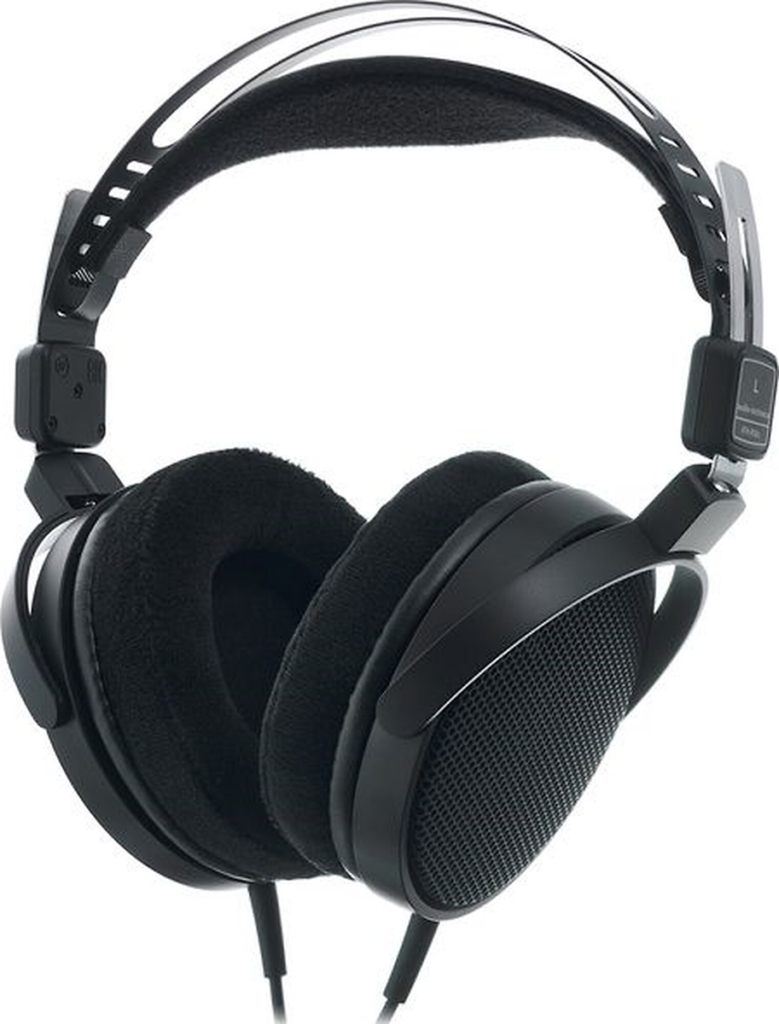
Audio-Technica ATH-R30x is the accessible entry in the R-Series open-back range. It offers a simple wired arrangement, low weight and a listening brief that includes home studios and everyday music. The important compromises are equally clear: the cable is fixed, surrounding noise remains audible, and there are no wireless or call features. Published evaluation supports a useful budget option, while also showing why fit and the intended source deserve more attention than the reference label alone.
Research-based review. This assessment draws on manufacturer documentation and the original published evaluations linked below. Audio Review has not performed a hands-on test of this model.
A quiet-room headphone with a clear purpose
The open rear structure allows sound to travel beyond the earcups. This makes the R30x a different tool from a closed monitoring headphone used beside a live microphone. It is best considered for listening, editing or checking a mix in a reasonably quiet setting.
Think about who else shares the space before choosing it for a desk. Nearby conversation can interrupt concentration, and music leakage can disturb another person. That is a consequence of the construction rather than a missing ANC setting. The simple wired format also means there is no battery routine or companion app to manage. Someone who mainly wants affordable home listening may appreciate that simplicity. A commuter or frequent caller should begin elsewhere. The best match is a fixed listening position where openness is welcome and the long cable has a practical route to the source.
Published listening evidence supports a measured expectation
What Hi-Fi finds an organised, spacious presentation with crisp detail, while wanting greater musical cohesion and a final degree of polish. Headphones.com’s original R-Series assessment is more cautious about bass quantity and occasional treble harshness, also noting that perceived balance can vary with fit.
That evidence does not support describing the R30x as a universal bass-rich bargain or a perfectly neutral reference. Try a familiar vocal, a bass-led track and a busy arrangement. Check whether the lower frequencies are sufficient at a comfortable level rather than compensating by continually increasing volume. Listen to cymbals and sharper consonants over more than one song. For home production, learn how familiar recordings translate before making large mix decisions. A useful budget checking tool can still have a recognisable character, and knowing that character is more valuable than assuming the word reference removes all uncertainty.
Low weight does not settle every fit question
Audio-Technica specifies approximately 210 g without the cable. The manual identifies replaceable earpads and a replaceable headpad, useful details for a headphone expected to stay at a working desk. The support is deliberately simple rather than a heavy decorative structure.
What Hi-Fi’s evaluation praises the undemanding weight but notes that the openings were small for some reviewers’ ears. Try the actual pad contact, especially if the ears tend to touch the inside of compact cups. Wear normal glasses and check the headband after a longer session. A light headphone can still create local pressure, so a few minutes are not enough to establish all-day suitability. On a used unit, inspect pad shape and the headpad mounting. Correct replacement parts are preferable to assuming that a similarly sized cushion preserves the original fit and acoustic result.
The fixed cable is the principal ownership compromise
The official manual makes the cable arrangement unambiguous: the three-metre lead is permanently attached. The supplied stereo adapter changes the source connection from 3.5 mm to 6.3 mm; it does not make the cable detachable or add a microphone.
Measure the distance from the listening position to the intended socket. At a desk the length may be convenient, while a phone in a pocket leaves substantial spare cable. Route it clear of chair wheels and avoid storing the headphone with strain on the entry points. If a cable is damaged, replacement is not the simple plug-in procedure offered by some more expensive alternatives. That matters more for frequent packing than stationary use. Do not buy on the assumption that a balanced cable upgrade is available through the existing connection. Choose the stock arrangement because it fits the routine, with the service implications understood in advance.
Check sensitivity as well as impedance
The primary specification lists 36 ohms and 92 dB/mW. The modest impedance alone should not be used to promise effortless operation from every small adapter. The sensitivity figure and the available source output also influence useful headroom.
Try the quietest recordings normally played and leave room for any processing. Check background noise and whether the volume control offers a convenient range. A desktop interface or headphone amplifier may be suitable without being expensive, but its presence should solve an actual need. If the intended source already works well, there is no reason to replace it merely because a review uses a larger system. Conversely, an awkward near-maximum setting deserves investigation before purchase. Include any required adapter or headphone output in the complete budget comparison. An inexpensive headphone becomes a less obvious bargain if additional equipment is needed unexpectedly.
Value comes from the right routine
The R30x combines an accessible position in the range with a deliberately spare feature set. Its useful appeal is the combination of light construction and published evidence for clear listening, rather than a long specification list. The absence of ANC, Bluetooth and a microphone is straightforward.
Compare current European offers and return terms with other wired open models. Check the replacement-pad route and the condition of the fixed cable on any used pair. For a home studio, consider whether closed monitoring is also needed during recording instead of expecting one open headphone to perform every job. For leisure listening, prioritise comfort and preferred balance over production terminology. The R30x is strongest when it provides exactly the simple quiet-room role required. Spending more is justified when a detachable cable, a different fit or another tonal presentation is worth the difference, not merely because a higher model number exists.
Alternatives to consider
Beyerdynamic DT 990 Pro: An existing open-back comparison for home listening. Compare fit, tonal preference and cable convenience rather than assuming that a larger headphone automatically offers a more useful experience.
Sennheiser HD 560S: A relevant reference-oriented alternative when a larger total budget is possible. Listen at matched loudness and include the actual source cost when deciding whether the difference is worthwhile.
Audio-Technica ATH-R30x key specifications
- Design
- Open-back dynamic
- Driver
- 40 mm
- Impedance
- 36 ohms
- Sensitivity
- 92 dB/mW
- Weight
- Approximately 210 g without cable
- Cable
- Fixed 3.0 m
- Source plug
- 3.5 mm stereo
- Included adapter
- 6.3 mm stereo
- Replaceable parts
- Headpad and earpads
- Microphone, ANC and Bluetooth
- None
- Frequency response
- 15 Hz–25 kHz (manufacturer specification)
Verdict
ATH-R30x has a credible place as a light, affordable open headphone for a quiet desk. Its original reviews support useful clarity, with different views on bass weight and treble behaviour that make a personal listen worthwhile.
Accept the fixed cable deliberately and check the intended source. With those conditions met, it is a sensible entry to open-back listening. Choose a different construction when isolation, portable cable convenience or calls are essential.
Documentation and original reviews
Audio-Technica official ATH-R30x product information · Audio-Technica official ATH-R30x user manual · Headphones.com original R-Series listening evaluation · What Hi-Fi original ATH-R30x evaluation
Editorial record
Sources and updates
Product specifications and factual claims were checked against Official Audio-Technica ATH-R30x product page ↗. Scores and buying advice follow our category-specific editorial methodology.
- Published
- November 17, 2026
- Last updated
- November 18, 2026