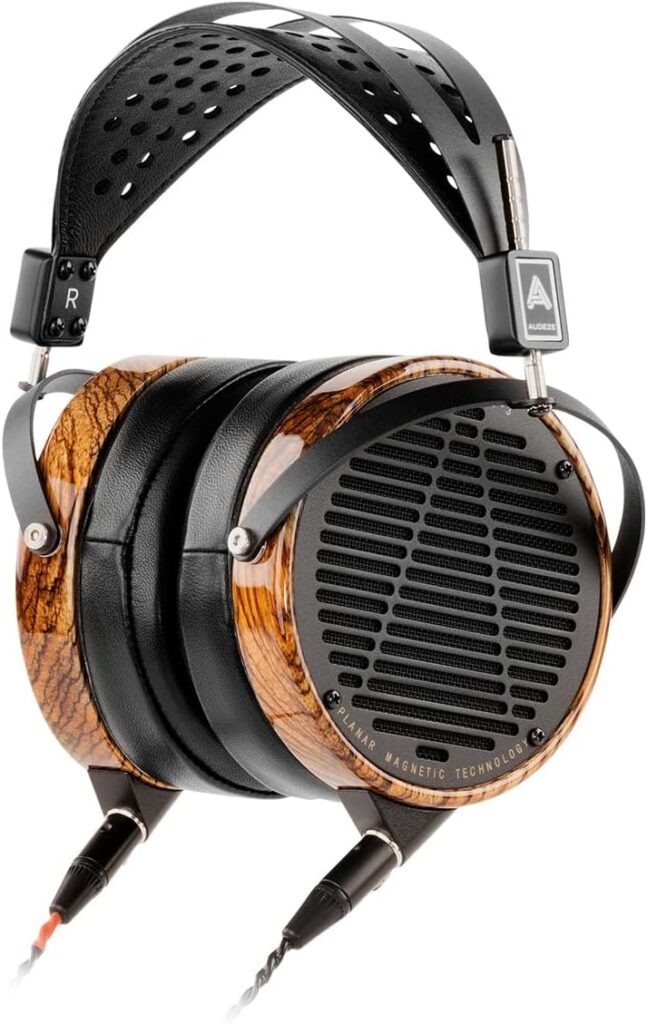
Audeze LCD-3 is a long-established premium open planar headphone with a substantial physical presence and a history of revisions. Its appeal rests partly on the rich LCD presentation and traditional wood-and-metal finish. That history also means a review must identify the evidence carefully: an early pair, a serviced older pair and current production should not be assumed identical. The purchase needs a clear preference for its sound and fit, not simply admiration for a familiar high-end name.
Research-based review. This assessment draws on manufacturer documentation and the original published evaluations linked below. Audio Review has not performed a hands-on test of this model.
Revision history belongs in the comparison
The current official page identifies a Fazor design with a 110-ohm load. The cited Headphone Corner evaluation uses an older owner-purchased pair updated with Fazor drivers and fitted with 2021 pads. That is useful original listening evidence, but it is not a fresh test of every current retail unit.
Ask about the serial history, driver repairs and pad configuration when buying used. A receipt for service can be more informative than a vague description of an upgraded pair. Do not transfer all observations from an early LCD-3 to a later one solely because the model name has remained. Equally, do not assume a newer pad or replacement driver creates exactly the same experience as an untouched new pair. A fair comparison starts with knowing which configuration is actually being heard and sold.
Rich bass comes with a tonal preference
Headphone Corner finds clean, substantial bass with a convincing sense of body, while also describing some softness in the outline of notes. Its midrange and treble assessment is more critical: the updated pads improve aspects of balance, but the reviewer still hears a subdued upper presence and uneven high-frequency character.
Treat that as an important preference check rather than a universal condemnation or praise. Listen to vocals, bass instruments and dense recordings at normal levels. Decide whether the richness is inviting or makes the music feel overly heavy. A listener who dislikes bright upper mids may respond differently from the cited reviewer. That individual variation is a reason to audition the actual pair, not to erase the tonal reservations. The LCD-3 should be chosen because its presentation remains satisfying through familiar albums, rather than because the price suggests that every frequency range must be beyond criticism.
Pads can change the comparison substantially
The original evaluation specifically examines older and 2021 cushions and explains that the sample and measurement conditions introduce variables. It should not be simplified into a promise that one pad replacement produces the same numerical or audible result for every LCD-3.
Check the fitted pads, wear and attachment before comparing offers. A flattened or substituted cushion can alter both comfort and acoustic coupling. Ask for the correct part and manufacturer procedure rather than selecting a replacement from appearance alone. If a used pair has been modified, compare it on its actual merits instead of pricing it as an untouched reference sample. Equalisation can be a personal tool, but a generic preset should not conceal uncertainty over the physical configuration. A clear description of the headphone’s condition makes a buying decision more reliable than a long list of enthusiastic comments about differently configured pairs.
635 grams is a major practical condition
Audeze’s current specification is 635 grams. Headphone Corner finds the broad support strap surprisingly effective, yet also raises the possibility of strap stretching and reduced separation from the harder band. Good distribution does not make the total weight disappear.
Try a long session in the actual listening posture. Check crown contact, neck fatigue, heat and lower-pad pressure with normal eyewear. Inspect the strap and adjustment range carefully on an older pair. Avoid improvised changes or drilling additional holes without appropriate guidance. Replacement components and correct servicing are part of the ownership cost. Someone who enjoys the sound but repeatedly removes the headphone because of weight should consider a lighter alternative. A premium home headphone is valuable through regular comfortable use, not simply through how impressive its construction feels when lifted from a case.
Source and cable planning should be practical
The current listing includes a four-pin XLR cable, conventional source adapters and a carrying case. Older packages may differ. The 110-ohm specification is only one part of the electrical picture, so the actual source should be checked rather than selected from impedance alone.
Listen for clean level on quiet recordings, noise in pauses and a useful volume range. Measure the cable route and confirm the output socket. A correctly wired conventional connection can be entirely appropriate; the presence of an XLR cable does not prove a balanced amplifier is mandatory. Compare any proposed electronic upgrade at similar loudness and identify a specific benefit. If buying used, include missing leads and likely service needs in the total. It is easier to assess value when the complete working arrangement is known than when a low headphone price is followed by several unplanned purchases.
Luxury value and the right room
LCD-3 is openly vented and has no ANC, wireless function or stock microphone. The intended setting is a quiet place where music can leak without disturbing others. Its weight and size also make it a deliberate home-listening object rather than a convenient everyday travel headset.
Check current European prices, return arrangements and regional service. A historic flagship reputation does not establish today’s best value, and a used discount can be offset by expensive repairs. Ask for a realistic condition assessment and compare alternatives without assuming that wood cups or a long-running model name guarantee the preferred sound. The strongest buyer is someone who has heard the actual configuration, likes the rich balance and can wear it comfortably. For another listener, a lighter or differently tuned open headphone can be the better purchase even at a much lower price. The decision should follow a clear sustained preference, with maintenance and the complete system cost understood.
Alternatives to consider
Audeze LCD-X: An important Audeze alternative with its own tuning and source requirements. Compare the actual revision and cushion condition rather than treating every LCD as the same presentation at a different price.
Sennheiser HD 800 S: A useful contrasting open dynamic design for perceived space and long listening. Assess comfort and the preferred balance with familiar recordings at similar loudness.
Meze 109 Pro: Keep this less expensive open option on the shortlist if comfortable music enjoyment is the main goal. A clear personal preference should justify paying more or accepting greater physical weight.
Audeze LCD-3 key specifications
- Design
- Open-back circumaural planar
- Driver size
- 106 mm
- Phase management
- Fazor
- Impedance
- 110 ohms
- Sensitivity
- 101 dB/1 mW at drum reference point
- Manufacturer weight
- 635 g
- Cup rings
- Zebrawood
- Current listed cable
- Four-pin XLR
- Current listed adapters
- XLR to 6.35 mm and 3.5 mm
- Case
- Standard LCD travel case
- Bluetooth, ANC and microphone
- None
- Frequency response
- 10 Hz–50 kHz (manufacturer specification)
Verdict
LCD-3 remains an interesting luxury open planar for a listener who values its rich presentation and traditional construction. Published evidence also gives clear reasons to examine tonal balance, revision history and the considerable weight carefully.
Audition the actual pair, confirm pads and service history, and include maintenance in the price comparison. It can be rewarding for the right owner without being a universal reference or an automatic upgrade over every less expensive headphone. Comfort and a lasting sound preference should decide the purchase.
Documentation and original reviews
Audeze official LCD-3 specifications, materials and current package · Headphone Corner original LCD-3 evaluation with Fazor drivers and 2021 pads
Editorial record
Sources and updates
Product specifications and factual claims were checked against Official Audeze LCD-3 product page ↗. Scores and buying advice follow our category-specific editorial methodology.
- Published
- November 17, 2026
- Last updated
- November 17, 2026