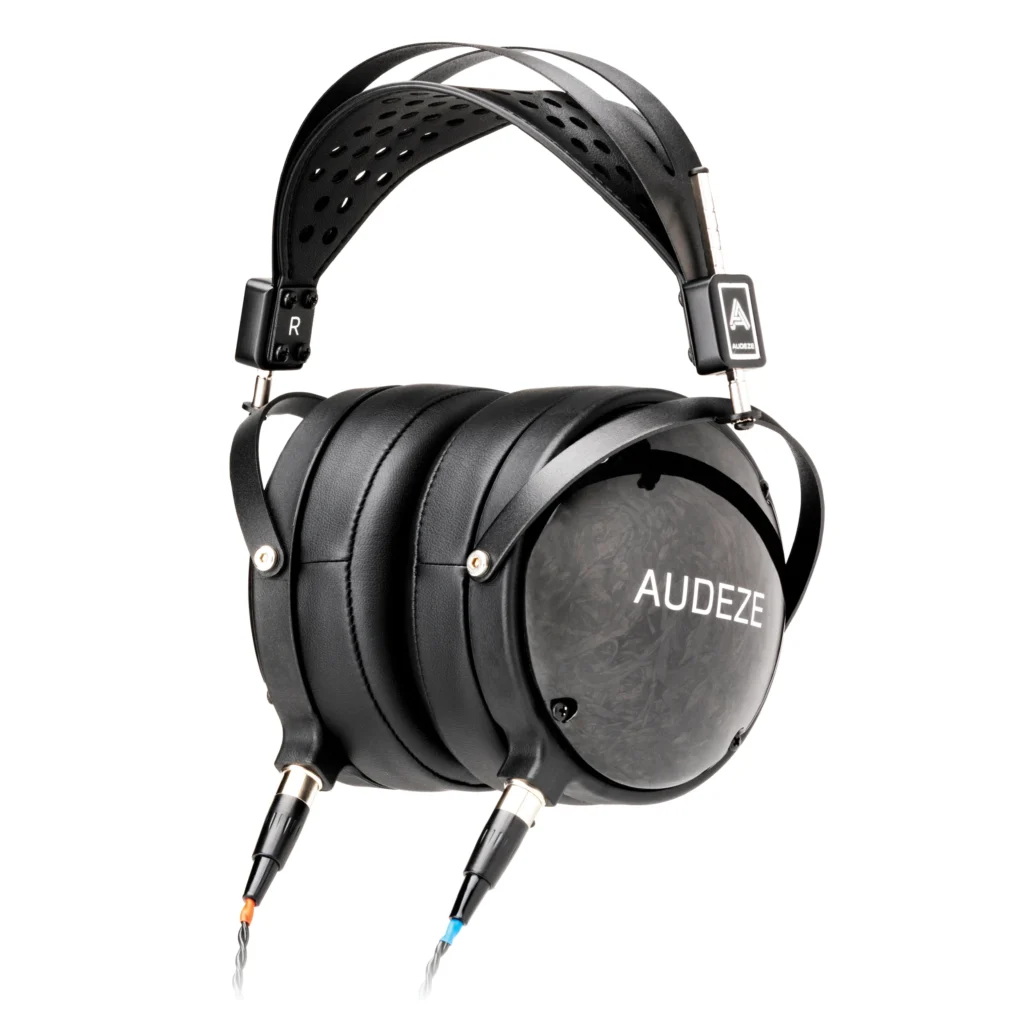
Audeze LCD-2 Classic is an established open planar headphone that deliberately retains a non-Fazor approach within the LCD family. Its appeal is a substantial, relaxed home-listening experience rather than a feature-rich consumer headset. The name Classic should not be mistaken for an assurance that every older review describes the current retail package exactly. Pad condition, accessories, physical weight and the listener’s response to its tuning all matter before a favourable price becomes a convincing purchase.
Research-based review. This assessment draws on manufacturer documentation and the original published evaluations linked below. Audio Review has not performed a hands-on test of this model.
Classic has a specific technical identity
Audeze identifies the LCD-2 Classic as a non-Fazor design with 106-millimetre planar drivers and glass-infused nylon rings. It is distinct from both the standard LCD-2 and the closed-back LCD-2. Similar names do not make their construction or listening results interchangeable.
Check the exact model before comparing listings. On a used pair, ask about driver service, pad replacements and any alterations. A historic review can provide useful listening evidence while still reflecting its own sample and period. It should not be presented as a fresh measurement of every later unit. The engineering identity is valuable because it makes the comparison fair, not because the presence or absence of a particular acoustic element establishes an automatic hierarchy. Choose the complete headphone that sounds and fits right rather than buying an acronym or a family reputation.
Bass strength does not make the whole tuning neutral
The original 2020 Headphones.com evaluation praises the bass’s depth, control and lack of boom. It is much more critical of the midrange, describing a recessed upper presence and a congested quality that improves for that reviewer with equalisation. Those reservations deserve as much attention as the positive low-frequency account.
Try vocals and dense arrangements alongside bass-led recordings. Check whether the relaxed balance feels comfortable or makes important musical parts too distant. Someone seeking a softer presentation may enjoy it without correction, while another listener may want more vocal openness. Compare at similar volume and take time beyond the first impressive bass passage. A headphone can deliver clean low frequencies and still have a tonal balance that is not personally convincing. The best recommendation follows the actual presentation rather than the assumption that expensive planar construction makes every part of the response equally neutral.
Equalisation is a choice, not an obligation to enjoy it
The cited review places considerable weight on its own equalisation approach. That is useful context, but its 2020 sample and exact cushion arrangement should not be treated as a universal preset for all later pairs. A preferred correction also depends on the listener and source.
Audition the unmodified headphone first, then decide whether processing belongs in the intended routine. If using equalisation, compare consistently and leave sensible output headroom. Make sure the same settings are available on the actual playback devices rather than only a demonstration computer. Avoid buying on the assumption that an unwanted balance will definitely become ideal after a complicated adjustment. A product that sounds right without additional work can be the more convenient purchase. Equally, someone who already uses careful personal correction may find the Classic’s underlying behaviour a useful basis for a satisfying home system.
Weight and suspension need a long trial
The current official weight is 544 grams. The older original evaluation finds the large cushions comfortable but also discusses suspension-strap stretching and possible contact with the harder band. A comfortable initial fit does not remove that long-term consideration.
Wear the headphone for a realistic listening interval with normal glasses. Check neck fatigue, crown pressure, cushion heat and the available height adjustment. Inspect the strap and pads on any used pair rather than judging solely by cosmetic cup condition. Ask about correct replacement parts and service before assuming that every problem is inexpensive to solve. A wide cushion opening can be appealing while the total weight remains too much for a particular user. The sound assessment is only useful if the headphone can be worn regularly. A lighter alternative may provide more actual enjoyment even when its construction looks less imposing.
Current cables differ from historic packages
The current Audeze listing includes a four-pin XLR lead, conventional stereo adapter arrangements and an LCD travel case. Older reviews and regional offers may describe another package. Confirm the actual contents rather than using a historic unboxing account as a guarantee.
Identify the amplifier socket and measure the route to the listening chair. Use the correct lead and adapter arrangement without assuming that every output topology is safely interchangeable. The 70-ohm specification should be considered alongside sensitivity and the source’s real capability. Check clean level, background noise and a useful control range on quiet recordings. There is no need to purchase an extreme amplifier solely because the headphone is large, but an unsuitable output should not be accepted because playback is technically audible. Include any missing cable or adapter in the complete cost when comparing a used offer.
A quiet-room purchase with a personal value equation
The Classic is open-backed and passive, so it lets surrounding noise in and playback out. There is no ANC, wireless system or stock microphone. Its value is therefore concentrated in home listening where those limitations are acceptable.
Check the actual room before comparing subtle sound differences. A television or conversation can hide the information that made an audition attractive. Compare current European prices, warranty and local maintenance options with both planar and dynamic alternatives. A good offer is compelling when the sound preference and fit are already established. It becomes less attractive if the owner needs to add unwanted processing, tolerate discomfort or buy several accessories simply to make routine use possible. The LCD-2 Classic can be a rewarding established design without being a universal reference or a necessary step in every enthusiast’s upgrade path. The complete daily experience should determine its value.
Alternatives to consider
Audeze LCD-X: An important Audeze alternative with its own tuning and source requirements. Compare the actual revision and cushion condition rather than treating every LCD as the same presentation at a different price.
Sennheiser HD 800 S: A useful contrasting open dynamic design for perceived space and long listening. Assess comfort and the preferred balance with familiar recordings at similar loudness.
Meze 109 Pro: Keep this less expensive open option on the shortlist if comfortable music enjoyment is the main goal. A clear personal preference should justify paying more or accepting greater physical weight.
Audeze LCD-2 Classic key specifications
- Design
- Open-back circumaural planar
- Phase management
- Non-Fazor
- Driver size
- 106 mm
- Impedance
- 70 ohms
- Sensitivity
- 101 dB/1 mW at drum reference point
- Manufacturer weight
- 544 g
- Cup rings
- Glass-infused nylon
- Current listed lead
- Four-pin XLR
- Current listed adapters
- XLR to 6.35 mm, then 3.5 mm
- Case
- Standard LCD travel case
- Bluetooth, ANC and microphone
- None
- Frequency response
- 10 Hz–50 kHz (manufacturer specification)
Verdict
LCD-2 Classic offers a credible full-bodied open-planar experience with particularly positive published bass impressions. Its midrange tuning, weight and the relevance of older sample configurations make the recommendation conditional on a personal audition.
Confirm the actual pads and accessories, test the intended source and decide whether equalisation fits the routine. For someone who likes the balance and can wear it comfortably, it can be rewarding. Another headphone can be better value when it delivers the preferred presentation with fewer practical compromises.
Documentation and original reviews
Audeze official LCD-2 Classic design, specifications and current package · Headphones.com original 2020 LCD-2 Classic sound, fit and EQ evaluation
Editorial record
Sources and updates
Product specifications and factual claims were checked against Official Audeze LCD-2 Classic product page ↗. Scores and buying advice follow our category-specific editorial methodology.
- Published
- November 17, 2026
- Last updated
- November 17, 2026