Overview
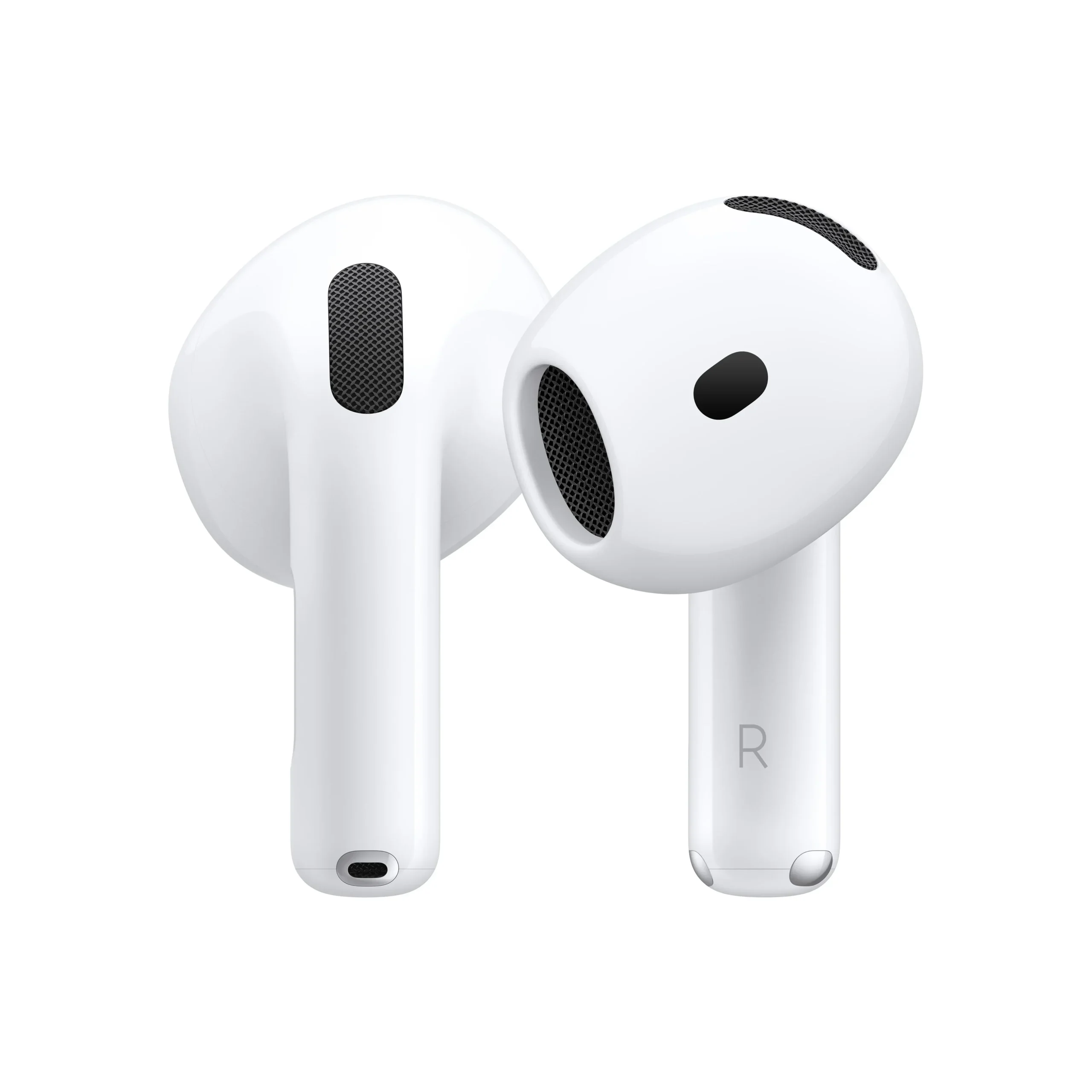
Apple AirPods 4 with Active Noise Cancellation bring ANC to the company’s open-fit, non-silicone earbud shape. They use Apple’s H2 chip, custom driver and high-dynamic-range amplifier, then add Transparency mode, Adaptive Audio, Conversation Awareness and personalised Spatial Audio. The concept is convenience first: a pair designed to disappear into an iPhone, iPad or Mac routine while offering more noise control than earlier non-Pro AirPods. This is an editorial assessment built around the published specification, the product’s intended use and the surrounding market rather than a substitute for a long-term in-room or bench test. The important question is not simply whether the feature list is impressive; it is whether the design makes a convincing, usable system for the listener it targets.
Design and day-to-day use
The open-fit shape is the defining decision. For listeners who dislike in-ear tips, it can feel more natural and less intrusive than a sealed earbud; for others, the lack of a seal can reduce passive isolation and security. The case is notably compact and can charge via USB-C, Qi-certified chargers or an Apple Watch charger. IP54 dust, sweat and water resistance helps for normal exercise, but it should not be treated as waterproofing. The practical appeal is in the details: control placement, the quality of the physical interface, cable routing and the way the product fits into an existing setup can matter as much as any headline specification. Buyers should consider the space around the unit, the equipment it must connect to and whether its operating style suits the way they actually listen.
Features and connectivity
The ANC model adds a case speaker for Find My proximity features and a full range of Apple ecosystem functions. Voice Isolation can help calls, head-tracked Spatial Audio has supported-content appeal, and the force controls make basic playback direct. Battery estimates are up to four hours with ANC enabled or five hours with noise control off, with up to twenty or thirty hours from the case respectively, so charging habits remain important. Those options create a useful degree of flexibility, but they also reward careful system planning. A feature has genuine value when it removes friction from a regular listening habit, not when it merely looks good on a comparison chart. Before buying, verify the exact regional specification and make a short list of the sources, headphones, speakers or cartridges that will be used with it.
Sound and system matching
Because the design does not create the same acoustic seal as a silicone-tip earbud, expectations for bass isolation and noise cancellation should be realistic. Apple’s adaptive EQ and H2 processing aim to compensate intelligently, and the open form can make casual conversation and situational awareness less burdensome. Sound quality will be most satisfying for a listener who values balance, communication and ecosystem integration over the absolute isolation of a sealed in-ear monitor. On paper, that direction should suit listeners who prefer an assured presentation over an artificially flashy one. Final results will still depend heavily on the partnering equipment and the room or listening position. Matching should therefore be treated as part of the purchase: a well-chosen source, cable or cartridge can make more difference than chasing a marginally higher specification elsewhere.
What to expect in a real setup
A sensible evaluation should begin with familiar recordings at normal listening levels, then move to more demanding material. Listen for tonal balance, control at the frequency extremes, image stability and whether the product remains satisfying over a complete album rather than a single impressive track. If it offers software, presets or calibration, start from the neutral setting and make one change at a time so that the result is meaningful.
Strengths
The biggest strength is the combination of comfort preference and Apple integration. Setup, device switching, Find My support, call controls and software features are unusually smooth for people already using current Apple devices. Adding ANC without moving to a Pro-shaped earbud is a meaningful option, not merely a specification update. Just as importantly, the product avoids forcing the buyer into an unnecessarily narrow use case. Its strongest case is made when the complete system is considered: layout, source quality, available connections and the type of music or content that will be played. That makes it a more considered proposition than a purchase driven only by a single headline feature.
Limitations to consider
Many advanced functions are limited or reduced outside Apple’s ecosystem, so Android and mixed-device users should compare alternatives carefully. Battery life with ANC is shorter than some sealed rivals, and the open fit will never isolate a train or aircraft cabin in exactly the same way as a well-fitting silicone earbud. Fit is personal and should be tested where possible. None of those points automatically rule it out, but they should shape expectations. This is not a category where the most expensive option is always the most appropriate one. Buyers who need a very different connection, a smaller footprint, more automation or a bundled accessory should compare those priorities directly before committing.
Who should buy it?
These AirPods make sense for an iPhone owner who wants Apple’s software experience but cannot get comfortable with ear tips. They are also a good choice for commuting, calls and light exercise when the user values an airy fit more than maximum passive isolation. It will make the most sense for a listener who understands the role it will play in a system and is prepared to set it up properly. It is less compelling when bought as a shortcut around a weak source, unsuitable headphones or poorly positioned speakers. In that situation, allocating part of the budget to the rest of the chain may produce a more balanced result.
Alternatives to consider
AirPods Pro are the logical upgrade for stronger isolation and tip-based fit. Beats alternatives may offer a different fit or sound profile within Apple’s ecosystem, while Sony, Bose and Samsung models should be compared by the buyer’s phone platform and preferred eartip style. Alternatives should be judged by their complete ownership experience, not just a specification table: warranty, app support where relevant, availability of accessories and how easy the product is to place, upgrade or resell all deserve consideration. The best alternative is the one that solves the same listening need with fewer compromises for a particular setup.
Apple AirPods 4 with Active Noise Cancellation key specifications
- Model
- Apple AirPods 4 with Active Noise Cancellation
- Type
- True wireless open-fit earbuds
- Chip
- Apple H2 headphone chip
- Audio
- Custom high-excursion driver; custom high dynamic range amplifier; Adaptive EQ
- Noise control
- Active Noise Cancellation; Adaptive Audio; Transparency; Conversation Awareness
- Spatial audio
- Personalized Spatial Audio with dynamic head tracking
- Bluetooth
- Bluetooth 5.3
- Battery
- Up to 4 hours with ANC on / 5 hours with noise control off; 20 / 30 hours total with case
- Charging
- USB-C, Apple Watch charger, or Qi-certified charger
- Water resistance
- IP54 for earbuds and case
- Weight
- 4.3 g per earbud; 34.7 g charging case
View the official Apple AirPods 4 with Active Noise Cancellation product page
Verdict
AirPods 4 with ANC solve a specific comfort-and-convenience problem very well. They are at their best when their open fit and deep Apple integration matter more than ultimate isolation. It is best approached as a deliberate system component rather than an isolated gadget. Confirm compatibility, audition where possible and compare it against a realistic shortlist. For the right buyer, its combination of design intent, connectivity and system potential gives it a credible place in its category.
Editorial record
Sources and updates
Product specifications and factual claims were checked against Official Apple AirPods 4 with Active Noise Cancellation product page ↗. Scores and buying advice follow our category-specific editorial methodology.
- Published
- July 16, 2026
- Last updated
- July 25, 2026
Compare before choosing
Two strong alternatives from the same earbuds category.