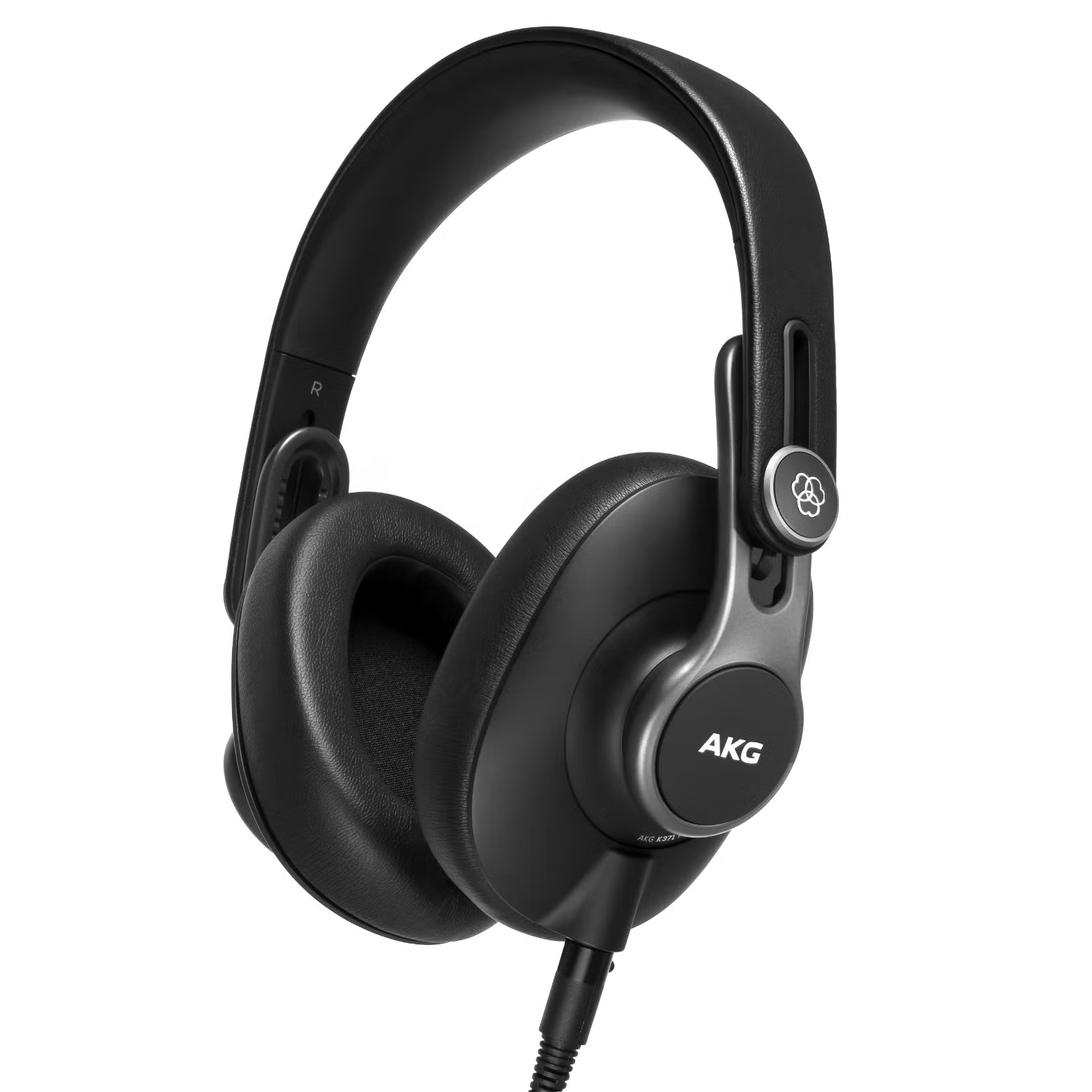
AKG K371 is an established wired headphone that puts its case primarily on sound, fit and a useful cable package. It is not the Bluetooth-suffixed version, and it does not provide active noise cancellation. For an owner who wants a direct connection at a desk or a relatively quiet listening space, that simplicity can be attractive. The important qualification is that the pad seal must remain consistent enough for the intended balance to reach the listener.
Research-based review. This assessment draws on manufacturer documentation and the original published evaluations linked below. Audio Review has not performed a hands-on test of this model.
A reference target is a design choice
AKG describes the K371 as tuned to its Reference Response target. SoundGuys’ original evaluation finds a broadly agreeable balance with slightly elevated deep bass, clear vocals and good overall listening quality. A preference-oriented target is useful context, not proof that every ear will hear an identical result.
Start with familiar music and assess the relationship between voices, bass and percussion. A headphone can have audible low-end weight without obscuring the middle range. Conversely, a lighter bass impression can result from an imperfect seal rather than a different recording or a weak source. For editing, keep trusted reference tracks alongside the work and verify important decisions elsewhere. The aim is a repeatable judgement, not a debate over whether one target is the only definition of neutral. Buyers coming from strongly bass-boosted consumer headphones should give the new balance a fair trial before reaching immediately for large EQ changes.
The pad seal determines the useful result
The official design uses oval over-ear pads and a folding, adjustable frame. SoundGuys finds the fit comfortable, including with glasses, but that observation belongs to its own test experience. Ear shape, eyewear and pad condition can change the result for another owner.
Check both sides while turning the head and looking down. If bass noticeably disappears when moving, solve the fit before deciding how the headphone sounds. Try the adjustment with the glasses normally worn and ensure hair is not trapped beneath the pads. A comfortable fit is valuable during a long edit, but very light pressure can also make a stable seal harder for some people. Replacement cushions should be selected carefully: a different depth or material may alter the sound as well as comfort. For a reference used across months of work, keeping the pad setup known is more useful than making repeated unrecorded changes.
Three cables make a real practical difference
AKG lists two straight cables and one coiled cable, with a mini-XLR attachment at the headphone and a conventional stereo source connection. That gives a short lead for close use and longer choices for a studio or listening chair. It also makes a damaged lead replaceable without replacing the whole headphone.
Choose the cable for the physical setup rather than leaving an unnecessary length across the floor. A coiled lead can be convenient around a console but may add pull when stretched. Confirm the locking plug is seated correctly and release it properly when changing cables. The larger connector adapter is for a headphone socket, not a balanced output conversion. This is a passive stereo headphone, so the cable does not provide microphone input or remote controls. A creator who also needs calls or voice recording should plan a separate microphone instead of assuming the studio description includes a complete headset function.
Closed construction is not a travel shield
The K371 uses passive isolation. SoundGuys considers that isolation only moderate and notes leakage, despite the closed enclosure. It does not suppress the low rumble of transport in the way a capable ANC headphone can.
That matters when deciding where the listening will take place. For a fairly quiet editing desk, the reduction of some surrounding sound can be sufficient. For an aircraft cabin or a loud daily journey, compare an ANC model directly. Near a microphone, make a short recording at the intended monitoring level and check whether the backing track is captured. Closed-back construction is a practical starting point for tracking, not a guarantee of zero spill. Avoid turning the level up simply to compete with the room. If the environment makes normal listening difficult, selecting a more appropriate design is usually more useful than buying a different cable or applying heavy EQ.
Simple electrical requirements, with no app layer
AKG specifies 32 ohms and sensitivity of 114 dB SPL per volt. The K371 has no battery, internal Bluetooth codec or companion-app signal processing in its wired form. Volume and any EQ come from the connected system.
Begin with a clean headphone output and confirm sufficient level on quieter recordings. Check that the control provides comfortable adjustment rather than jumping abruptly from too quiet to too loud. A suitable phone adapter or interface can be enough; an extra amplifier should address an actual limitation. If the sound seems wrong, inspect the pad seal and connection first. A different gain setting cannot restore bass lost through a gap around an ear. For software EQ, retain a known default and leave suitable headroom when boosting frequencies. The simplicity of a passive headphone is most valuable when the owner keeps the rest of the playback chain equally understandable.
Portability and long-term value
The folding construction reduces the space occupied by the K371. Its supplied pouch helps organise the headphone and cables, but it is not a hard case. AKG also specifies metal reinforcement in parts of the frame rather than an entirely metal body.
Handle the hinges normally and avoid packing heavy objects against the folded cups. For a used example, inspect the adjustment, pads and cable locking point, then check both channels before judging the price. Compare current European offers rather than relying on an old launch recommendation. The K371’s strongest value case is enjoyable, relatively balanced wired sound with serviceable cables. If a poor personal fit undermines that balance, a cheaper price is not enough to rescue the purchase. If wireless calling or strong noise reduction is essential, buying another product for those tasks may be more expensive overall than choosing the right design from the beginning.
Alternatives to consider
Audio-Technica ATH-M50x: ATH-M50x is a natural closed wired comparison, particularly when a robust everyday cable arrangement matters. Compare the sound and pad fit directly rather than assuming similar professional positioning means identical performance.
Sennheiser HD 560S: HD 560S makes sense if the listening space permits an open headphone. Its different leakage and room requirements should be considered before choosing solely on perceived detail or a favourable price.
Audio-Technica ATH-M50xBT2: ATH-M50xBT2 addresses a different need when wireless convenience is essential. Include charging, calls and connection behaviour in that decision instead of expecting the wired K371 to provide them.
AKG K371 key specifications
- Design
- Closed-back over-ear
- Driver
- 50 mm with titanium-coated diaphragm
- Impedance
- 32 ohms
- Sensitivity
- 114 dB SPL/V at 1 kHz
- Weight
- 255 g
- Cable attachment
- Detachable mini-XLR at earcup
- Supplied cables
- 1.2 m and 3 m straight; 3 m coiled
- Source plug
- 3.5 mm with larger stereo adapter
- Frame
- Folding
- ANC
- No
- Bluetooth
- No; this review covers wired K371
- Microphone
- No
Verdict
AKG K371 is a persuasive wired option when sound balance and a flexible cable package matter more than wireless features. The original published evaluation supports a favourable listening assessment, while the passive isolation and fit requirements define its limits.
Try it with familiar recordings, confirm a stable seal and choose the appropriate cable for the desk or source. It can serve listening and editing well without an elaborate equipment chain. It should not be bought as an ANC substitute or on the assumption that a reference target removes the need to learn how the headphone translates to other systems.
Documentation and original reviews
AKG UK official K371 features, cables and specifications · AKG official K371 technical sheet · SoundGuys original K371 sound, comfort and isolation evaluation
Editorial record
Sources and updates
Product specifications and factual claims were checked against Official AKG K371 product page ↗. Scores and buying advice follow our category-specific editorial methodology.
- Published
- November 17, 2026
- Last updated
- November 17, 2026