Research note: This is an independent, research-based assessment built from official specifications and product documentation. We have not claimed a hands-on laboratory test.
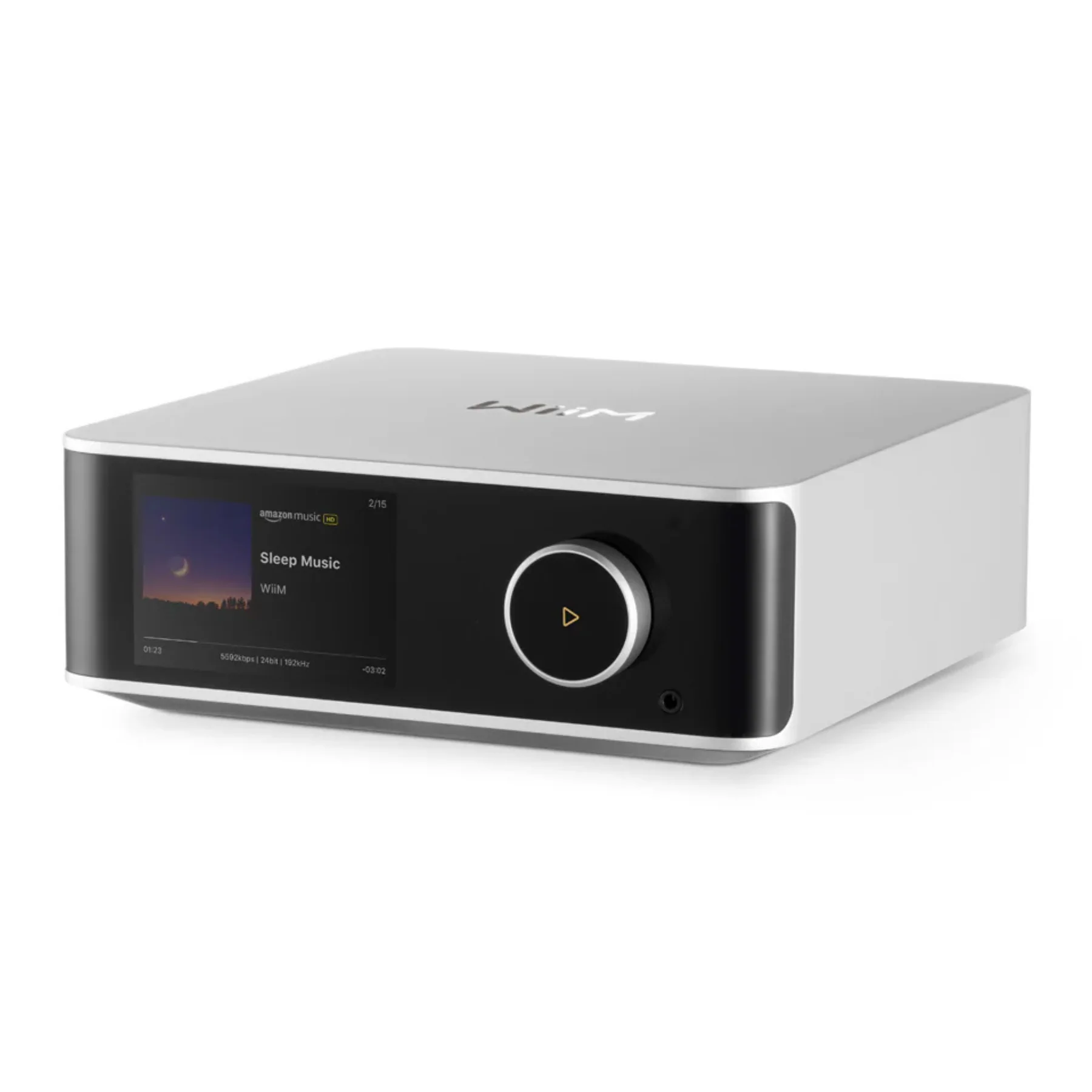
WiiM Ultra key specifications
- Model
- WiiM Ultra
- Type
- network music streamer and DAC/preamp
- DAC
- ESS ES9038Q2M
- Analogue line-output signal-to-noise ratio
- 121 dB
- Analogue line-output THD+N
- -116 dB (0.00015%)
- Analogue input ADC
- up to 192 kHz / 24-bit
- Display
- 3.5-inch glass-covered touchscreen
- Inputs
- RCA line-in, MM phono input, optical S/PDIF and HDMI ARC
- Outputs
- RCA line-out, 3.5 mm headphone output, optical S/PDIF, coaxial S/PDIF, USB Audio and subwoofer output
- USB media
- USB storage playback and USB audio output
- Digital output resolution
- up to 24-bit / 192 kHz
- Network
- Wi-Fi 6, upgradeable to Wi-Fi 6E by software update, plus Ethernet
- Bluetooth
- Bluetooth 5.3
- Streaming
- Google Cast Audio, Spotify Connect, TIDAL Connect, DLNA, Alexa Cast and Roon Ready
- Multi-room
- groups with WiiM, Google Home and Alexa devices
- Room correction
- integrated room-correction function
- Equalisation
- 10-band graphic EQ, 10-band parametric EQ and presets
- Control
- WiiM Home app, touchscreen and voice assistants
- Voice-assistant support
- Alexa and Google Assistant
- AirPlay
- not an AirPlay receiver
- Subwoofer support
- wired subwoofer output with bass-management controls
- Purpose
- connects to an external amplifier or powered speakers
Driver design and sound goals
An ESS ES9038Q2M DAC feeds the analog outputs, while digital outputs allow use as a transport. RoomFit and extensive parametric EQ can correct broad room response and integrate a subwoofer. Published frequency and output figures are useful boundaries, but room placement and listening distance often determine the result more strongly. A stereo pair also creates real image width that a single smart speaker or soundbar can only approximate.
Amplification and system architecture
Ultra is a streamer and preamp, not a speaker power amplifier. Its headphone output covers convenient listening, while passive speakers still require an external amplifier and active speakers connect through variable line output. Active systems simplify amplifier matching and allow DSP to coordinate drivers, but they also concentrate electronics, software and amplification inside the speakers. Long-term ownership therefore depends on app support and serviceability as well as conventional cabinet quality.
Inputs and streaming
HDMI ARC, MM phono, analog line, optical, USB storage and Bluetooth make it unusually flexible. Turntable cartridge level and grounding must match the MM stage; low-output MC cartridges need external gain. Buyers should map every intended source before purchase, especially televisions, computers and turntables. HDMI ARC/eARC improves TV convenience, while analog sources may require adapters or a phono preamp.
Placement, calibration and bass
Bass management provides crossover, level, phase and timing tools for a subwoofer. The front touchscreen helps now-playing and input control, but the device still belongs near the connected amplifier and cables. Boundary distance, stands and listening height affect tonal balance and imaging. App EQ can correct broad problems but cannot turn poor placement into an ideal stereo triangle. A subwoofer output is valuable when deeper bass or lower distortion is needed.
Daily use and ecosystem
Google Cast, Spotify/Tidal Connect, Alexa Cast, DLNA and Roon Ready are supported through the WiiM Home app. AirPlay reception is absent, which matters to households built around Apple’s native casting. Network speakers should wake reliably, preserve volume settings and remain controllable when services change. Multiroom compatibility is useful only if it matches devices already in the home; Bluetooth remains a convenient fallback but may offer fewer features.
Value and alternatives
Ultra combines functions that often require a streamer, DAC, preamp, phono stage and room processor. Output quality and app depth are strong, though buyers who need AirPlay or balanced XLR outputs must look elsewhere. The correct comparison includes amplifiers, streamers, cables and stands that a passive system might require. All-in-one speakers can be expensive upfront yet economical as a complete system, while traditional separates retain greater upgrade freedom.
Who should buy it?
Choose WiiM Ultra when one affordable box must connect TV, turntable, digital sources, a subwoofer and an existing amplifier or active speakers. It suits system builders who enjoy app control. Pure AirPlay users and owners needing balanced outputs should compare alternatives.
Alternatives to consider
WiiM Pro Plus is cheaper and simpler; Cambridge CXN100 offers premium build and balanced analog output. Eversolo DMP-A6 provides a larger screen and audiophile interface, while Bluesound Node supports AirPlay and a mature ecosystem.
Verdict
WiiM Ultra is one of the most versatile affordable streamers available. Its touchscreen, HDMI ARC, phono input, room correction and sub control make it a genuine system centre. Missing AirPlay and XLR are real limits, but neither undermines its exceptional breadth.
Primary source
WiiM Ultra official product page
Editorial record
Sources and updates
Product specifications and factual claims were checked against Official WiiM Ultra product page ↗. Scores and buying advice follow our category-specific editorial methodology.
- Published
- July 1, 2026
- Last updated
- July 25, 2026
Compare before choosing
Two strong alternatives from the same streamers & amplifiers category.