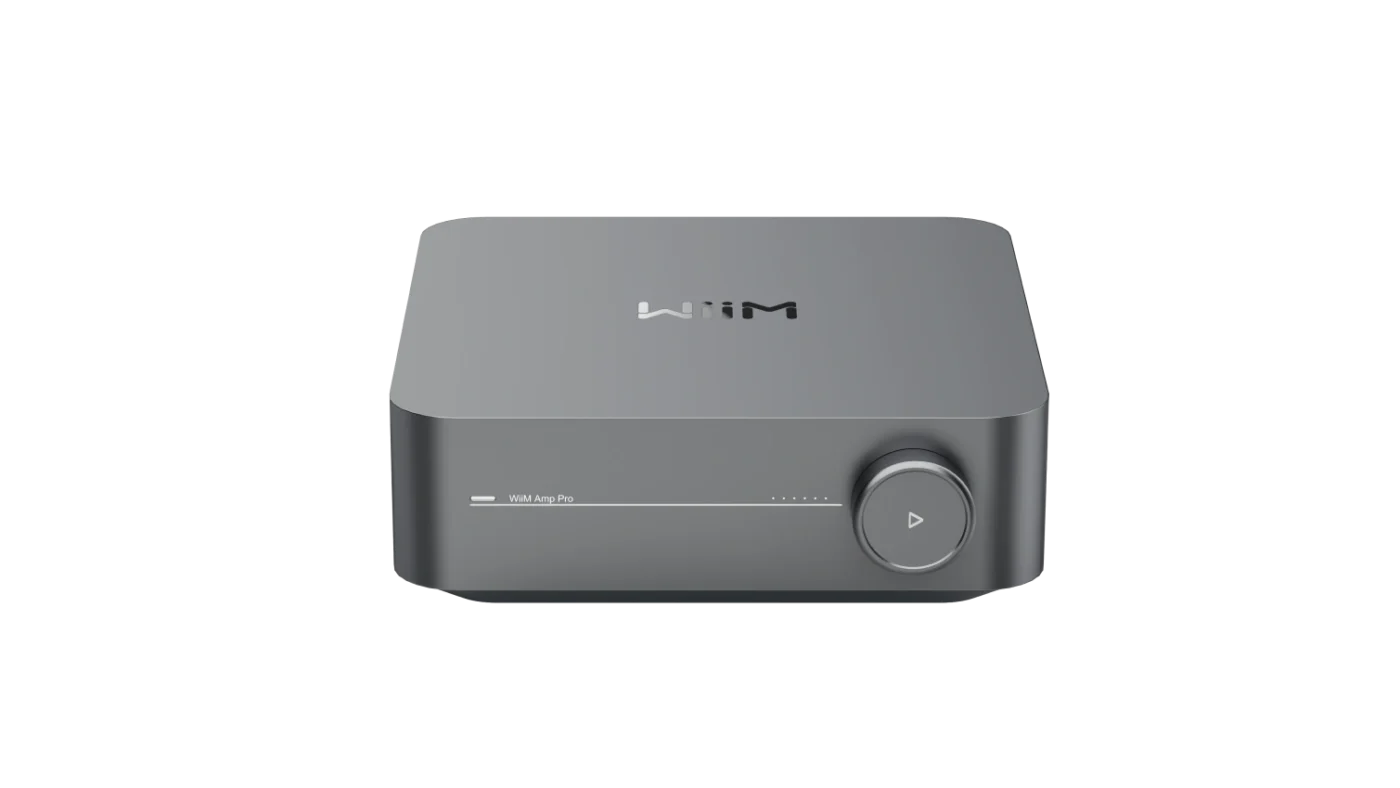
Research note: This is an independent, research-based assessment built from official specifications and product documentation. We have not claimed a hands-on laboratory test.
WiiM Amp Pro key specifications
- Model
- WiiM Amp Pro
- Type
- Class-D streaming amplifier for passive speakers
- Amplifier chip
- Texas Instruments TPA3255
- DAC
- ESS ES9038Q2M
- Power output
- 60 W per channel into 8 Ohm
- Power output
- 120 W per channel into 4 Ohm
- Supported speaker loads
- 8 Ohm, 6 Ohm and 4 Ohm; two 8 Ohm pairs in parallel
- Minimum supported impedance
- 2.67 Ohm
- Analogue-output signal-to-noise ratio
- 120 dB
- Analogue-output THD+N
- -105 dB (0.0005%) at 5 W
- Analogue input ADC
- up to 192 kHz / 24-bit
- Inputs
- HDMI ARC, RCA line-in, optical S/PDIF and USB media
- Outputs
- passive speaker terminals, subwoofer output and USB Audio output
- Network
- tri-band Wi-Fi 6E and Ethernet
- Bluetooth
- Bluetooth 5.3 with SBC and AAC
- Streaming
- Google Cast, Alexa Cast, Spotify Connect, TIDAL Connect, DLNA and Roon Ready
- AirPlay
- not supported as an AirPlay receiver
- TV audio
- stereo PCM or Dolby Digital through HDMI ARC/optical
- Room correction
- AI RoomFit room-correction support
- Equalisation
- 10-band graphic EQ, 10-band parametric EQ and 26 EQ presets
- Controls
- front volume knob, play/pause controls and WiiM Voice Remote
- Dimensions
- 217 x 190 x 66 mm
- Weight
- 2.08 kg
Driver design and sound goals
Post-filter feedback compensates for speaker-load variation in the Class D output stage, while an ESS DAC and low-noise op-amps handle conversion. The design targets consistent, neutral performance across ordinary passive speakers. Published frequency and output figures are useful boundaries, but room placement and listening distance often determine the result more strongly. A stereo pair also creates real image width that a single smart speaker or soundbar can only approximate.
Amplification and system architecture
Sixty watts per channel into eight ohms doubles to 120 W into four ohms under stated conditions. That is ample for normal rooms and mainstream speakers, but insensitive loads and concert levels may need a larger amplifier. Active systems simplify amplifier matching and allow DSP to coordinate drivers, but they also concentrate electronics, software and amplification inside the speakers. Long-term ownership therefore depends on app support and serviceability as well as conventional cabinet quality.
Inputs and streaming
HDMI ARC, optical, analog line and USB storage cover TV and music. There is no phono stage, and TV output should use stereo PCM or supported Dolby Digital rather than DTS or Atmos. Buyers should map every intended source before purchase, especially televisions, computers and turntables. HDMI ARC/eARC improves TV convenience, while analog sources may require adapters or a phono preamp.
Placement, calibration and bass
RoomFit and ten-band graphic/parametric EQ address room response, while the sub output has adjustable crossover. Proper speaker and sub placement should precede automated correction. Boundary distance, stands and listening height affect tonal balance and imaging. App EQ can correct broad problems but cannot turn poor placement into an ideal stereo triangle. A subwoofer output is valuable when deeper bass or lower distortion is needed.
Daily use and ecosystem
Google Cast, Spotify/Tidal Connect, Alexa Cast, DLNA, Roon Ready and two-way Bluetooth are supported. Amp Pro does not receive AirPlay, an important difference from some other WiiM products. Network speakers should wake reliably, preserve volume settings and remain controllable when services change. Multiroom compatibility is useful only if it matches devices already in the home; Bluetooth remains a convenient fallback but may offer fewer features.
Value and alternatives
Few products combine amplification, streaming, ARC, room correction and bass management at this price. The compromise is limited surround handling, no headphones and no phono input. The correct comparison includes amplifiers, streamers, cables and stands that a passive system might require. All-in-one speakers can be expensive upfront yet economical as a complete system, while traditional separates retain greater upgrade freedom.
Who should buy it?
Buy WiiM Amp Pro to modernize passive speakers for streaming and television in a stereo or 2.1 room. It suits value-conscious music listeners and secondary systems. Apple-only AirPlay households, vinyl users without a preamp and demanding floorstanders may need another solution.
Alternatives to consider
WiiM Amp Ultra adds more power and a display; the original WiiM Amp supports AirPlay in applicable versions. Bluesound Powernode offers a more premium ecosystem, while Sonos Amp integrates better with Sonos home cinema.
Verdict
WiiM Amp Pro is a remarkably complete stereo hub whose sensible power, excellent app, room correction and sub integration outweigh the missing AirPlay and phono stage for many buyers. It is not an AVR, but as a compact modern 2.1 amplifier its value is difficult to beat.
Primary source
WiiM Amp Pro official product page
Editorial record
Sources and updates
Product specifications and factual claims were checked against Official WiiM Amp Pro product page ↗. Scores and buying advice follow our category-specific editorial methodology.
- Published
- July 1, 2026
- Last updated
- July 25, 2026
Compare before choosing
Two strong alternatives from the same streamers & amplifiers category.