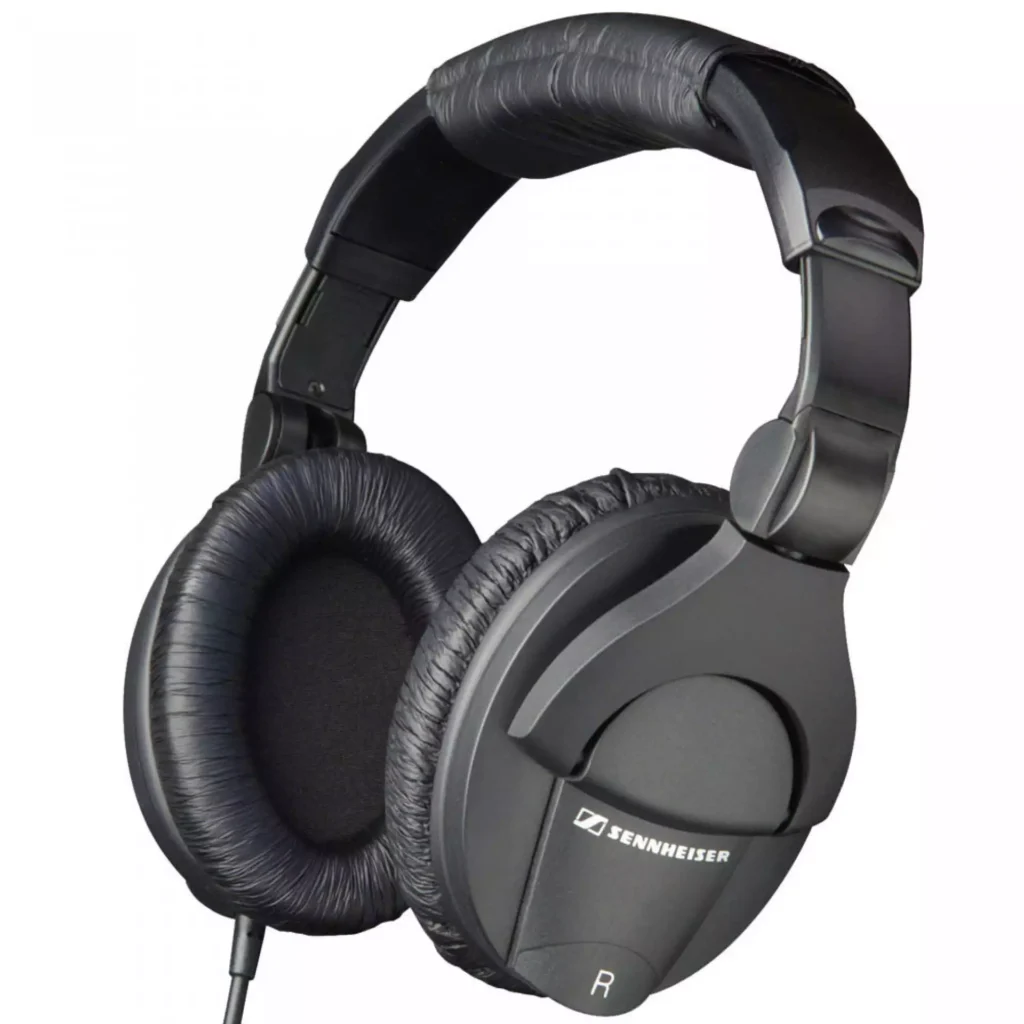
Sennheiser HD 280 PRO is a long-established closed monitoring headphone built around a simple wired job. It does not provide wireless convenience, app effects or active noise cancellation. Its purpose is to give a performer or engineer a useful listening feed with passive isolation, at a price that can make sense for a working studio or home recording setup. That practical focus remains attractive, provided its fit, fixed coiled cable and relatively restrained presentation match the task.
Research-based review. This assessment draws on manufacturer documentation and the original independent evaluations linked below. Audio Review has not performed a hands-on test of this model.
Recording utility comes before appearance
The closed over-ear design makes the HD 280 PRO relevant to vocal recording, instrument monitoring and voice work where playback leaking into a microphone is undesirable. It is a more natural starting point for that role than an open-back home headphone. Isolation still depends on the seal and actual cue level, so check the setup rather than assuming silence outside the cups.
For a small studio, a simple headphone can be a useful shared tool. Label the lead, store it without strain and explain the volume control to anyone using it. The most important quality is predictable monitoring during the recording, not whether the cabinet looks luxurious. A good practical fit can justify an unglamorous design that would be less appealing as an everyday travel accessory.
What the independent review finds
SoundGuys’ original evaluation describes neutral mids and a fairly revealing balance, with lighter bass than some consumer listeners may expect. It considers the headphone useful value for recording and mixing while noting heat during longer wear. These observations support a work-focused recommendation with realistic comfort expectations.
For monitoring a performance, check that the voice or instrument remains easy to follow without excessive level. For mix work, use familiar references before changing low-frequency balance in response to a new headphone. A restrained bass impression can encourage adding more bass than the recording needs if the listener has not learned the presentation. Check important decisions on another known system where possible rather than treating a studio model name as proof of perfect translation.
Passive isolation has boundaries
Noise reduction here comes from the closed cups and pad seal. It is not an active cancellation system, and the independent test finds that low-frequency noise is less effectively reduced than higher-frequency sound. That distinction matters if the intended environment includes a persistent engine or ventilation rumble.
Keep hair, spectacles and pad condition in mind when checking the seal. If a cue feed is difficult to hear, improve the monitoring balance and environment before simply increasing volume. For a singer, reducing unnecessary instruments in the cue mix may be more effective than turning up the entire track. The headphone should support a comfortable performance, not become a reason to compensate for an unsuitable mix with an increasingly loud signal.
The coiled lead is both useful and restrictive
The single-sided cable stays out of the way of one earcup, and the coil can reduce loose cable on the floor. However, it is not a quick removable lead like those on some alternatives. Think about the path to an interface, recorder or headphone distributor before deciding the arrangement is convenient.
A cable that pulls against a light desktop device can be irritating or risky to the equipment. Leave enough slack for normal head movement, keep it away from chair wheels and avoid hanging the headphone by the lead. If frequent field work or easy cable replacement is central to the plan, compare models designed around that requirement. A low initial cost can be outweighed by inconvenience if the fixed cable is wrong for the routine.
Fit, pressure and a longer session
The earcups rotate and the structure folds for storage, but the headphone remains a substantial wired item rather than a miniature commuter model. Try the headband range and pad contact with the glasses or hairstyle normally worn. A short demonstration does not always reveal warmth or a pressure point.
For long voice-editing sessions, take breaks and check whether the fit stays consistent when looking down at notes or turning toward another screen. If pressure causes repeated adjustment, consider a different shape rather than assuming it will become comfortable for everyone. Pad wear also deserves attention over time. Replacement with the correct part helps retain a predictable fit, while unrelated aftermarket pads can change both sealing and the listening balance.
Source matching without a complicated stack
The official nominal impedance is sixty-four ohms. That number does not describe the complete drive requirement by itself. Try the intended interface or recorder and check for clean, comfortable output with a usable control range. Start at a low setting when connecting to unfamiliar equipment.
There is no battery to charge and no Bluetooth codec to select. That direct connection is useful for monitoring, but computer software and interface routing can still introduce delay. If a performer hears an echo, inspect the monitoring path rather than blaming a passive headphone for all system latency. The correct solution may involve the interface’s monitoring arrangement, not a different headphone or an additional amplifier purchased without identifying the actual problem.
Value as a working tool
HD 280 PRO is most convincing when the budget is limited and the job is clear: provide an isolated wired feed for recording or monitoring. Compare DT 770 Pro for a different physical and tonal approach, and ATH-M50x when removable leads and its presentation appeal. There is no universally correct studio headphone independent of the user and task.
For used units, inspect pads, hinges, headband and the entire cable. Intermittent sound when the lead moves is a practical concern that an attractive price does not erase. For new stock, compare support and replacement-pad availability. A dependable pair that can be used comfortably and stored sensibly is a better studio purchase than a nominally more impressive model that creates friction every time a session begins.
Alternatives to consider
Beyerdynamic DT 770 Pro: DT 770 Pro is a useful closed-headphone comparison when fit and tonal preference differ. Check the exact impedance version and source, and compare a full session rather than assuming a larger-looking cup guarantees better comfort.
Audio-Technica ATH-M50x: ATH-M50x is worth considering when its removable cable arrangement and different presentation suit the routine. For tracking, compare leakage and comfort with the actual microphone setup as well as the music.
Sennheiser HD 280 PRO key specifications
- Design
- Closed-back, over-ear, dynamic
- Connection
- Fixed single-sided coiled cable
- Cable length
- Approximately 1.3–3 m, official specification
- Connector
- 3.5 mm with 6.3 mm adapter
- Nominal impedance
- 64 ohms
- Portability
- Folding and rotating cups
- Isolation
- Passive; no ANC
- Wireless / microphone
- Neither
- Transducer type
- Dynamic
- Weight without cable
- 285 g
Verdict
HD 280 PRO remains a sensible affordable closed monitoring option. The original test supports its relatively restrained presentation and practical recording value, while making warmth and cable handling part of the decision.
Choose it for a wired studio role, check leakage and fit in the actual setup, and use familiar references for mix work. Compare other closed designs when comfort or removable cables matter more. It earns its place as a straightforward tool that does a defined job, rather than through features it does not offer.
Primary documentation and independent reviews
Sennheiser HD 280 PRO official product and technical specification · SoundGuys original HD 280 PRO evaluation
Editorial record
Sources and updates
Product specifications and factual claims were checked against Official Sennheiser HD 280 PRO product page ↗. Scores and buying advice follow our category-specific editorial methodology.
- Published
- November 17, 2026
- Last updated
- November 17, 2026