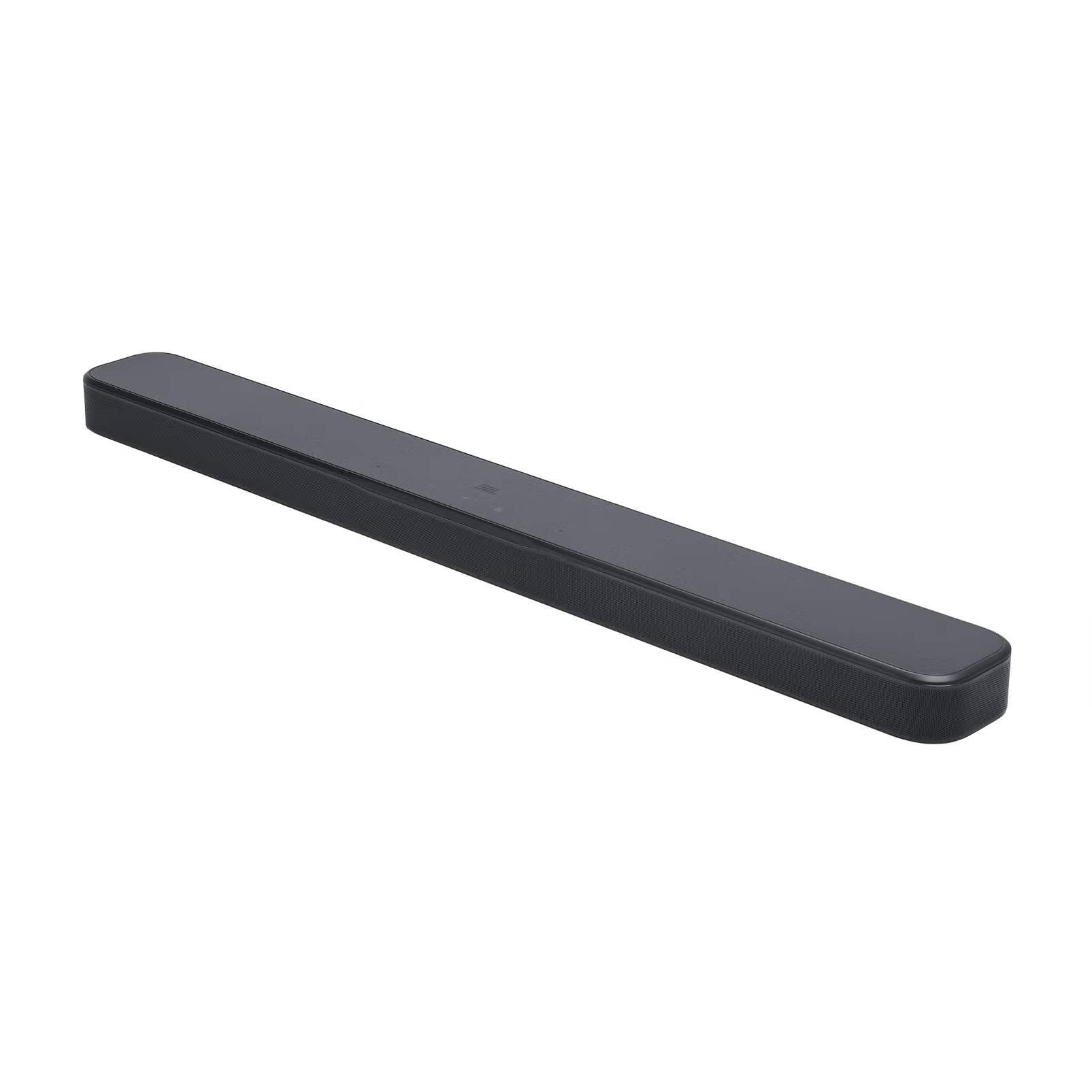
JBL Bar 300MK2 is a slim 5.0 all-in-one soundbar aimed at improving film sound without adding a separate bass cabinet. MultiBeam 3.0 and virtual Atmos processing widen its ambitions beyond ordinary stereo, while a source HDMI input and network music make it more versatile than a basic TV speaker. It has no physical up-firing drivers or separate rear speakers in the package. This research-based review weighs its documented facilities against original listening evidence and practical EU ownership details, including the important regional restriction on USB playback.
Research-based review. This assessment draws on manufacturer documentation and the original published evaluations linked below. Audio Review has not performed a hands-on test of this model.
Film weight is the clearest reason to consider it
What Hi-Fi’s original evaluation finds substantial bass, clear voices and an involving front presentation, with useful spatial reach for a single bar. It also reports port noise during extreme low-frequency stress and less control and musical precision than its preferred Sonos rival. That supports a film-first recommendation with sensible limits, rather than a claim that a slim enclosure replaces a separate bass system in every room.
Try ordinary speech before a dramatic action passage. Check whether the added weight makes television more satisfying without masking low-pitched voices or making every programme sound oversized. Then use a familiar music track with several simultaneous parts. Listen for how easily the vocal and rhythm can be followed, not simply how much bass is present. The most useful upgrade is enjoyable at the actual household level. A demo played unusually loudly can exaggerate both impact and weaknesses that may matter differently during everyday use. The evidence gives good reasons to shortlist this JBL, while leaving music refinement and the deepest effects as comparative audition points.
Virtual Atmos needs realistic spatial expectations
The official 5.0 arrangement and MultiBeam processing do not include upward-firing height drivers or separately positioned rear speakers. Atmos compatibility describes a decoding and spatial-processing route; it should not be confused with a full set of physical speakers surrounding the seats.
Run the documented calibration with the room arranged for normal listening and keep the bar’s sound paths unobstructed. Assess the main seats and any frequently used side position with a suitable soundtrack. Decide whether the wider front image and sense of space are convincing in that room, rather than expecting effects to appear identically to a review demonstration. If sound clearly behind the listener is essential, compare a documented complete surround package before purchase. A front-only system can be preferable where rear placement is impossible, and its simplicity is part of the appeal. The goal is a useful improvement within the feasible layout. It is not necessary to mistake a virtual effect for a physical speaker in order to enjoy the result.
One source HDMI input is a practical advantage
JBL provides a source HDMI input alongside the eARC output and optical input. The official material documents Dolby Vision passthrough, while the manual also lists HDR10+. This gives an alternative route where the television cannot forward the desired soundtrack reliably. It should not be treated as a universal guarantee for every advanced console mode.
List the external sources and decide which device benefits most from the direct input. Test the required picture and audio settings separately. If a high-frame-rate gaming feature is essential, verify the complete supported route before purchase rather than inferring it from an HDMI label. The television may be the better connection point for that source, with eARC carrying audio back to the JBL. Check synchronisation and normal remote operation after standby, as those everyday details can be more noticeable than a seldom-used format. Optical remains useful for an older display, but it is not interchangeable with every eARC capability. A clear source map helps preserve simplicity instead of adding adapters and repeated manual changes.
Network music and app control broaden the role
JBL’s UK product page lists AirPlay, Google Cast, Spotify Connect, Tidal Connect and Roon Ready support. The JBL One app provides setup, equalisation and access to supported services, with availability and accounts still relevant. Bluetooth 5.3 offers a separate phone route rather than replacing those network functions.
Use the normal household devices during the return period. Check how quickly playback starts, how another user takes over and how the bar returns to television sound afterwards. A network platform is most valuable when those routines are understandable without a long explanation. Do not assume that every source application sends the same format, or that a subscription is included because a service appears in the app. Compare a moderate EQ adjustment with the default rather than creating a complicated preset before becoming familiar with the system. The front display is useful for confirming changes from the sofa. A buyer who values music as highly as films should still compare tonal balance and rhythmic clarity directly with dedicated stereo options, even when the soundbar has an extensive streaming list.
The European USB port has a different role
The official global manual explicitly restricts USB music playback to the US version. For other regions, including the European version considered here, USB is for service. That is a useful example of why a photograph of a socket or a US retailer description is not enough to establish a local source facility.
Confirm the exact model and regional package when buying remaining stock or an import. Do not plan a USB music library or computer-DAC connection around a European Bar 300MK2. Use a documented network or other supported source route instead. Keep service and update instructions distinct from ordinary playback directions, and avoid applying a procedure from another regional manual without checking. The bar’s other connection choices may make the USB restriction irrelevant in practice, but it is better to establish that before setting up the room. Regional differences also make accurate second-hand listings important. Ask for the actual model details rather than assuming that every listing using the same marketing name includes identical source behaviour.
A slim installation still needs measurement and a fair comparison
JBL specifies approximately 940 mm width, 50.5 mm height and 104 mm depth, with a weight around 2.9 kg. The shallow height makes placement beneath many screens plausible, but cable space, screen clearance and an unobstructed front display should still be checked. No separate subwoofer is supplied in this all-in-one arrangement.
Measure the furniture with the actual television feet and source cables in place. Keep the setup accessible enough to adjust or inspect without dismantling the room. Compare current complete prices against alternatives that either include separate bass or require it as an additional purchase. Do not use an old launch price as a permanent value judgement. Distinguish the MK2 from the original Bar 300 when comparing reviews, offers and manuals. A stronger feature list matters only when those features fit the household. The JBL is especially attractive where the buyer wants substantial film sound, useful streaming and one compact enclosure. A listener prioritising subtle music reproduction or precise rear localisation may reasonably prefer a different system design.
Alternatives to consider
Sonos Beam Gen 2: Compare precision, musical expression and the ecosystem against JBL film weight and its source input. Include any optional speakers in the final price.
Sennheiser AMBEO Soundbar Mini: Another compact virtual-spatial approach to audition in the room. Its connection arrangement and software platform should be assessed against the exact intended sources.
JBL Bar 300MK2 key specifications
- Model
- Bar 300MK2; not original Bar 300
- Layout
- 5.0 all-in-one; no separate subwoofer supplied
- Height / rear speakers
- No physical up-firing drivers or separate rears
- Spatial processing
- Dolby Atmos; DTS Virtual:X; MultiBeam 3.0
- HDMI
- One source input; one eARC output
- Other audio
- Optical; Bluetooth 5.3
- Network playback
- AirPlay; Google Cast; Spotify Connect; Tidal Connect; Roon Ready
- Control
- JBL One; remote; front display
- Dimensions
- 940 × 50.5 × 104 mm
- Weight
- Approximately 2.9 kg
- EU USB
- Service only; US music-playback support differs
- Setup
- Built-in calibration and app EQ
Verdict
Bar 300MK2 combines substantial film sound with a slim enclosure and a useful source and network connection set. Original evidence supports its bass and dialogue strengths while qualifying extreme low-frequency behaviour and music finesse. Confirm the EU model, calibrate sensibly and compare the actual source route. It is a strong single-bar shortlist option when its front-only layout matches the room.
Documentation and original reviews
JBL official UK Bar 300MK2 features and connections · JBL official global Bar 300MK2 manual and regional USB note · What Hi-Fi original Bar 300MK2 listening evaluation
Editorial record
Sources and updates
Product specifications and factual claims were checked against Official JBL Bar 300MK2 product page ↗. Scores and buying advice follow our category-specific editorial methodology.
- Published
- November 17, 2026
- Last updated
- November 17, 2026