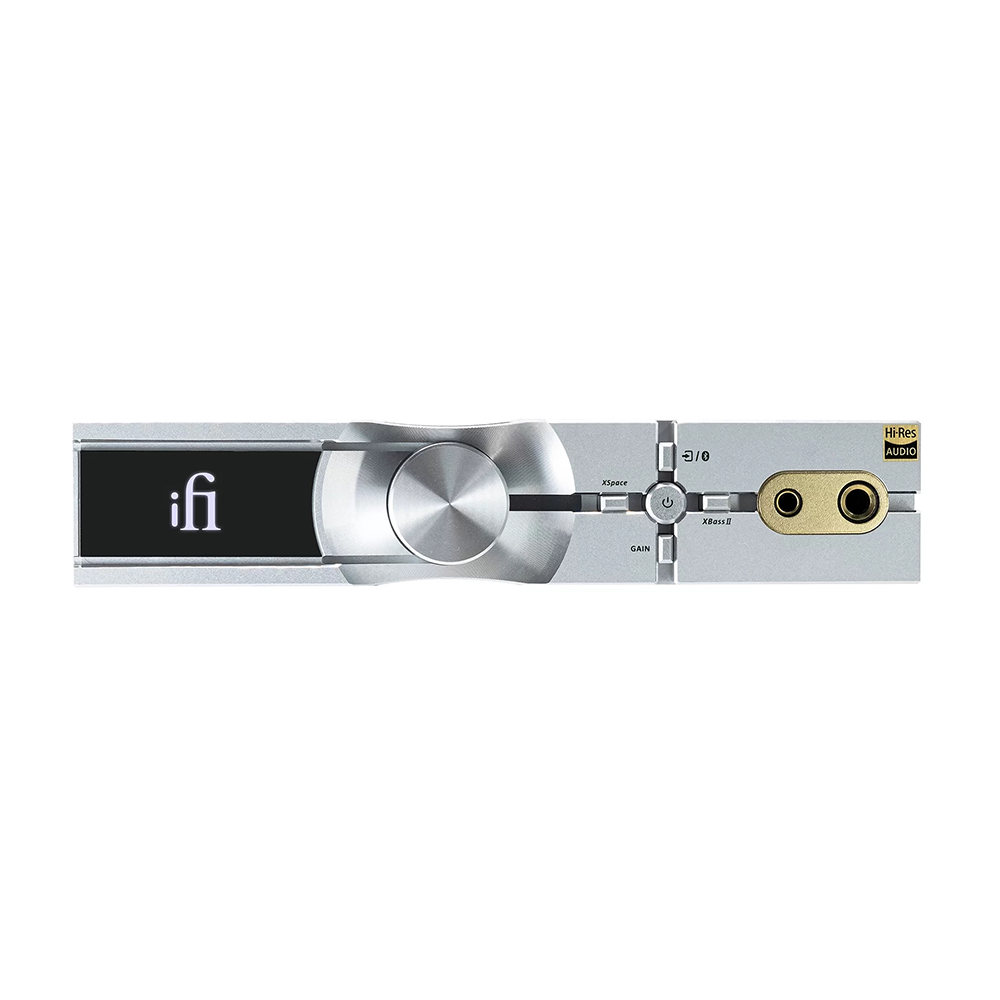
The iFi NEO iDSD 2 is a desktop DAC, headphone amplifier and preamplifier with a broader brief than a basic computer audio box. It combines wired digital sources, Bluetooth receiving and an analogue input, while providing control for headphones or a compatible speaker system. Its appeal is the integration of those jobs into a component that can be used directly at a desk or from a chair.
iFi NEO iDSD 2 — Design and everyday control
The slim enclosure can stand vertically or sit horizontally, and the colour display rotates to suit its orientation. This is a useful response to a real desktop problem: the space between a monitor, computer and loudspeakers is not always wide enough for another conventional component. Make sure that the chosen orientation still leaves room to reach the headphone sockets and operate the front control. The shape of the box alone does not account for rear plugs and cable bends.
A remote is also part of the intended experience. That matters when the NEO is controlling active speakers from beyond arm’s reach, rather than living beside a keyboard. A component that handles both uses should make the normal routine clear, so set the input, gain and output behaviour before experimenting with its sound options. The display is useful for checking what the system is doing; it should not encourage constant settings changes in place of listening to music.
Connections and system roles
The documented digital inputs include USB, coaxial and optical, alongside Bluetooth receiving. The manual also identifies a 3.5 mm analogue line input. RCA and XLR line outputs serve an external amplifier or active speakers, and headphones use the front 6.3 mm or 4.4 mm connections. This combination lets the NEO remain useful with an analogue source or an external DAC, rather than tying every listening arrangement to its internal digital conversion.
The analogue input expects line level. A turntable therefore needs a phono stage first, whether that is built into the turntable or supplied separately. Passive speakers need a power amplifier; line outputs cannot drive them directly. A system plan should identify the source, volume control and power amplification as separate jobs, even when two of those jobs happen inside the same enclosure. The NEO can simplify an active-speaker desk substantially, while a conventional integrated amplifier may already provide some of the control functions.
Headphone drive: read the conditions
iFi publishes maximum and RMS headphone output figures separately. The official RMS table includes balanced output above 2.53 W into 64 ohms. That is a more informative specification than repeating the much larger maximum-power headline without its context. Neither figure is an Audio Review measurement, and neither proves that every unusually demanding headphone will be an ideal match. Load, sensitivity, gain and available headroom still matter.
The useful question is whether the chosen headphone works comfortably in the required listening range. Start on a low gain setting, particularly with sensitive earphones. The available iEMatch setting is intended to make very sensitive models easier to use, but changing gain can also change level substantially, so make adjustments conservatively. A balanced socket can provide an appropriate connection for an already compatible cable; it is not a reason to purchase a new cable before trying the equipment you own.
For a full-size headphone, include quiet recordings and any planned bass adjustment in the matching decision. Large boosts consume headroom. A system that only just reaches the desired level before processing may be less comfortable afterward. The NEO’s amplifier is an important upgrade over a basic output, but selecting the right headphone remains more effective than relying on a large power number to solve every mismatch.
Sound quality and the analogue adjustments
Headfonics’ original second-generation review described a broadly neutral presentation with some warmth, and reported quiet operation with several headphones and earphones. That is positive evidence for the NEO’s shared desktop role. It is still a listening assessment in a specific system. Our rating reflects the combination of that evidence, documented functions and system flexibility, rather than treating the reviewer’s impressions as our own hands-on results.
XBass II and XSpace provide practical ways to explore changes in balance and presentation. Start with them disabled so there is a clear reference. A bass option can suit one headphone and make another too heavy, while a spatial effect is a preference rather than a requirement for accuracy. Compare at similar playback levels and give longer-term comfort more weight than the immediate impression of a larger or more vivid sound.
These options are not a substitute for a full parametric equaliser or room correction. Loudspeaker positioning and room interaction remain important in a speaker system, and a headphone’s fit and seal remain important in headphone listening. The strongest argument for the NEO is that it makes a good existing system easier to use and adjust, rather than promising to erase all the compromises of the transducers connected to it.
Bluetooth, files and compatibility
The NEO iDSD 2 supports aptX Lossless as well as other Bluetooth codecs, but the source must also support the required format and connection conditions. An iPhone or another phone does not gain a new codec simply because the receiver lists it. If wireless compatibility is a major buying reason, check the exact phone and settings rather than assuming the newest Bluetooth number guarantees a lossless link.
Wired USB remains a straightforward route from a computer. The supported input-format ceiling reaches PCM 768 kHz and DSD512, but ordinary recordings do not require maximum-rate playback. A stable native-rate path is a sensible default. This is also not an independent network music player: a phone, computer or separate streamer supplies the programme and user interface. Bluetooth convenience and standalone streaming are different features, even if both can reduce the number of cables visible at first glance.
Speaker use and buying value
When connecting active speakers or a power amplifier, decide whether the NEO will control volume and configure its line-output mode accordingly. Begin with the receiving equipment’s gain reduced. A fixed output feeding equipment without a convenient level control is a different arrangement from variable preamp use. Making that decision carefully is more important than changing an optional digital filter.
The NEO is easiest to justify when it replaces several things you would otherwise need: a converter, headphone stage and useful speaker-level control point. For a buyer who needs only a USB DAC, much of the package may be redundant. Compare current European pricing with the supplied accessories, return arrangements and support included. There is little reason to replace a functioning first-generation or competing DAC solely because a new model exists. Buy the second-generation NEO when the stronger integrated role, analogue input and control options improve the way the system is used.
Alternatives to consider
FiiO K17: Compare this if a more elaborate desktop hub is on the shortlist. Prioritise the inputs, processing and control arrangement that your system actually needs.
RME ADI-2 DAC FS: A relevant alternative for a buyer who puts detailed adjustment and EQ ahead of the NEO’s particular analogue sound-shaping features.
iFi NEO iDSD 2 key specifications
- Role
- Desktop DAC, preamp and headphone amplifier
- Analogue input
- 3.5 mm line input
- Headphone outputs
- 6.3 mm and balanced 4.4 mm
- Line outputs
- RCA and XLR, fixed or variable
- RMS balanced rating
- Manufacturer: above 2.53 W at 64 ohms
- Bluetooth
- Receiving, including aptX Lossless with a compatible source
- USB formats
- PCM up to 768 kHz; DSD512
Verdict
A versatile headphone and speaker control centre with useful analogue input, remote operation and meaningful sound options. Its breadth makes a strong case in a shared desktop system, while Bluetooth codec matching and correctly configured line levels remain essential.
Primary documentation and independent reviews
iFi official NEO iDSD 2 specifications · iFi NEO iDSD 2 manual · Headfonics original NEO iDSD 2 listening and matching
Editorial record
Sources and updates
Product specifications and factual claims were checked against Official iFi NEO iDSD 2 product page ↗. Scores and buying advice follow our category-specific editorial methodology.
- Published
- November 8, 2026
- Last updated
- November 8, 2026