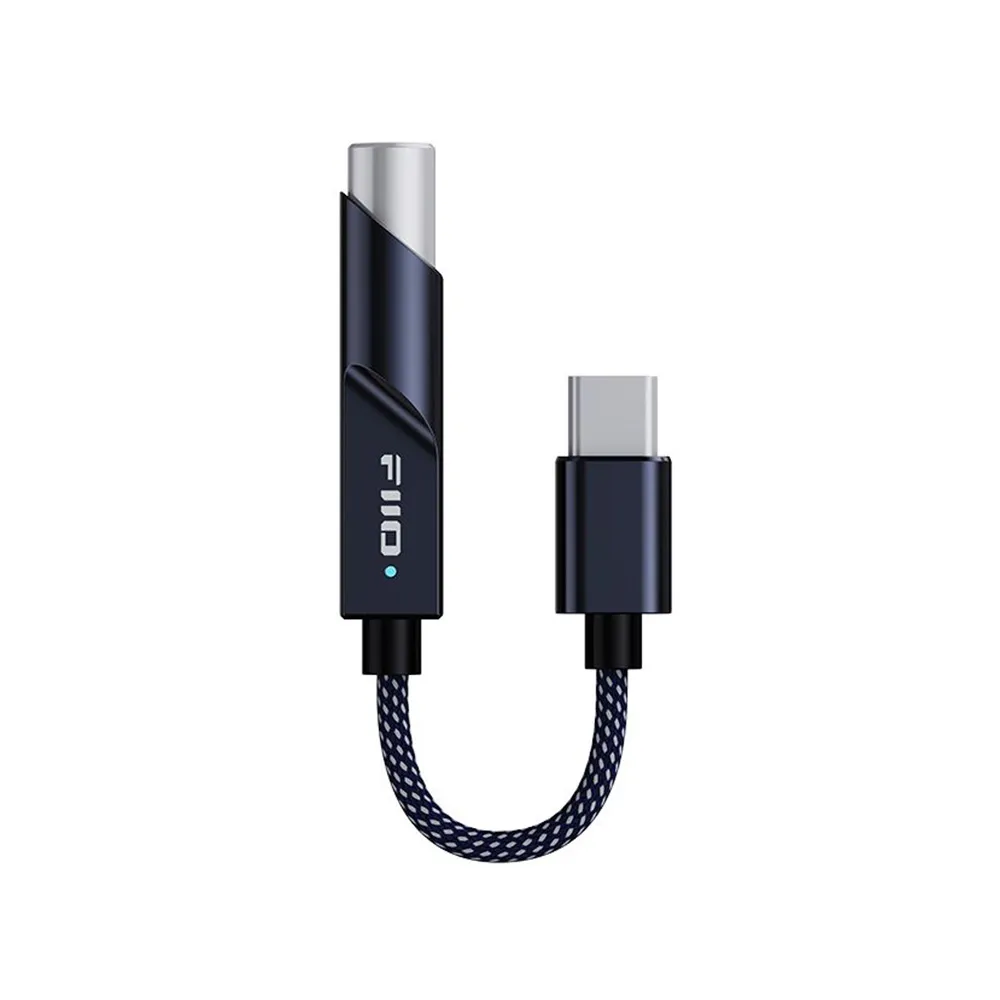
The FiiO KA11 is a small digital-to-analogue converter and headphone amplifier in an adapter-style form. It is most useful when a phone or computer needs a wired headphone output, or when the existing output has a specific limitation. Its size and output capability are practical reasons to consider it; a DAC chip name alone does not prove an audible upgrade.
FiiO KA11 — Start with a connection problem
A dongle DAC receives digital audio and supplies an amplified analogue signal to wired headphones. That is different from a passive connector adapter. The source must support the necessary digital-audio route, and the physical connector must match the particular KA11 version being purchased.
Do not order from a photograph alone when a listing groups connector variants. USB-C, Lightning and simple connector-shape adapters involve different compatibility questions. Follow FiiO’s model-specific phone guidance, including any host settings, rather than assuming every phone with a charging port exposes the same audio functions.
The output rating needs a headphone match
Official KA11 specifications identify a CS43131 DAC and a separate amplifier stage. FiiO’s documented 200 mW per-channel figure at 32 ohms includes a stated distortion condition. It should not be described as the power available into a high-impedance headphone or every real musical load.
Headphone sensitivity matters alongside impedance. A sensitive earphone may need very little power, while a less sensitive model may need more voltage or current than a particular dongle can provide. Start at low volume and check adequate clean headroom rather than assuming that a high maximum figure makes every headphone sound better.
High-resolution support is not a buying target by itself
FiiO documents PCM up to 32-bit/384 kHz and DSD256. These describe supported digital formats, not a guarantee that every phone application bypasses system mixing or sends native high-rate audio. The source software and operating system remain part of the route.
Ordinary recordings do not gain new musical information simply because a player upsamples them. Choose reliable playback and sensible volume control before pursuing a particular rate indication. We have not measured the KA11’s output or performed a controlled comparison against a phone adapter, so no blanket audible-upgrade claim is made.
Portable convenience has ownership trade-offs
The small body and short cable suit mobile use, but the source supplies power and the assembly adds something to carry. Avoid leaving the adapter hanging under strain from a phone port or trapping the cable in a pocket. A convenient connector can still become a wear point.
Software control and firmware facilities vary by host platform. FiiO’s support material distinguishes phone, computer and control-app instructions, so verify the exact task rather than assuming Android and iOS provide identical adjustment features. For computer use, check current driver requirements for the intended playback mode.
Compare the complete mobile setup with a simpler adapter, a battery-powered portable DAC/amp or wireless headphones. The KA11 is most sensible when a compact wired path is the actual goal. Paying for format support or output headroom that is never used may add little practical value.
What to expect in a real setup
Is the KA11 just a passive USB-to-jack cable? No. It contains digital conversion and headphone amplification, so the host must provide compatible digital audio and power.
Does a supported 384 kHz rate mean every app outputs that? No. The application, operating system and selected playback mode determine the actual data sent to the DAC.
Buy the KA11 for the device that will carry it
The KA11 is a small active audio adapter, but the exact source connection remains a purchase decision. Confirm the connector version, the phone or computer’s USB-audio support and the arrangement with any protective case. A product photograph showing a familiar plug does not establish that every version uses the same connector. Check the actual item being ordered, particularly in listings that combine variants. This simple step can prevent an otherwise suitable headphone accessory from becoming dependent on an awkward chain of adapters.
Physical use matters as much as nominal compatibility. The short attached lead should sit comfortably without pulling on the host or headphone connection. Test how the phone is held for reading, put away for walking and removed from a pocket. Avoid carrying the dongle by its cable or letting a heavy headphone plug repeatedly lever against the assembly. If listening normally happens at a desk, support the cable so that normal hand movement does not keep disturbing the connection.
Check the applications that make up an ordinary day
Begin with low source volume and confirm playback from the preferred music app. Then check browser video, notifications and any communication software that matters to the user. A USB audio output should not be assumed to provide microphone support, headset-button support or identical behaviour in every calling app without verification. These functions can be more important during travel than the maximum music decoding rate. If a particular task fails, isolate the application and host settings before assuming the headphones are incompatible.
The host also provides operating power. Include the phone’s battery routine in the assessment and test whether audio resumes after sleep or reconnecting. A passive mechanical splitter is not automatically a suitable answer when simultaneous charging and audio are required. Confirm a supported solution for the exact host instead of treating all USB-C accessories as interchangeable.
For headphone matching, use sensitivity and impedance together. The published power figure has a specified load and distortion condition; it is not a guarantee for every planar or high-impedance headphone. Easy-to-drive earphones may need no more output than the KA11 can provide comfortably, while a demanding full-size pair deserves a more careful check. The KA11’s appeal is restoring a simple wired listening route with little extra bulk. It is a stronger purchase when it solves that everyday problem than when it is bought solely to chase file specifications.
Alternatives to consider
FiiO BTR17: A different portable approach when wireless reception and a battery-powered control device are more useful than a minimal dongle.
iFi GO bar Kensei: A much more expensive dongle route to compare only if its additional controls and facilities address a specific need.
FiiO KA11 key specifications
- Role
- USB dongle DAC / headphone amplifier
- DAC
- Cirrus Logic CS43131
- Amplifier stage
- SGM8262
- Headphone connection
- 3.5 mm
- PCM support
- Up to 32-bit/384 kHz
- DSD support
- Up to DSD256
- 32-ohm power claim
- At least 200 mW/channel, THD+N <1%
- Power source
- Connected host
- Purchase check
- Exact connector version and host compatibility
Verdict
The KA11 is worth considering as a small, purposeful wired-output solution. Match the connector, source and headphones, then test volume control and daily portability. Its specification can establish compatibility and headroom requirements without inventing an audible advantage over every existing output.
Primary documentation
Specifications and feature descriptions were checked against the following official documents on 6 November 2026. Compatibility advice is our interpretation of those documented capabilities; it does not establish measured sound quality. Regional bundles, software features and service availability can change, so verify the exact European model and current support information before purchase.
- FiiO KA11 official product release
- FiiO Japan KA11 official specifications
- FiiO KA11 official mobile-phone connection guidance
- FiiO KA11 official Chinese specification page
Editorial record
Sources and updates
Product specifications and factual claims were checked against Official FiiO KA11 product page ↗. Scores and buying advice follow our category-specific editorial methodology.
- Published
- November 7, 2026
- Last updated
- November 8, 2026