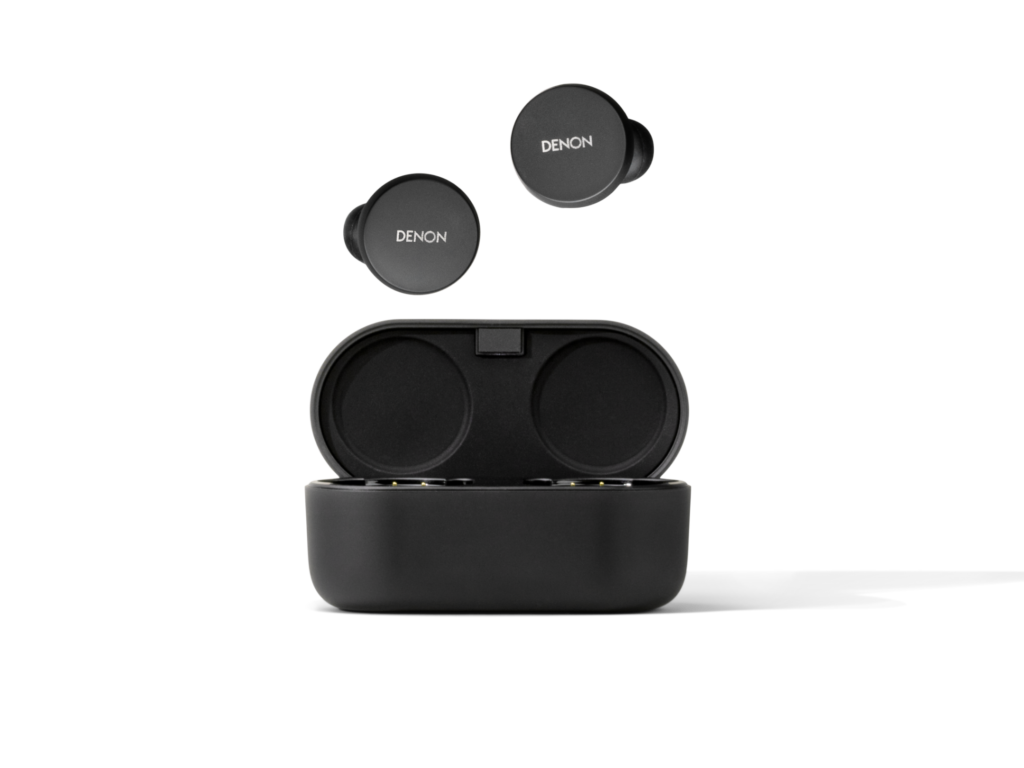
Denon PerL makes automated sound personalisation the central reason to choose it. Original evaluations find meaningful improvements from the process, but the standard model should not be confused with PerL Pro. It has a large physical design and a simpler connection and adjustment package. The useful buying question is whether the generated profile sounds preferable and the fit remains comfortable, rather than whether personalisation is impressive in an initial demonstration or looks elaborate inside the app.
Research-based review. This assessment draws on manufacturer documentation and the original published evaluations linked below. Audio Review has not performed a hands-on test of this model.
Personalisation is a listening choice, not a universal promise
Denon’s Adaptive Acoustic Technology generates a personal sound profile. HIFI.DE finds a substantial difference from the unpersonalised mode, with more body and space. The process should be judged from the actual result rather than treated as proof that every generated setting will be preferred.
Set up the earbuds carefully in a quiet place and follow the app’s fitting checks. Compare the profile using familiar music rather than relying solely on a supplied demonstration. Listen through complete tracks and revisit the result later, when the initial contrast is less striking. If a profile seems wrong, check the seal and repeat the supported process instead of immediately assuming that the product cannot suit the listener. Equally, do not keep a result simply because it was produced automatically. Personalisation is useful when it makes ordinary listening more satisfying. It is not a substitute for preference, a stable fit or a comparison with another well-matched pair.
The baseline and personalised presentations differ
HIFI.DE is less impressed by the standard unpersonalised balance and finds the profile substantially more enjoyable. WIRED likewise welcomes the personalised detail while noting that obtaining a suitable profile can take trial and error. These accounts support evaluating the intended configured experience, with realistic expectations about setup.
Try voices, acoustic instruments and denser music after the profile is created. Check whether added weight remains controlled and whether spoken content is still natural. Do not judge the entire product only from the most dramatic contrast between two modes. A large difference is not automatically an improvement across every recording. Someone who enjoys a single well-matched profile may value this approach more than a long manual adjustment process. Someone who wants to reshape individual frequency regions for different uses may find it restrictive. The strongest recommendation follows the sound that remains enjoyable over time, rather than the theatrical impact of the first before-and-after comparison.
The standard model does not offer the Pro adjustment package
Standard PerL has an Immersion bass adjustment but no manual multi-band EQ of the kind reserved for the Pro model. Its supported Bluetooth formats are SBC, AAC and ordinary aptX; aptX Lossless and spatial features should not be copied from the Pro specification.
Identify the exact functions that matter before deciding whether the lower-priced model is sufficient. A listener mainly interested in the generated profile may not need extensive manual editing. A listener who frequently changes the balance for speech, recordings or different applications may value more direct control. Check the source phone’s shared codec rather than assuming that any aptX label describes the same transmission system. Keep the purchase decision tied to features available on the actual standard unit. Similar product names and similar-looking cases make it easy to overestimate the package, especially when shopping from mixed retailer descriptions. The final comparison should use the exact model and included functions at the current delivered price.
Large discs and wings need a longer wearing trial
The official specification gives 7.1 grams per earbud and provides several tips and support wings. HIFI.DE finds the arrangement stable and comfortable in its trial. WIRED is more cautious about wing pressure over time. Retention and long-session comfort therefore deserve separate attention.
Choose the fitting parts for each ear independently and check whether the body rests comfortably without repeated adjustment. Try the profile again after settling the fit. Wear the pair for the normal session rather than deciding from a brief secure impression. A wing can stop an earbud moving while still creating pressure later; a looser arrangement can feel pleasant initially but lose the intended seal. Also check the ease of removing the earbuds from the case and reaching the touch surface without disturbing their position. A return option is particularly useful for this distinctive shape. The best fit supports both the personalised listening result and a routine in which the earbuds are convenient to wear.
ANC, Social Mode and switching suit particular routines
Denon supplies ANC and its Social awareness mode, while the official sheet confirms no multipoint. HIFI.DE regards cancellation as useful rather than exceptional. The noise-control package and single-source connection should be considered alongside the personal sound appeal.
Try the two modes in the normal environment and learn how to change them without opening the app repeatedly. Check what remains audible before raising playback level. If the day alternates between a computer and a phone, test the actual handover rather than assuming a quick-switch description means simultaneous multipoint. Configure the touch controls around the actions used most often and try them during a real call. The absence of a feature may be minor for a person listening from one source for long sessions and frustrating for someone who changes tasks constantly. Personalised music does not remove those practical distinctions. Choose the complete product for the intended day, not only for its most unusual feature.
Use cautious battery expectations and check the present offer
Denon lists a six-hour earbud claim. Its current information sheet labels 18 hours with the case, while older review accounts describe a larger cumulative total. Because the documentation differs, this review does not present one combined number as universally guaranteed. USB-C charging is provided without wireless charging.
Ask the seller to confirm the exact package and current specification if case endurance is decisive. Plan first around the continuous session needed, allowing for settings, calls and battery age. Case totals require recharging breaks regardless of which description applies. Compare new, refurbished and used offers on their actual condition and support rather than a historical saving against launch retail. Standard PerL is most persuasive when the profile and fit are both preferred and the price reflects its simpler features. If those strengths do not clearly improve the experience, a more conventional model may offer an easier all-round package. The automated setup needs to earn its place through everyday listening, not merely through novelty.
Alternatives to consider
Denon PerL Pro: Compare the existing Pro review if its extra functions are central to the purchase. The standard PerL should not inherit the Pro feature list simply because the names are similar. Judge the price difference against the actual connections and adjustments needed.
Soundcore Liberty 4 NC: Compare this existing review if noise reduction and value are central. Use the current local price and the intended phone, then judge fit and the complete controls rather than choosing from a single battery or codec headline.
Denon PerL key specifications
- Model
- Standard PerL, not PerL Pro
- Driver
- 10 mm dynamic
- Earbud weight
- 7.1 g each
- Bluetooth
- 5.0
- Codecs
- SBC, AAC, aptX
- Personalisation
- Masimo Adaptive Acoustic Technology
- Bass control
- Immersion Mode
- Noise modes
- ANC and Social Mode
- Multipoint
- No
- Wireless charging
- No; USB-C charging
- Battery claim
- Up to 6 h earbuds; case totals vary across documentation
- Resistance
- IPX4
Verdict
Standard PerL is a worthwhile audition for someone intrigued by automatic personal sound profiles and comfortable with its larger fit. Original evidence supports meaningful listening benefits, with setup and comfort caveats. Keep its specifications separate from PerL Pro and choose it only when the preferred profile and current offer outweigh the simpler switching, EQ and charging package.
Documentation and original reviews
Denon official UK standard PerL features · Denon official European PerL information sheet · HIFI.DE original standard PerL evaluation · WIRED original standard PerL evaluation
Editorial record
Sources and updates
Product specifications and factual claims were checked against Official Denon PerL product page ↗. Scores and buying advice follow our category-specific editorial methodology.
- Published
- November 17, 2026
- Last updated
- November 17, 2026