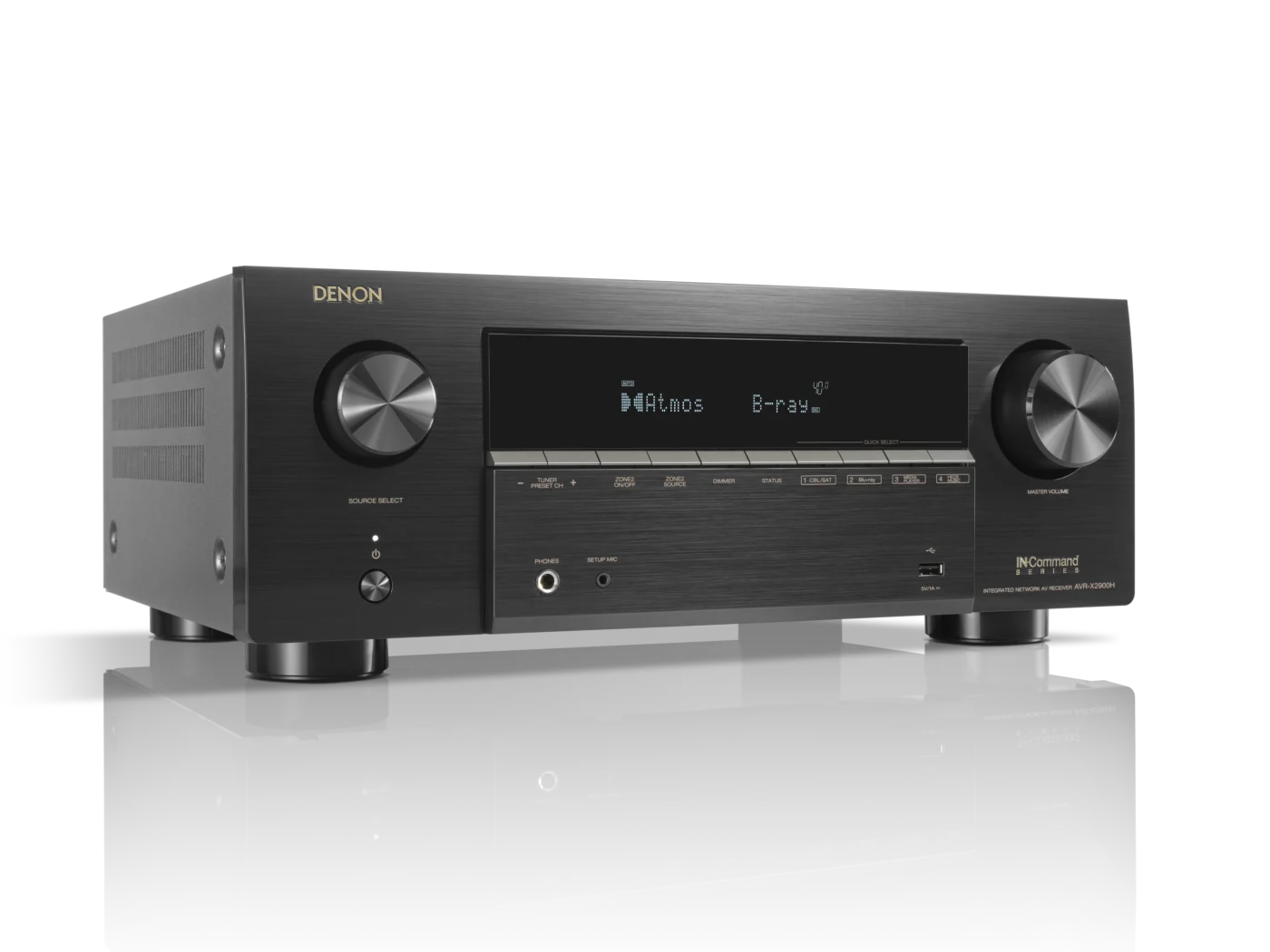
Research note: This is an independent, research-based assessment built from official specifications and product documentation. We have not claimed a hands-on laboratory test.
Denon AVR-X2900H key specifications
- Model
- Denon AVR-X2900H
- Channels
- 7.2-channel AV receiver (7 processing channels and dual subwoofer outputs)
- Amplification
- 95 W per channel (8 Ω, 20 Hz–20 kHz, 0.08% THD, 2 channels driven)
- Power amplifiers
- 7
- Immersive audio
- Dolby Atmos and DTS:X
- HDMI
- 6 inputs / 2 outputs
- 8K video
- 3 HDMI inputs support 8K/60; 4K/120 is supported on compatible inputs
- HDR & gaming
- Dolby Vision, HDR10+, HLG, VRR, ALLM, QFT, AMD FreeSync and eARC
- Room correction
- Audyssey MultEQ XT, Dynamic EQ and Dynamic Volume; Dirac Live upgrade-ready
- Streaming
- HEOS Built-in, AirPlay 2 and Bluetooth
- Analog inputs
- 4 RCA inputs and MM phono input
- Digital inputs
- 2 optical and 1 coaxial
- Speaker options
- Assignable A/B, bi-amp and Zone 2 speaker terminals
- Dimensions
- 434 × 330 × 168 mm without antenna
- Weight
- 9.7 kg
- Official price checked
- C$1,799 on Denon Canada (checked 25 July 2026)
Amplification and speaker layouts
Seven internal amplifier channels support conventional 7.1 or 5.1.2 Dolby Atmos layouts, with two subwoofer outputs. The 95 W rating is measured with two channels driven; available power is shared in multichannel use. Speaker sensitivity, distance and crossover settings determine real headroom more than a single watt figure.
HDMI and gaming features
Six HDMI inputs and two outputs make the receiver a genuine source hub. Three inputs support 8K/60 and 4K/120, with VRR, ALLM, QFT, Dolby Vision, HDR10+ and AMD FreeSync for compatible gaming chains. eARC returns lossless audio from a television. Cable quality and per-input settings matter at the highest bandwidths.
Immersive formats and room correction
Dolby Atmos and DTS:X cover object-based cinema, with upmixers for conventional content. Audyssey MultEQ XT, Dynamic EQ and Dynamic Volume use the supplied microphone to balance speakers and room response. Optional paid Dirac Live provides a more advanced path, so buyers should include license cost when comparing models.
Music, phono and multiroom
HEOS streams major services and coordinates compatible rooms, while AirPlay 2 and Bluetooth provide alternatives. An MM phono input supports common moving-magnet turntables. High-resolution network and USB playback broaden music use, although the receiver remains a large, fanless component that needs ventilation.
Inputs, outputs and upgrade limits
Analog, optical and coaxial inputs support legacy sources, and Zone 2 adds another room. Pre-outs are limited compared with higher Denon models, so replacing all internal amplification later is not the design goal. Seven-channel processing also prevents expansion to 5.1.4 without moving to a more capable receiver.
Setup and long-term value
The on-screen assistant and labeled terminals simplify a complex product, but correct speaker sizes, crossovers and HDMI modes still require attention. AVR-X2900H offers an excellent balance of modern video, room correction and source flexibility for normal seven-channel rooms. Buyers planning nine or eleven speakers should step up now rather than replace later. It also keeps firmware, network services and format support in one manufacturer ecosystem, which is easier to maintain than mixing several HDMI switches and streamers. The trade-off is concentration: if the receiver is replaced, amplification, switching, calibration and streaming all change together. Good ventilation and a surge-protected power arrangement help long-term reliability.
Who should buy it?
Choose AVR-X2900H for a 5.1.2 Atmos or 7.1 room with several consoles and players, especially when HEOS and Audyssey are useful. It also suits turntable owners through the MM input. Larger 5.1.4/7.1.4 plans require more processing channels.
Alternatives to consider
Denon AVR-X3800H adds nine amplification channels, eleven-channel processing and fuller pre-outs. Marantz Cinema 60 offers related technology and different styling; Yamaha RX-V6A and Onkyo TX-NR7100 are alternatives, with the Onkyo including Dirac in some markets.
Verdict
Denon AVR-X2900H is a modern, well-balanced seven-channel receiver with strong HDMI gaming support, immersive formats, HEOS and meaningful room-correction options. Its channel ceiling and limited pre-out expansion are clear. For a conventional 5.1.2 system, it provides nearly everything required in one mature platform.
Primary source
Denon AVR-X2900H official product page
Editorial record
Sources and updates
Product specifications and factual claims were checked against Official Denon AVR-X2900H product page ↗. Scores and buying advice follow our category-specific editorial methodology.
- Published
- July 1, 2026
- Last updated
- July 25, 2026
Compare before choosing
Two strong alternatives from the same av receivers category.
Denon AVR-X3900H Review
Research note: This is an independent, research-based assessment of the Denon AVR-X3900H Review. It is structured around product…
Onkyo TX-RZ50 Review
Research note: This is an independent, research-based assessment of the Onkyo TX-RZ50 Review. It is structured around product…