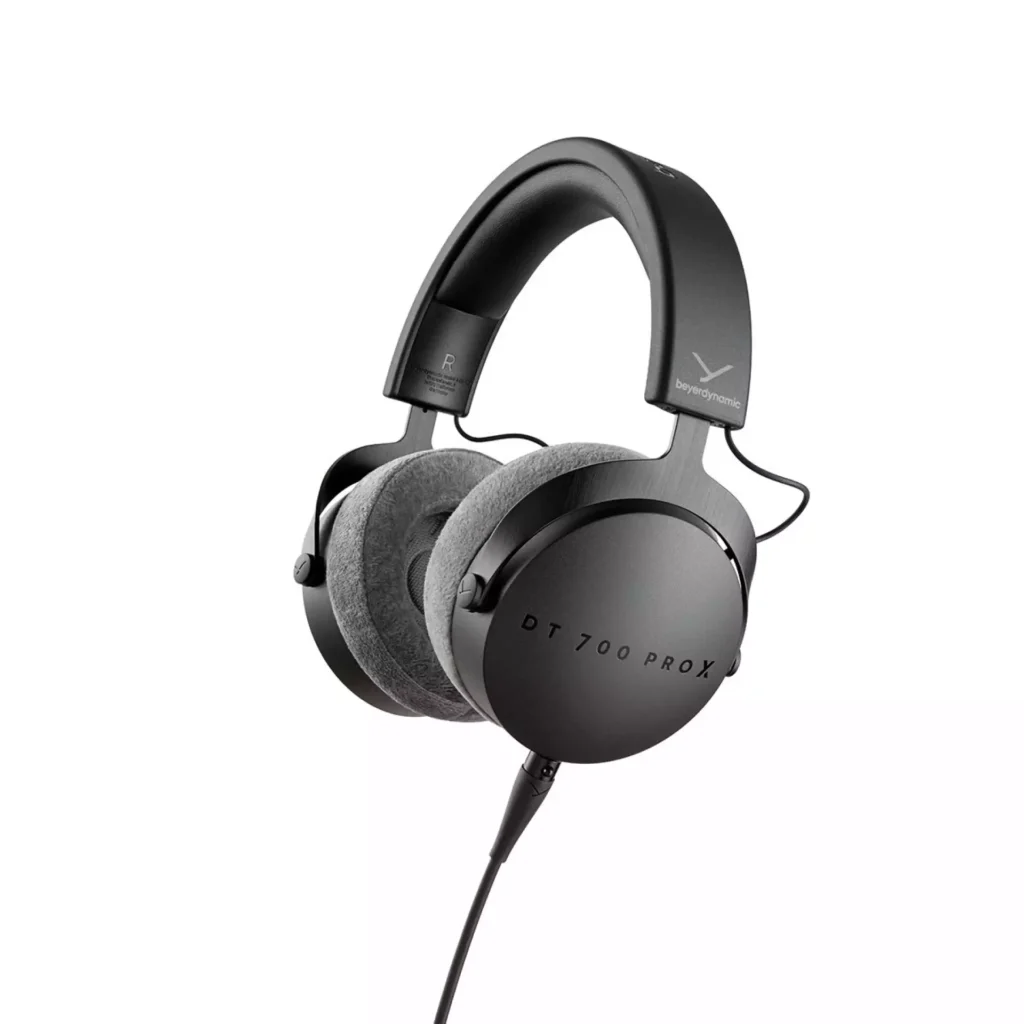
Beyerdynamic DT 700 PRO X is a closed wired headphone intended for recording, monitoring and serious everyday listening. It combines the 48-ohm STELLAR.45 driver with detachable cables and replaceable wearing parts. This is an established studio model, not a wireless lifestyle release. Its case rests on sound, fit and long-term practicality rather than a feature list built around applications, batteries or noise-cancelling modes.
Research-based review. This assessment draws on manufacturer documentation and the original published evaluations linked below. Audio Review has not performed a hands-on test of this model.
A purposeful closed headphone
Closed cups give the DT 700 PRO X a different job from an open home headphone. They help limit the direct exchange of sound with the room, although they do not establish total silence or guarantee that a nearby microphone will never pick up playback.
For a recording session, check leakage with the actual microphone position and monitoring level. For home use, try the headphone while normal household noise is present. These are different tests: preventing a click track from entering a vocal microphone is not the same requirement as reducing a train’s low-frequency rumble. Decide which matters before paying for a model simply because it has a professional reputation. A studio headphone can be an excellent music companion, but the label does not automatically make it an ideal commuter.
Sound evidence and the right audition
What Hi-Fi’s original listening test describes a controlled, precise presentation with good bass discipline and the ability to follow subtle changes. Its account is positive about musical communication while acknowledging that some rivals initially sound more exciting. Those observations support the DT 700 PRO X as a serious audition candidate rather than as a guaranteed match for every listener.
An effective comparison should include a busy arrangement and a sparse vocal recording at similar perceived levels. Listen for whether bass notes remain easy to follow when the arrangement becomes dense, and whether a voice stays intelligible without needing extra volume. Then spend longer with material you actually enjoy. Immediate brightness or dramatic bass can be persuasive during a brief demonstration, while a less demonstrative balance may become preferable over an entire album. That is a preference to establish personally, not something a review score can settle.
Two lengths of cable are genuinely useful
The official package provides detachable straight cables of 1.8 and 3 metres. They lock into the earcup through a three-pin mini XLR connection; the source end uses an ordinary headphone plug and adapter.
Use the shorter lead at a desk if it keeps surplus cable away from the chair, and the longer lead where the interface or amplifier sits farther away. A locking connection resists an accidental tug, but the sensible arrangement is still to route the cable so that a sudden movement cannot pull hard on the socket. Do not mistake the earcup connector for an audio-interface input standard. The headphone receives analogue playback from a suitable headphone output, and a microphone input with a superficially related connector is not a substitute.
Fit, weight and serviceability
Beyerdynamic specifies 350 grams without the cable and replaceable velour pads. The construction is intended for continued use, but the weight remains relevant during long sessions. Replacement parts can extend ownership only if their cost and availability are sensible in the buyer’s market.
Try the headphone with your usual glasses and hairstyle, and allow enough time for pressure or warmth to become noticeable. Move the head normally rather than judging comfort while sitting perfectly still. A good fit should remain stable without demanding constant adjustment. With a used example, inspect the pads and headband as carefully as the cups, since compressed cushions change both the contact around the ears and the overall feel. Include any necessary replacements in the price comparison. A sturdy-looking shell is only one part of a comfortable and maintainable headphone.
Source matching without overbuying
The 48-ohm rating makes this a different proposition from choosing among several impedance versions of an older studio model. It does not, by itself, describe the clean output level of every laptop, adapter or audio interface.
Begin with the source you intend to use. Check for clean playback, enough adjustment at normal listening level and satisfactory performance on quieter recordings. If there is a problem, compare a known competent output before deciding that an expensive amplifier is necessary. A large power figure should not become a reason to listen louder. For recording, also assess the complete monitoring route: the interface’s direct-monitor function and software settings can matter more to timing than the passive headphone itself. Changing the headphone cannot remove latency introduced earlier in the signal path.
Where its practical limits matter
There is no Bluetooth, ANC or integrated call microphone. The cups do not form a small folding travel package. Those omissions are coherent for a wired studio tool, but they should be recognised before purchase rather than excused after the return period.
At a work desk, decide whether calls will use a separate microphone and whether the cable can remain connected without obstructing movement. In a shared room, make sure passive isolation is sufficient without raising playback to compete with noise. For editing, use familiar reference material and check important decisions on another playback system when possible. One headphone should not become the sole authority on every recording. The strongest reason to choose this model is that its particular balance of closed construction, serviceable parts and sound suits the job, not that a studio designation promises perfect neutrality.
Alternatives to consider
Beyerdynamic DT 770 PRO: The classic DT 770 PRO is worth comparing at a lower current price. Check the exact impedance version and cable arrangement rather than treating every 770 listing as the same product.
Beyerdynamic DT 900 PRO X: DT 900 PRO X is the open alternative for a quiet room. The first decision is whether sound entering and leaving the cups is acceptable; an open design does not solve a recording isolation requirement.
Beyerdynamic DT 700 PRO X key specifications
- Design
- Closed-back over-ear
- Driver
- STELLAR.45 dynamic
- Nominal impedance
- 48 ohms
- Weight without cable
- 350 g
- Cables
- Detachable 1.8 m and 3 m straight leads
- Cup connector
- Locking three-pin mini XLR
- Source connection
- 3.5 mm with 6.35 mm adapter
- Pads
- Velour, replaceable
- Bluetooth / ANC
- Neither
- Microphone
- No
Verdict
DT 700 PRO X makes a convincing shortlist for wired recording and home listening where an open headphone is impractical. The original test’s composed assessment and the thoughtful cable arrangement are more meaningful than a long list of wireless conveniences it does not offer.
Audition the fit and presentation, then compare the complete price with a suitable DT 770 PRO version and an open alternative if the room allows it. Choose it for a durable, straightforward working arrangement that you enjoy hearing, with weight and isolation requirements understood before purchase.
Documentation and original reviews
Beyerdynamic official DT 700 PRO X specifications · What Hi-Fi original DT 700 PRO X evaluation
Editorial record
Sources and updates
Product specifications and factual claims were checked against Official Beyerdynamic DT 700 PRO X product page ↗. Scores and buying advice follow our category-specific editorial methodology.
- Published
- November 17, 2026
- Last updated
- November 17, 2026