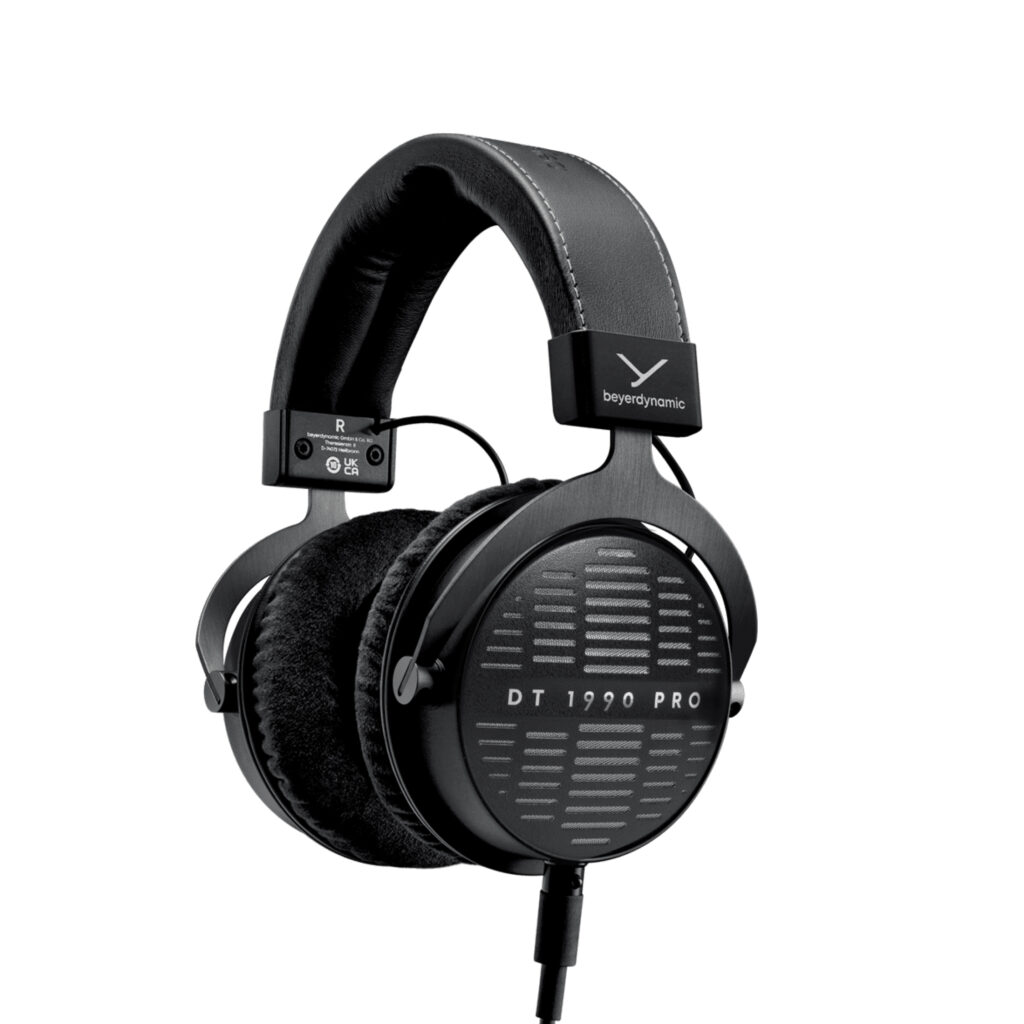
The Beyerdynamic DT 1990 PRO MKII updates a recognisable studio headphone with 30-ohm TESLA.45 drivers and a package designed for regular professional handling. Its strongest argument is the combination of replaceable components, detachable cables and two pad sets. The important qualification is tonal: a revised generation is not automatically a neutral one, and independent measurements still identify a prominent treble region. This is a product to assess with familiar material and a clear understanding of the work it will do.
Research-based review. This assessment draws on manufacturer documentation and the original independent evaluations linked below. Audio Review has not performed a hands-on test of this model.
The MKII changes that matter
The new 45 mm driver system and 30-ohm nominal impedance distinguish the MKII from the original 250-ohm DT 1990 PRO. Check the full model name when comparing listings, especially for discounted or used stock. Similar-looking photographs do not establish that the driver system or electrical requirements are the same.
The lower impedance broadens the range of practical source devices, but should not be treated as a complete quality rating. It says something about the load seen by the amplifier, not whether a particular mix will translate accurately to speakers. For an existing owner, the useful questions are whether the new fit, response and accessory package improve daily work enough to justify replacing a functioning pair. A newer model number alone is not an adequate reason.
Build quality, fit and serviceability
Beyerdynamic specifies replaceable headband and ear pads, a locking mini-XLR connection and two supplied cables. These are practical studio features because wear or cable damage need not retire the whole headphone. The hard case is also useful when moving between rooms or carrying equipment to another workplace.
At a stated 376 g without the cable, however, this is not an especially light headphone. Try the headband adjustment and check pressure during a realistic session. A robust construction is valuable only if it remains comfortable enough to use. Route the lead so it cannot pull against the socket or catch under a chair, and select the straight or coiled version according to the distance from the source. More accessories are helpful when they simplify the workflow, rather than merely filling a specification list.
Two pad sets, two listening baselines
The package includes Producing Velours and Mixing & Mastering Velours pads. Beyerdynamic describes the former as the fuller option and the latter as the more analytical one. SoundGuys’ measurements also show that the pad change affects the low-frequency balance. Treat the supplied sets as alternative acoustic configurations, rather than as cosmetic spares.
For consistent work, choose a set, learn it with familiar references and keep track of which configuration was used for important decisions. Changing pads halfway through a project can change the apparent balance without anything in the recording changing. The same caution applies to worn or compressed pads. A replacement that feels different can also change the response, so maintenance and monitoring consistency are connected issues.
Sound quality and the treble qualification
SoundGuys’ original evaluation finds useful bass and midrange behaviour but a pronounced treble feature that remains difficult to ignore. That is an important counterweight to the manufacturer’s presentation of a smoother update. The evidence supports an audition, especially for a listener who already knows that bright headphones become tiring.
Our editorial judgment is therefore positive about the hardware and flexibility but more qualified about a universal sound recommendation. Strong treble can make small events in a recording conspicuous without proving that the whole presentation is balanced. For production work, compare familiar references and check decisions on another trusted playback system. Do not mistake being able to hear an emphasised cymbal or sibilant consonant for an automatic improvement in accuracy across the entire mix.
EQ and responsible monitoring decisions
Equalisation can be useful if the headphone’s broad balance suits you but a particular region remains too prominent. A published preset is a starting point, not a personalised correction certificate. Different ears, fit, pad condition and measurement methods can change the appropriate adjustment. Begin conservatively and compare at similar listening levels.
Allow enough digital headroom when applying boosts so that EQ does not create clipping elsewhere in the chain. Keep a saved unprocessed reference and name the active preset clearly in the monitoring software. For creative work, an undocumented change to the monitoring chain can be more troublesome than a response limitation you understand. The goal is repeatable judgment, not collecting a large number of filters or assuming that every published curve must be copied exactly.
Source matching and daily connections
The 30-ohm load and source checks in the independent review suggest that many ordinary computer outputs can achieve useful listening levels. An audio interface remains convenient for studio use because it can provide physical level control and work alongside a separate microphone. Check output noise, available level and connector compatibility in your own arrangement before buying another amplifier.
There is no integrated microphone. For gaming or meetings, select a separate microphone input in the application instead of expecting the headphone cable to carry speech. A stereo jack adapter changes the physical plug size; it does not add a microphone channel or create balanced amplification. Keeping those connection roles clear avoids unnecessary accessory purchases and makes troubleshooting far simpler.
Where an open studio headphone is unsuitable
The open enclosure is appropriate for work in a reasonably quiet room, but it leaks sound. Recording a quiet vocal or acoustic instrument near a sensitive microphone is therefore a different use case from editing the take afterwards. A closed tracking headphone can be the more practical tool during recording even if you prefer an open design for other work.
Likewise, external noise can mask details and encourage higher monitoring levels. A studio product does not overcome the basic limitations of a noisy environment. If your workstation is beside loud equipment or other people, solve that problem before assuming that a more expensive open headphone will restore every detail. For travel, the size, cable and lack of ANC make the DT 1990 PRO MKII a specialised choice rather than an obvious all-rounder.
Alternatives to consider
Sennheiser HD 490 PRO: The HD 490 PRO is a direct production-oriented comparison with its own pad choices and a lighter stated construction. Compare fit and the monitoring presentation with familiar work, rather than treating either studio label as a guarantee of neutrality.
Beyerdynamic DT 900 PRO X: The DT 900 PRO X offers a less expensive route into a serviceable open-back studio headphone. Consider whether the MKII accessories, construction and tonal options solve a real problem in your workflow before paying the difference.
Beyerdynamic DT 1990 PRO MKII key specifications
- Design
- Open-back, circumaural studio headphones
- Driver
- 45 mm TESLA.45 dynamic
- Nominal impedance
- 30 ohms
- Weight
- 376 g without cable
- Supplied cables
- 3 m straight and 5 m coiled
- Headphone-side connector
- Locking 3-pin mini-XLR
- Pad sets
- Producing Velours; Mixing & Mastering Velours
- Case
- Hard case supplied
- Microphone
- None
View the official Beyerdynamic DT 1990 PRO MKII product page
Verdict
The DT 1990 PRO MKII is most convincing as a durable, maintainable headphone for someone who already understands their monitoring preferences. The supplied pad sets, locking cable and replacement-part approach provide concrete benefits, while the revised electrical load makes source planning less restrictive than with the original model.
Its treble character prevents a blanket recommendation to every newcomer seeking a neutral reference. Audition it, compare the HD 490 PRO and DT 900 PRO X, and judge whether any EQ you need fits naturally into your workflow. Choose it for the hardware, useful configuration choices and a presentation you have actually established suits you. Those are stronger reasons than the assumption that a premium studio model must sound correct to every listener without qualification.
Primary documentation and independent reviews
Beyerdynamic official DT 1990 PRO MKII product information · SoundGuys original DT 1990 PRO MKII review and measurements · RTINGS original DT 1990 PRO MKII test
Editorial record
Sources and updates
Product specifications and factual claims were checked against Official Beyerdynamic DT 1990 PRO MKII product page ↗. Scores and buying advice follow our category-specific editorial methodology.
- Published
- November 17, 2026
- Last updated
- November 17, 2026